Start with the whole journey
A smoother path is not simply the one with the fewest steps. It begins where someone arrives and continues through each doorway to the place they need to reach. A route might be level for most of its length but still be difficult because of one raised threshold, a narrow turn or a door that is hard to manage while moving across a change in height.
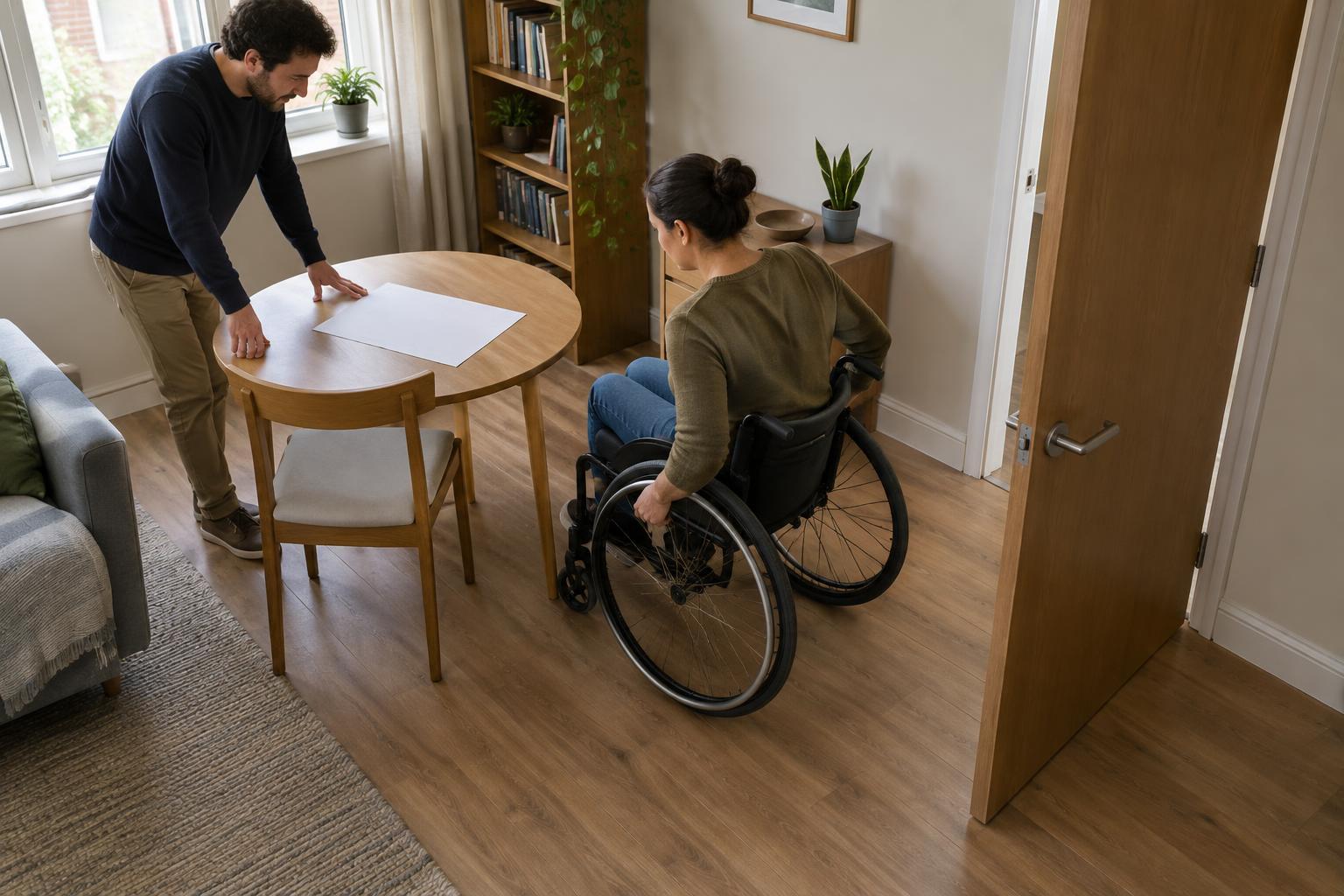
Walk the route at an ordinary pace, then look at it from the perspective of someone using a mobility aid, carrying supplies or needing a steadier surface. Note where the floor changes height or material, where a person might have to stop, and whether there is room to approach a doorway without balancing on a slope. If possible, invite the people who use the space to describe what feels awkward. The obstacle that stands out visually may not be the one that causes the most trouble.
Look closely at thresholds
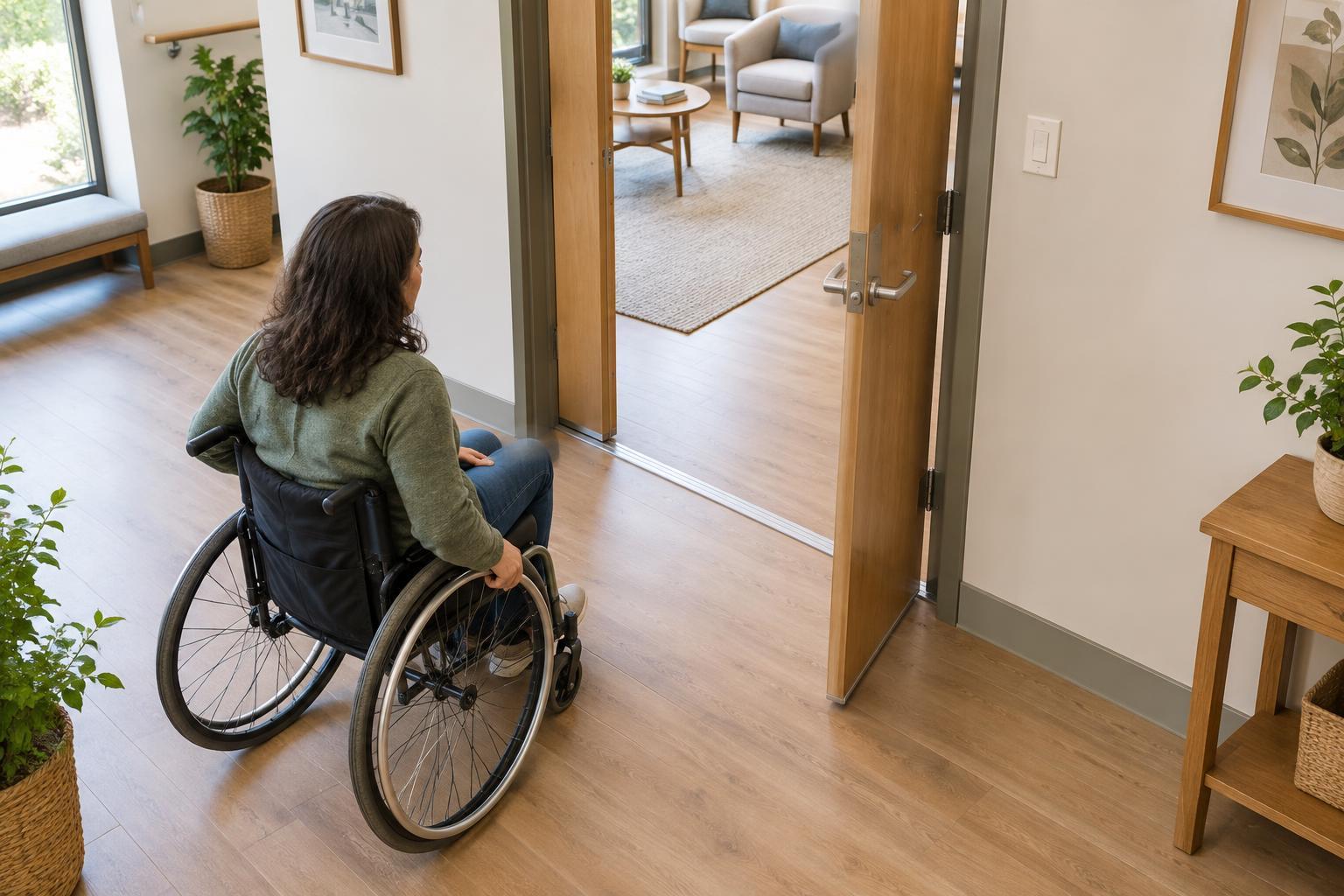
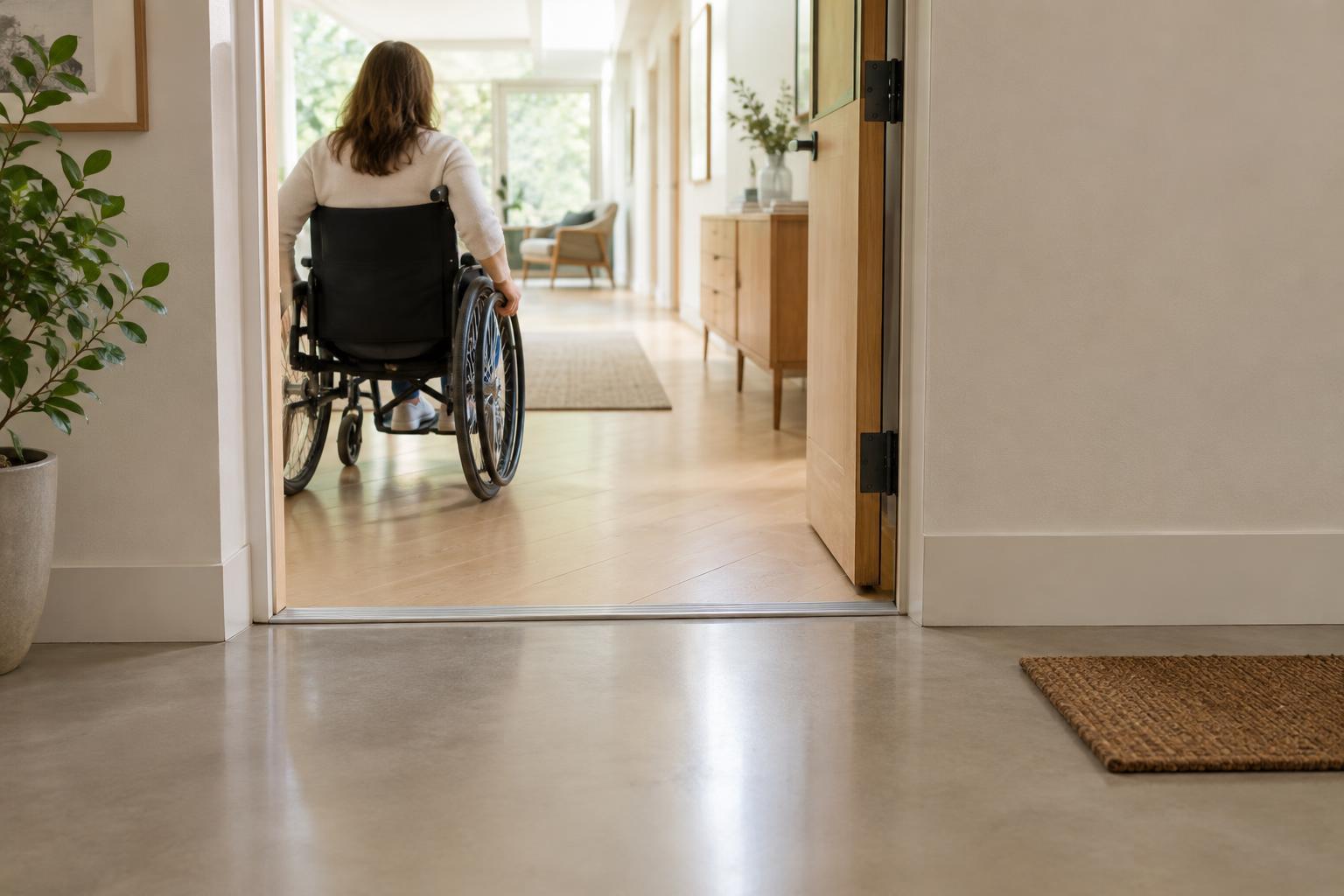
Thresholds help doors meet floors and can serve purposes such as weather protection. They can also interrupt the movement of wheels, catch a walking aid or create a trip point. Check not only their height but also their shape: a sharp edge may feel different from a gradual transition. Look for loose trim, uneven flooring and mats that bunch up near the door.
Small adjustments may help in some spaces. A securely fitted transition strip can make a change in floor level more gradual, while removing an unnecessary loose mat may clear the approach. Any change should leave the door working as intended and should not create a new edge elsewhere. At exterior doors, drainage and weather sealing matter too; a modification that makes entry easier on a dry day may cause other problems if water can enter.
Lighting and visibility are part of the threshold. A change in level is easier to anticipate when it is well lit and visually distinct from the surrounding floor. Avoid relying on a small warning sign alone: people still need a surface and layout they can cross comfortably.
Compare routes before adding equipment
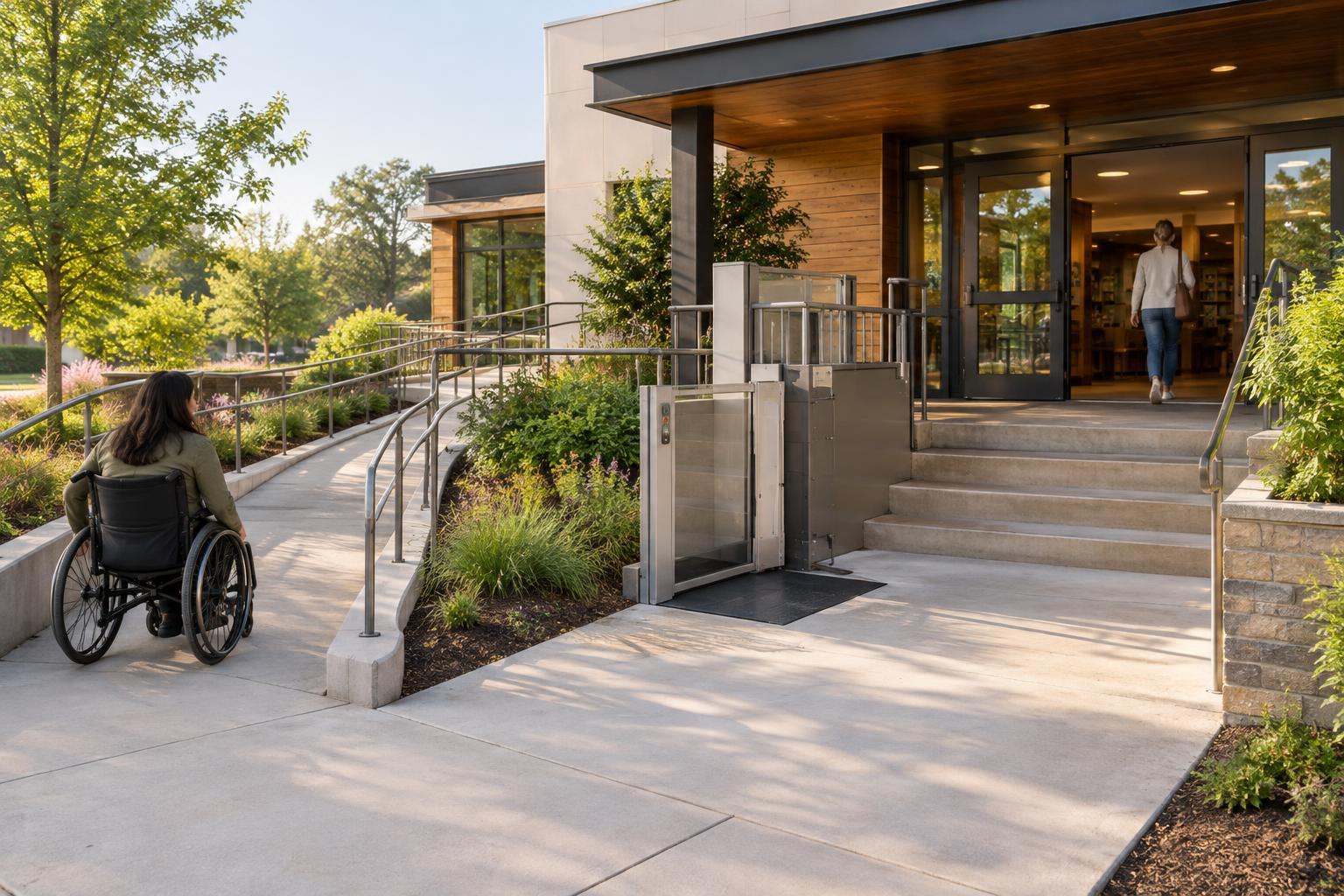
When a route includes a step, it is tempting to focus immediately on a ramp. First consider whether another entrance or an existing level route offers a simpler journey. Compare the full paths, including distance, door operation, surface condition, lighting and whether the route remains available whenever it is needed. A step-free route that leads through a cluttered storage area or requires someone to find a key may not be a dependable choice.
Where a ramp is being considered, its usefulness depends on more than connecting two heights. People need space to approach, turn and operate doors, as well as a surface that stays stable under normal use. A short rise can still require more room than expected to create a comfortable slope. Portable products may suit some temporary situations, but they need to be appropriate for the location and set up securely each time. For permanent changes, a qualified accessibility or building professional can help assess the layout and applicable requirements.
Keep the chosen path clear and predictable
A good route can become difficult when everyday objects migrate into it. Shoe racks, delivery boxes, chairs and trailing cables can narrow an approach or force a detour across an uneven surface. Give frequently used items a home away from door swings and turning areas. Check that rugs lie flat and that flooring stays secure at its edges.
Consistency helps people move with confidence. If an accessible entrance is different from the most obvious one, make the way to it clear from the point of arrival. Avoid directions that depend on someone knowing the building already. In a shared space, agree on who checks the route and how people can report a sticking door, damaged strip or newly blocked passage.
Test changes in everyday conditions
After a change, try the entire route again rather than judging one improved spot in isolation. Can someone open the door without standing on the level change? Is there enough room to pause? Does the transition remain easy to see in lower light? An exterior route may also feel different when wet or when leaves and other debris collect near an entrance.
The aim is not to assume that one solution works for everyone. A person’s preferred route can depend on their equipment, pace and need for assistance. Keeping routes clear, asking for feedback and revisiting small trouble spots over time can make a space easier to use without treating accessibility as a one-time project.