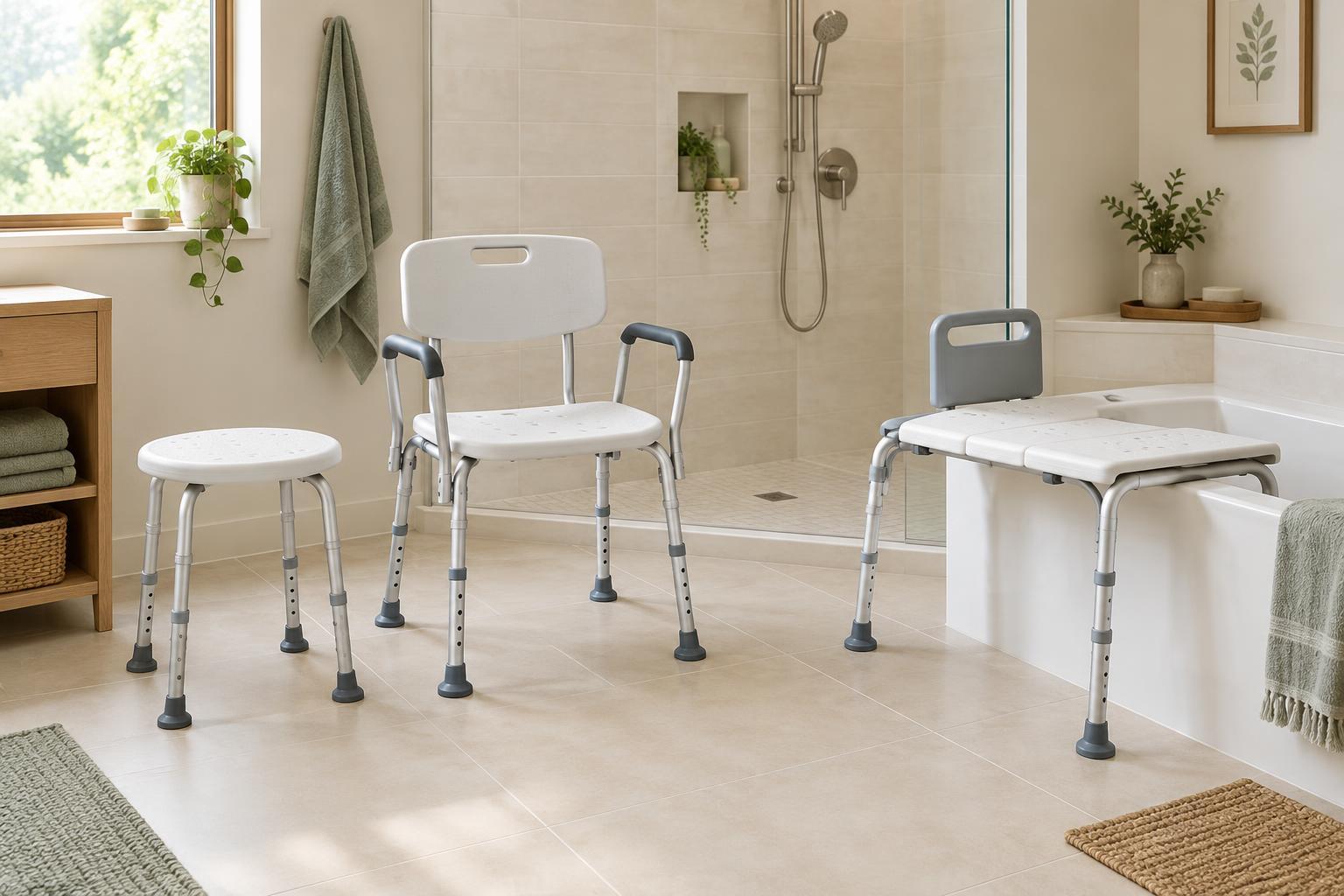
Three products with different layouts
A shower stool is usually a compact seat without a back. Its small footprint may suit a shower with limited floor space, and some models are light enough to move out of the way between uses. The trade-off is that a stool generally offers fewer places to lean or rest an arm. Models vary: some have round seats, others rectangular seats, and some include handles built into the seat.
A shower chair typically adds a backrest and may have armrests. Those features can make the seat feel more defined and provide surfaces to hold while settling in or standing up. They also increase the chair’s overall size. A chair that looks modest in a product photo may leave little room for feet, a handheld shower head, or another person in a narrow enclosure.
A transfer bench has a longer seat designed to span the edge of a bathtub, with part of the bench positioned outside the tub. It addresses a different layout challenge from a stool or chair that sits wholly inside the bathing area. A bench needs clear floor space beside the tub, and its legs must fit the bathroom’s surfaces. It may also affect how a shower curtain closes, so containing splashes is worth considering.
Start with the bathroom, not the product photo
Before comparing extras, note whether the bathing area is a walk-in shower, a shower over a tub, or another arrangement. Measure the usable floor area and the opening, then check for a raised lip, sloping floor, built-in ledge, door track, or fixtures that could obstruct a seat. For a transfer bench, include the space outside the tub in those measurements.
Product dimensions should be read in more than one direction. Seat width is not the same as the distance between the outer edges of the legs. Armrests and backrests can project beyond the seat, while an adjustable leg may need room to sit flat away from a wall or curved tub base. The product’s stated adjustment range also needs to work with the height of the tub edge, if there is one.
Think through the rest of the room as well. Will a door still open? Can toiletries and the shower controls be reached from the seated position? Is there a sensible place to store the product when someone else uses the bathroom? These everyday details can matter as much as the seat itself.
Compare support, adjustability, and surfaces
Backrests and armrests change both the feel and the footprint of a seat. Fixed arms may be useful as handholds, but they can also get in the way in a tight space. Some products have removable or reversible components; checking the exact configuration matters, particularly for a bench that must face a particular direction in the room.
Many shower seats have height-adjustable legs. Look for a clear way to confirm that every adjustment point has engaged and that the feet sit evenly on the intended surface. Rubber-tipped feet, a textured seat, and drainage holes are common features, but their designs vary. A feature described as “non-slip” does not remove the need to check how a product behaves on the bathroom’s actual floor.
Check the manufacturer’s stated weight limit and intended use, along with any requirements for assembly or routine inspection. Avoid assuming that a wider seat automatically has a higher limit. If a model has a padded seat, compare its cleaning requirements with those of a molded plastic seat; seams and removable parts may add places that need attention after bathing.
Consider cleaning and shared use
A useful seat should be manageable after the shower ends. Look at where water can collect under the seat, around fasteners, and inside any accessories. Drainage holes may help water leave the sitting surface, while simpler shapes may be easier to wipe down. Check the care instructions before using cleaning products, since materials and finishes differ.
In a shared bathroom, consider who will move or store the seat and whether its feet could scuff a surface or create an obstacle when left in place. A lightweight stool may be convenient to relocate, while a larger chair or bench may be less practical to move often. Foldable designs save space in some layouts, but hinges introduce another feature to inspect and keep clean.
A short comparison checklist
A stool is worth a closer look when space is limited and a compact seat is the main priority. A chair may be a better product category to explore when a backrest or armrests are important. A transfer bench is designed for a bathtub layout where a seat spanning the tub edge is needed. None of these categories guarantees a good fit on its own; the exact model and bathroom layout decide much of the outcome.
When comparing models, record the full footprint, seat dimensions, height range, weight limit, leg and foot design, support features, drainage, assembly requirements, and cleaning instructions. Check the manufacturer’s guidance for the surfaces and layout where the product will be used. If suitability or safe setup is uncertain, seek individualized guidance rather than relying on a product description alone.