Start with the surface and the task
A non-slip product does one of two related jobs: it helps an object grip the surface beneath it, or it gives feet a more secure surface to stand on. A drawer liner that keeps utensils from sliding is not the same product as a floor mat meant for walking. Before choosing one, notice what moves, when it moves, and what is underneath it. A product that works on a clean, dry shelf may not stay put on a wet floor.
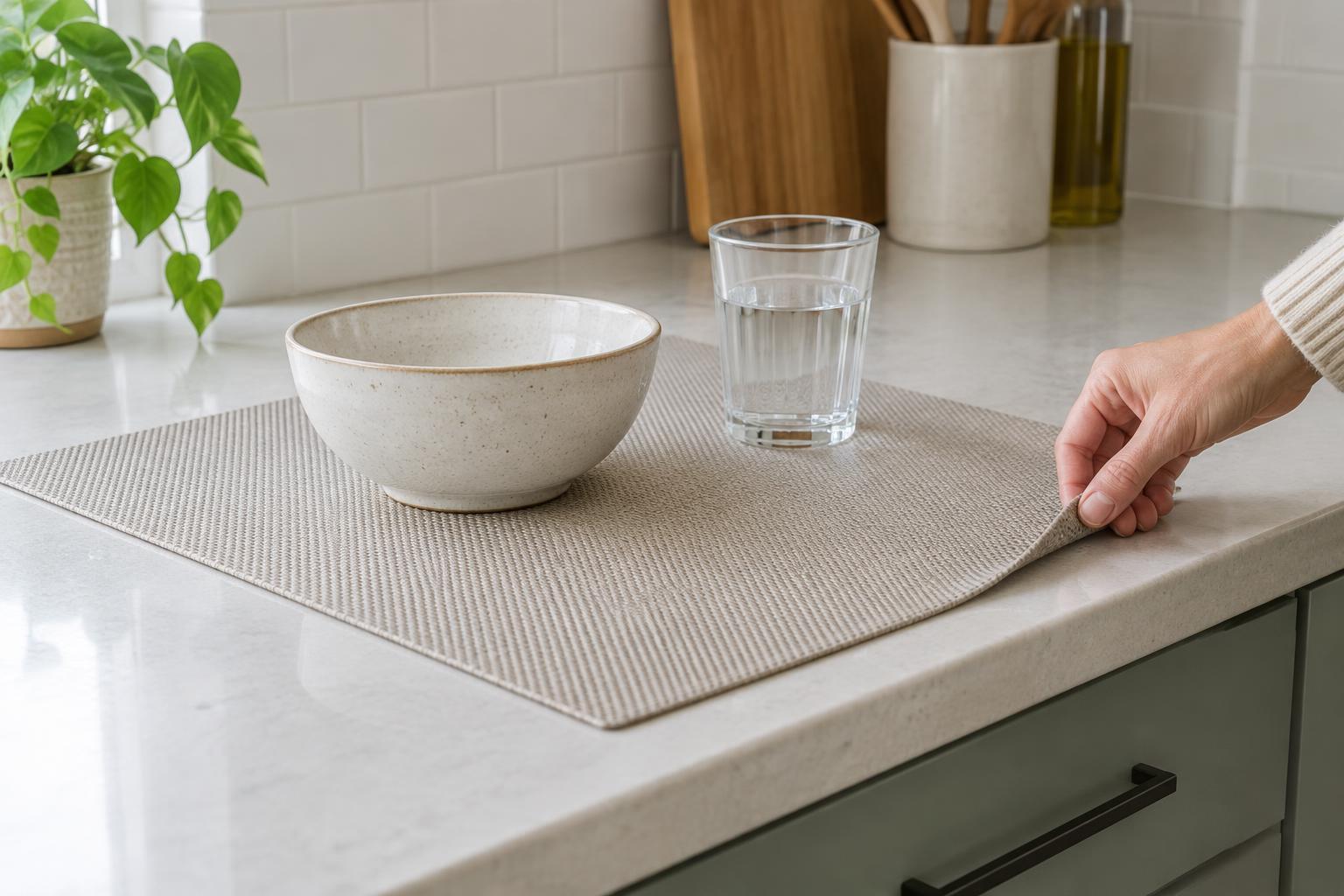
Mats and liners can be useful where small movements cause daily frustration. A liner may help keep dishes or supplies steady inside a drawer. A mat may help hold a frequently used item in place on a counter or table. At an entrance or beside a sink, a suitable floor mat may offer a place to stand while also collecting some moisture. In each case, the benefit depends on the mat staying flat and the surface beneath it remaining appropriate for that use.
Match the product to its location
For drawers, shelves and trays, look for a liner that lies flat without bunching when the drawer opens or objects are moved. Cut it to fit without forcing it tightly against every edge; a crowded liner may curl. If spills are likely, consider how easily the liner can be removed and cleaned. Check that its material is suitable for the shelf or countertop finish, since some materials can leave marks or react with certain surfaces.
Floor mats need a different check. They should sit flat, resist sliding on the particular flooring, and have edges that do not catch a shoe, walking aid or wheel. A thick or loose mat can create a trip obstacle even if its top feels grippy. In routes used by a walker or wheelchair, a clear, even floor may be more useful than adding another layer. Do not put a small loose mat where people regularly turn, step sideways or move quickly.
Wet areas call for particular care. A mat designed for a dry hallway should not be assumed suitable for a bathroom floor or bathing surface. Suction-cup bath mats, for example, generally depend on a smooth surface and firm contact; textured surfaces may prevent a reliable hold. Follow the product’s placement and cleaning directions, and treat any shifting as a reason to stop using it until the issue is resolved.
Make a simple stay-put check
Check a new mat or liner before relying on it. Clean and dry the underlying surface as directed for the product, then place it flat. Press along its edges and corners and look for ripples, lifted spots or gaps. For a floor mat, gently push it with a foot from several directions while holding a stable support if needed. It should not slide, curl or fold under light pressure. Check the edge with the footwear normally used in that space.
Repeat the check after cleaning, after a spill and whenever the mat has been moved. Also look underneath it: moisture, dust, soap residue or loose grit can change how well it grips. A mat that held yesterday may shift today if the floor or the underside has changed. If it starts to move, remove it and address the cause rather than placing another loose layer beneath it.
Keep it clean without losing its grip
Mats and liners work best when both sides are maintained. Crumbs can build up beneath drawer liners, while water or cleaning-product residue can collect under floor and bath mats. Lift removable products regularly, clean them according to their instructions, and let the product and the surface beneath it dry as required before putting it back. This is also a chance to check for tears, flattened texture, peeling backing or corners that no longer lie flat.
Avoid assuming that adhesive, tape or a second mat will fix a poor fit. These additions may leave residue, complicate cleaning or create an uneven edge. If a product repeatedly slips despite correct placement and cleaning, a different size, backing or product type may be more suitable.
Know when not to use one
A non-slip mat is a small aid, not a substitute for a sound floor or a well-arranged space. If the underlying floor is damaged, persistently wet or uneven, covering it can hide the problem without removing it. Likewise, a mat that blocks a door or narrows a route may make the space harder to use.
The most useful question is not simply whether a mat feels grippy in your hand. It is whether it stays flat and secure in the exact place, under the conditions, where it will be used. A brief check during ordinary cleaning can help keep a helpful product from becoming an unnoticed obstacle.