Start with the material and the reading spot
Reading hands-free can be useful when following a recipe, referring to an instruction sheet, taking notes or simply wanting a book to stay open. A stand supports the material; a page holder keeps pages from closing or lifting. Some products do both, but no single design works equally well for a paperback, a large reference book and a loose sheet of paper.
Before choosing a product, try the reading material in the place it will be used. Note its size and weight, how stiff its binding is, and how often pages need to be turned. Also consider the available surface: a wide desk offers different options from a narrow bedside table. These details matter more than a long list of product features.
Choose a stand that fits the task
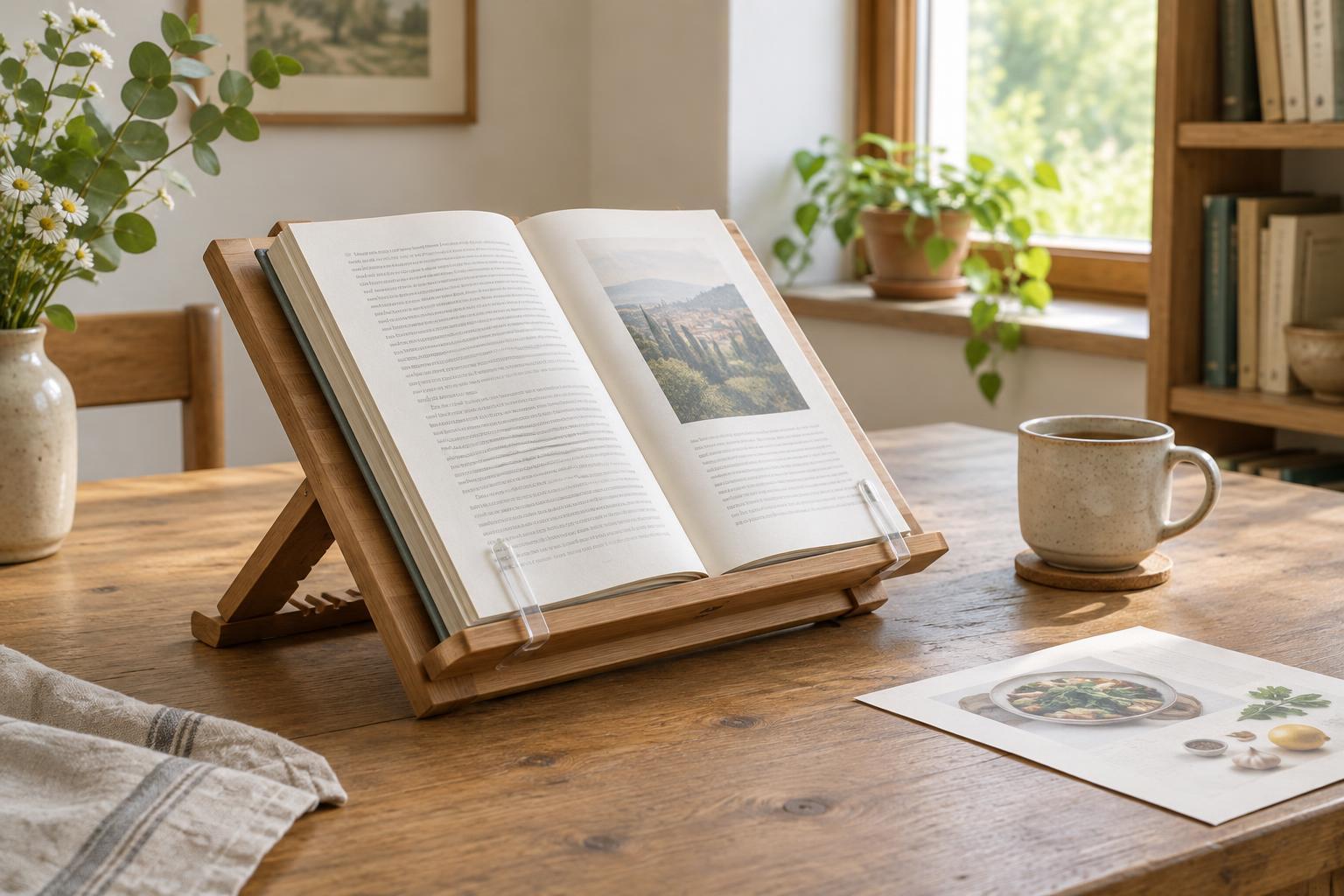
A tabletop book stand usually has a sloped back and a ledge beneath the book. Adjustable models let the reader change the viewing angle, while fixed-angle models tend to be simpler to set up. Check that the ledge is deep enough for the intended book but does not cover the bottom line of text. A broad base and a secure hinge can help keep the stand steady when a heavier book is opened.
A folding stand can be convenient to store or move between rooms. Its portability is less helpful, though, if opening it and setting the angle takes several small or fiddly steps. For reading in a chair, a floor stand or adjustable arm may position a book where a tabletop cannot. Those designs need enough room around the chair, and their base should not create an easy-to-miss obstacle.
Placement is part of the setup. The text should be comfortably visible without repeatedly leaning toward it or turning the head sharply. If a stand is used near food, drinks or a sink, choose a position where a spill is less likely to reach the printed material or the reader.
Understand how pages are held open
Many stands use two movable clips or arms to hold pages against the support. They can work well for a book that wants to close, but clips may cover words near the edge or need to be released at every page turn. Look at how easily they move and whether they can accommodate both a thin paperback and a thicker book. Gentle contact matters when pages are fragile.
Other options include a weighted page holder laid across an open book, a transparent sheet over the pages, or a simple book weight placed away from the text. These can reduce the need to hold a spread open, although they must still be moved to turn pages. A transparent holder may create glare under a lamp; an opaque weight may hide part of a page. For loose papers, a clipboard or document stand with a top clip may be more practical than a book stand.
A useful test is to turn several pages, not just open the book once. Notice whether the holder grips securely without excessive force, whether pages remain readable, and whether the material stays in place while the holder is moved.
Make page turning part of the decision
Hands-free reading rarely means never touching the material. Most printed pages still need to be released, turned and secured again. If page turning is frequent, a stand with easy-to-move arms may be preferable to one that holds pages very firmly. A cookbook left open to one recipe may benefit from a stronger hold instead.
Small adjustments can make an existing setup more useful. Try opening a stiff new book gently before putting it on a stand, or use a bookmark to find the next place after an interruption. Keep the stand within comfortable reach if clips need regular adjustment. Avoid using improvised clamps that crease pages or could spring loose.
Try the whole setup before committing
When comparing options, use the actual type of printed material whenever possible. Set the stand at the intended height, open to a page near the beginning and another near the middle, and see whether it remains balanced. Check that the print is not hidden by the ledge or clips and that lighting reaches the page without troublesome shadows or reflections.
The best choice is often the one that makes the routine simpler: stable enough for the material, easy enough to adjust, and compact enough for its usual location. A basic stand and a separate page weight may offer more flexibility than a complicated all-in-one product. If reading needs change from day to day, a setup that can be repositioned without much effort may be especially useful.