Start with the tasks that matter most
A more usable rental does not have to begin with a large purchase. Walk through an ordinary day and notice where the space makes a task harder: reaching a frequently used item, passing through a doorway, seeing a step or getting settled in a chair. Focus on the routines that happen most often before trying to improve every corner at once.
It can help to look at each route from the perspective of the person using it. A clear path on a floor plan may feel narrow when a door is open or a chair is pulled out. Notice where someone needs to turn, pause or carry things. If several people share the home, ask what they find awkward rather than assuming one arrangement works for everyone.
Make room to move
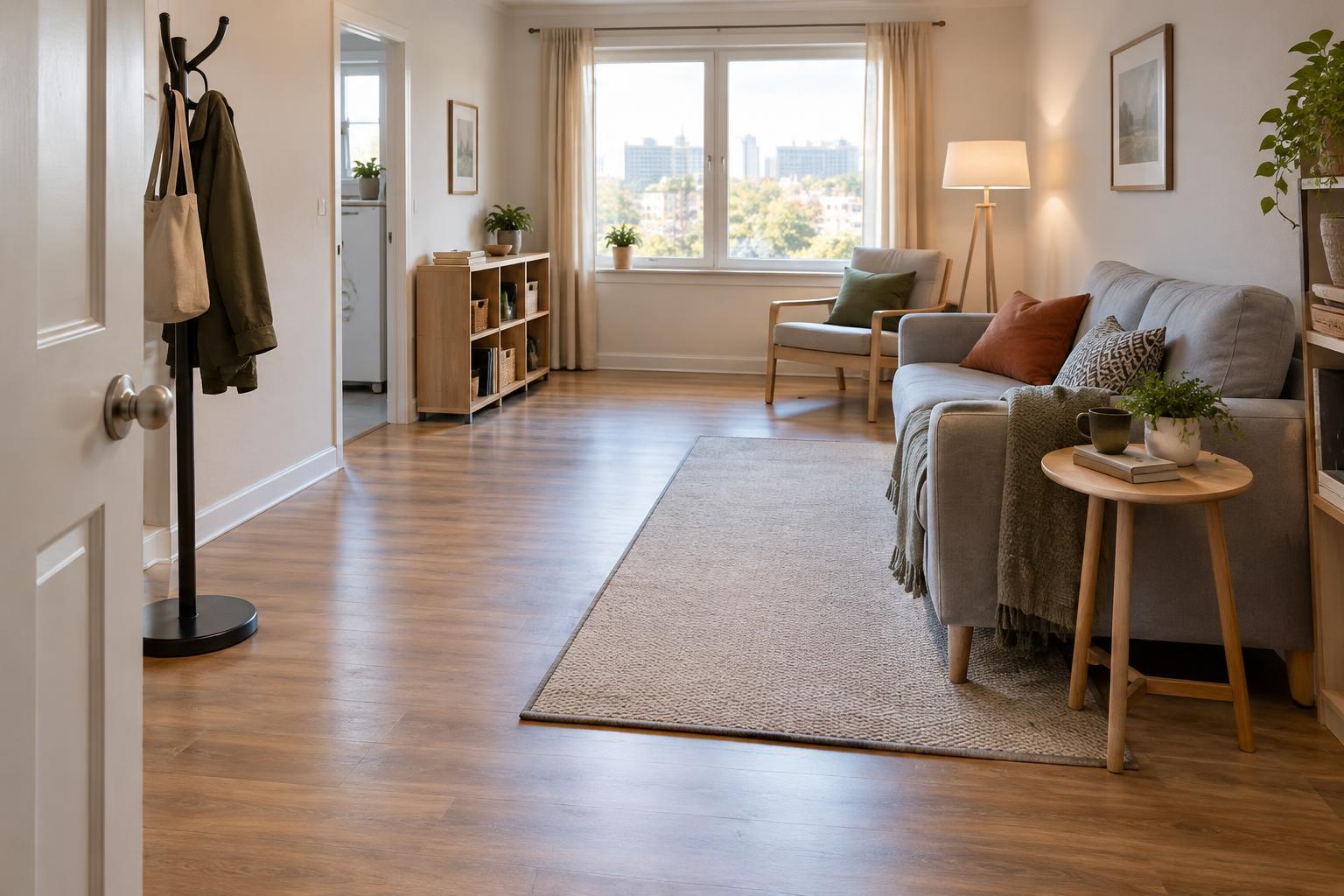
Furniture placement is one of the most flexible changes a renter can make. Shift pieces to create a direct route between the entrance, seating, bathroom and kitchen. Move small tables, baskets and decorative objects away from the edges of busy paths. Leave doors able to open fully where possible, and keep exits unobstructed.
Loose cords and rugs can interrupt an otherwise clear route. Run cords along the perimeter of a room using suitable removable organizers, without placing them under rugs or across doorways. Consider removing a rug if its edges curl or it slides. If a rug is important to the room, check that it lies flat and that any backing or pad is appropriate for both the rug and the floor.
Try changes before buying anything. A chair moved closer to a table or a shoe rack relocated away from the entrance may make a meaningful difference. Live with a new layout for a few days and check whether it helps at different times of day.
Improve visibility and reach
Good lighting makes everyday features easier to find. Portable lamps can brighten a work surface or reading spot without rewiring. Plug-in or battery-powered lights may help in a dim hallway or closet, provided they do not add cords or clutter to a walking route. Check for glare as well as brightness: a lamp aimed at a task may be more useful than one shining directly into someone's eyes.
Put frequently used items where they can be reached without stretching, climbing or moving other objects. This might mean keeping a daily-use cup on an open shelf, placing keys in a consistent spot near the door or moving heavier items to a comfortable height. A stable rolling cart can bring supplies to where they are used, but it should not become an obstacle in a narrow space.
Simple visual cues can also make a home easier to understand. Contrasting containers, large readable labels and consistent storage locations may reduce searching. Choose removable labels that suit the surface, and keep the system simple enough that everyone in the household can maintain it.
Choose removable products with care
Freestanding furniture and portable products can offer flexibility, but “no installation” does not automatically mean “safe for every use.” Check a product's intended purpose, dimensions, weight limits and setup instructions. Test whether it stays steady on the actual floor or surface in the rental. A narrow walkway may become harder to use if a helpful-looking product takes up too much room.
Be especially cautious with products intended to support a person's weight, such as bathroom rails or transfer aids. Adhesive or suction-mounted items may not provide dependable support on every surface. Before relying on one, confirm that it is intended for that purpose and suitable for the specific location. If a more secure change is needed, discuss options with the property owner or manager rather than improvising an attachment.
Keep changes reversible and review them
Rental rules vary, so check the lease and seek permission before drilling, replacing fixtures or applying materials that might mark a surface. Even removable hooks, tape and mats can leave residue or affect some finishes. Test products as directed, retain original parts and document anything you are expected to restore when moving out.
After making a change, use the space normally and ask whether it actually helps. Can people still open doors, clean the floor and reach what they need? Has a new lamp introduced a cord, or has a storage solution created another obstacle? Small adjustments are easier to revise when they do not depend on permanent alterations. The goal is not a perfect-looking layout, but a rental that better supports the routines of the people who live there.