Look beyond overall brightness
A room can seem bright yet still be difficult to move through or use. A window may reflect sharply off a table while the route to the door remains dim. A ceiling fixture may light the center of a room but leave a cupboard, sink, or reading chair in shadow. Accessible lighting starts with these differences: where light falls, what it reflects from, and whether people can adjust it for the activity at hand.
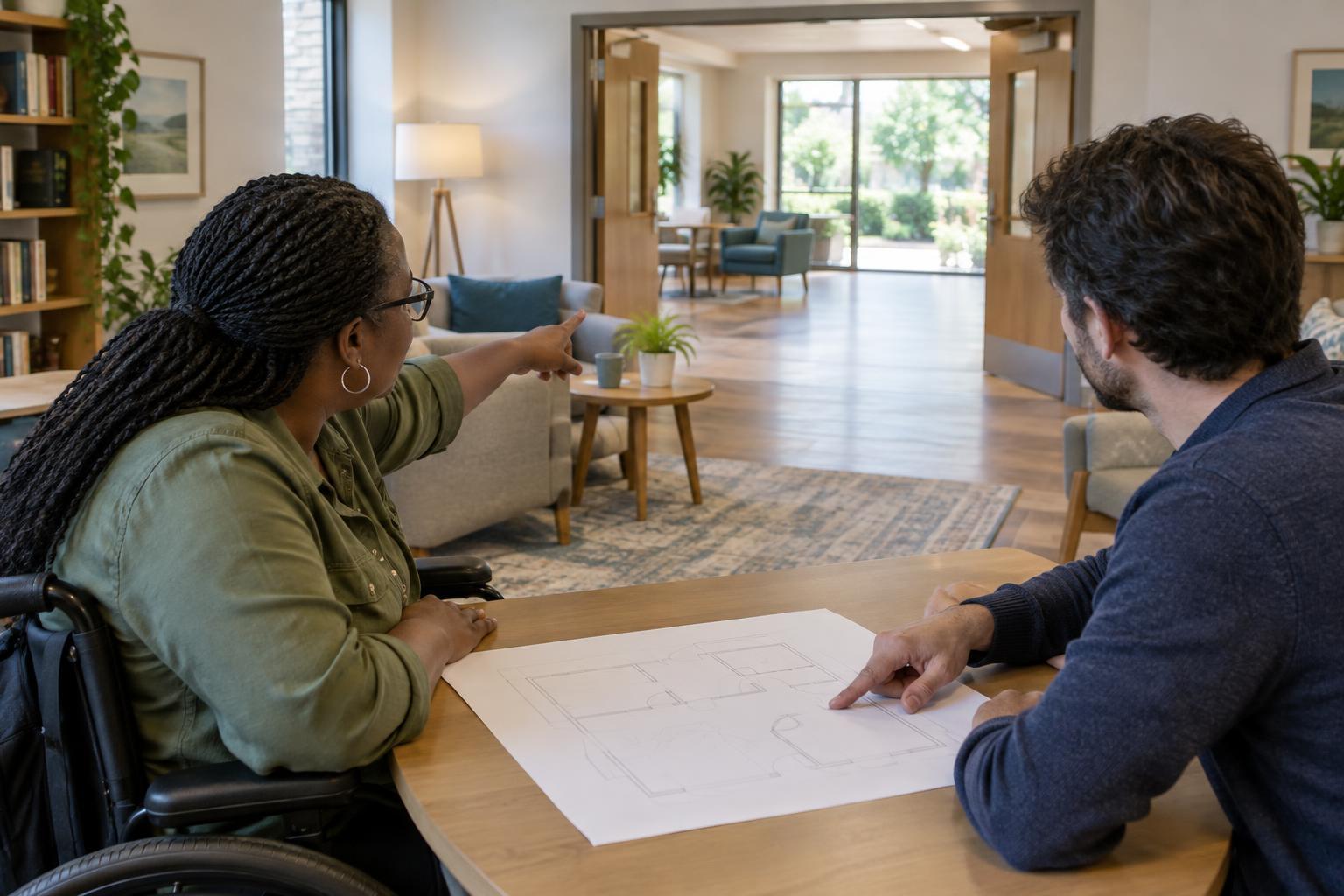
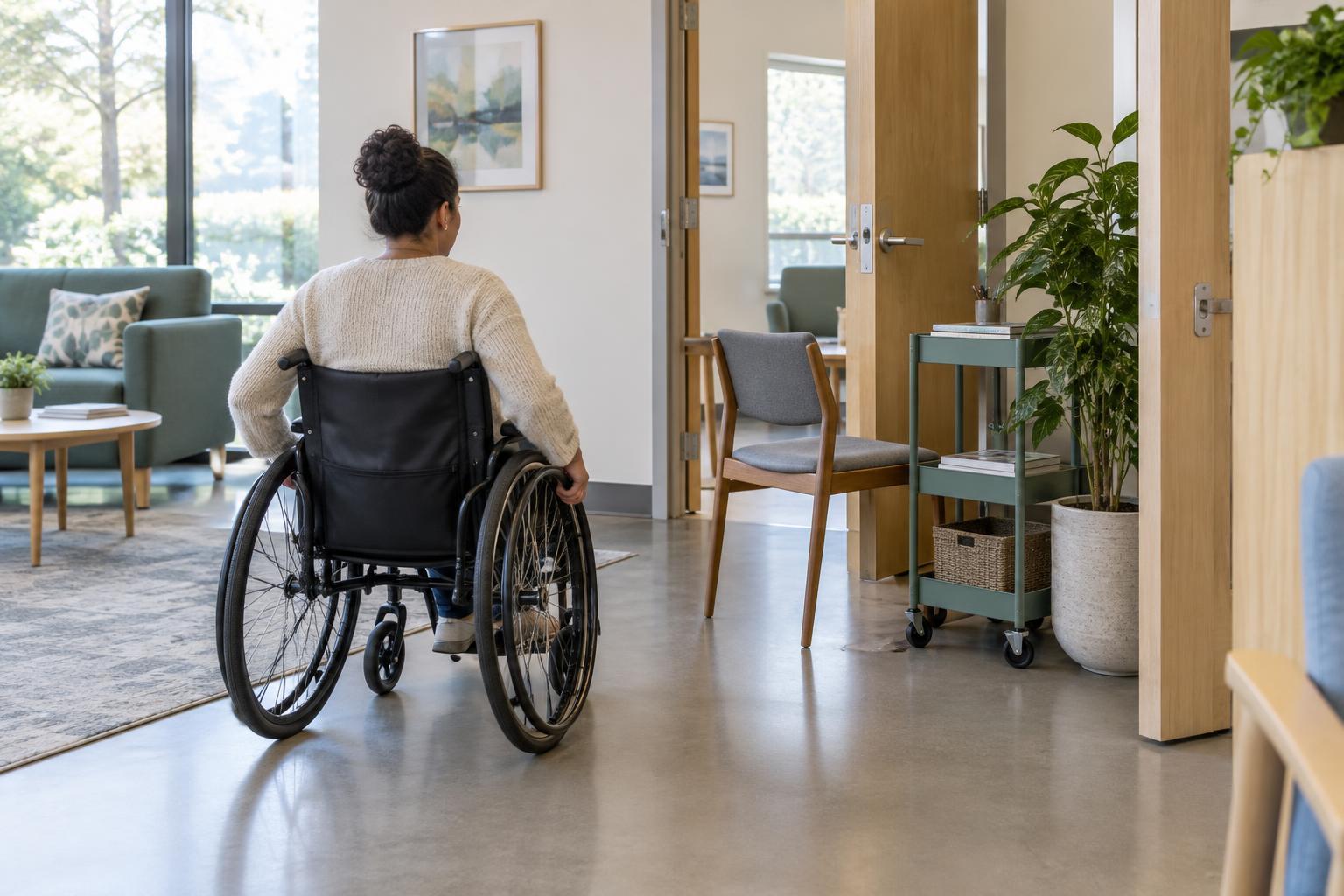
Walk through the space at different times of day and look from seated as well as standing positions. Notice what happens when someone enters from a brighter corridor, reaches for a switch, or looks toward a screen. This simple review can reveal dark patches and uncomfortable reflections that are easy to miss when judging the room from one spot.
Soften glare without losing useful light
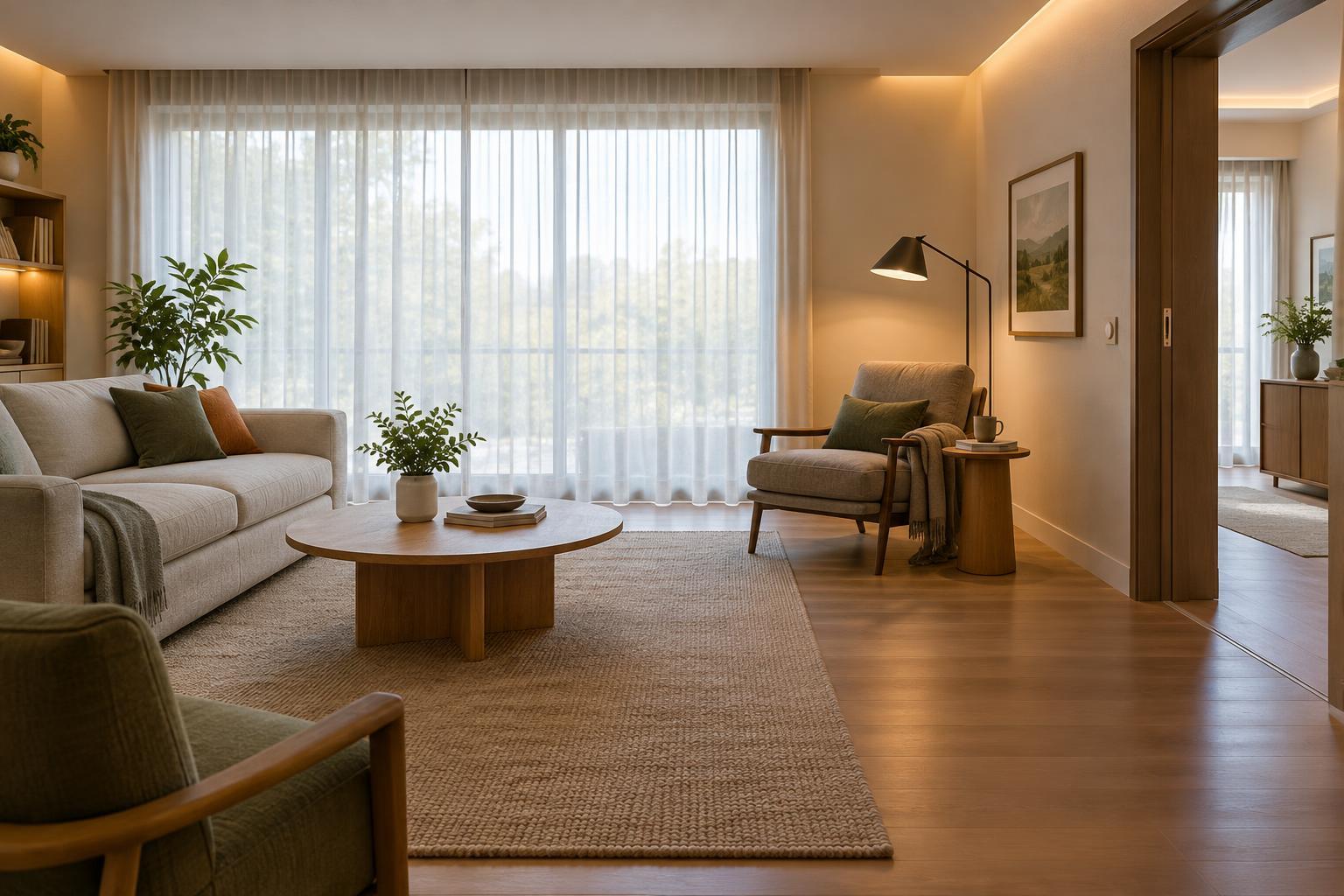
Glare can come from an exposed bulb, direct sun, a glossy floor, or light reflected in glass. Adding a stronger lamp does not necessarily help; it may create another bright point against a darker background. Instead, consider shades or diffusers that conceal the light source, window coverings that can be adjusted through the day, and matte finishes on large surfaces where practical.
Placement matters too. A desk lamp aimed at a work surface can make paperwork easier to see, but its bulb should not shine into the user's eyes or reflect off a screen. In a shared room, check the lamp from nearby seats as well. Lighting that works for one person should not make an adjacent chair uncomfortable.
Make routes and tasks easy to see
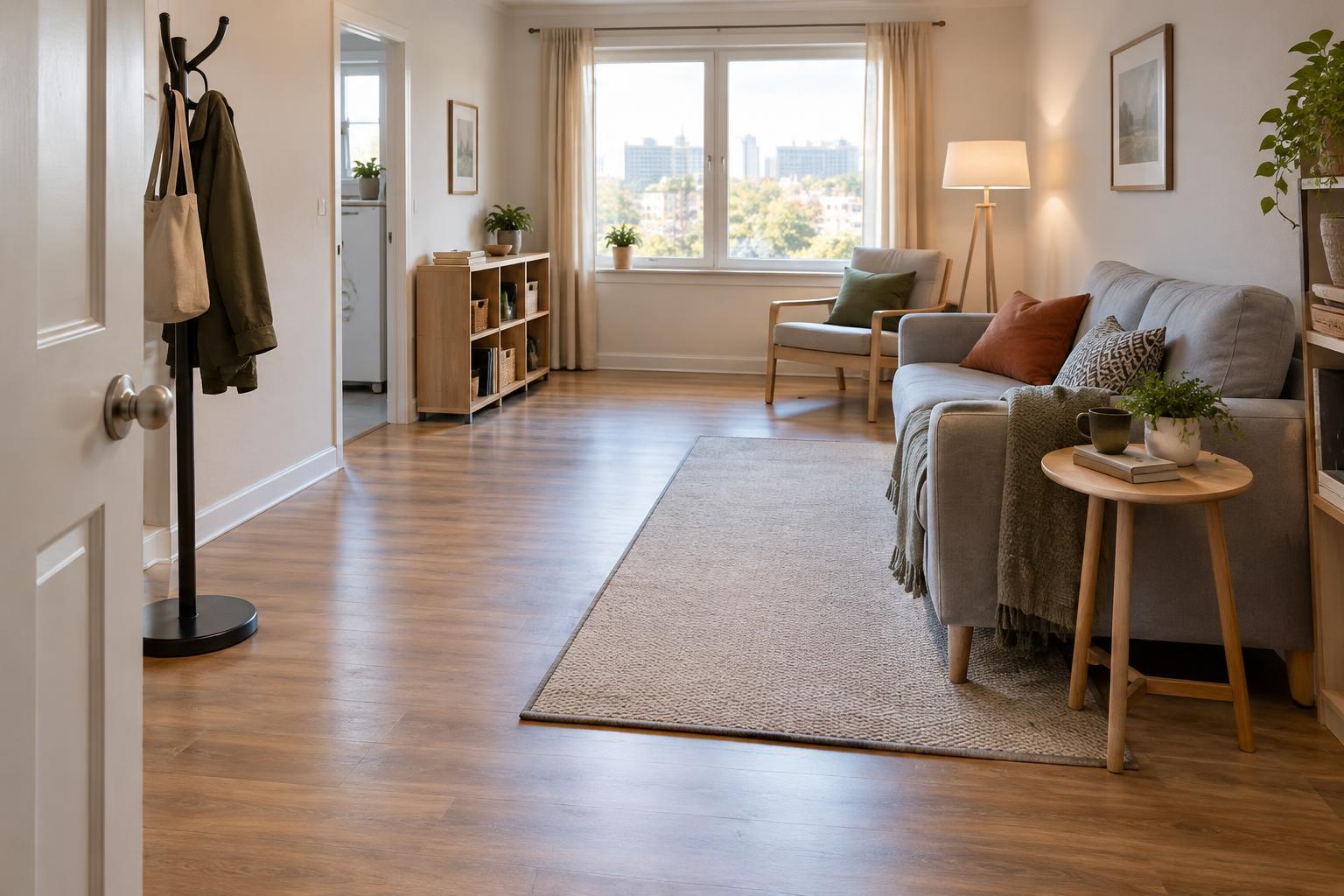
Even lighting along a route helps people identify thresholds, furniture edges, and changes in direction. Pay particular attention to entrances, hallways, steps, and the area between a bed or chair and a frequently used destination. Avoid leaving a dark stretch between two well-lit areas. Where fixtures cannot be moved, a carefully positioned additional light may be more useful than increasing the brightness of the entire room.
Task lighting serves a different purpose from general room lighting. Reading, preparing food, finding items in storage, and completing forms each need light where the activity happens. Under-shelf lighting, a shaded adjustable lamp, or a fixture near a worktop may help. Keep cords out of walking routes, and make sure an added lamp does not block access to a surface or create a new obstacle.
Support clear visual cues
Light works together with color and surface finishes. A door handle may be harder to locate when it blends into a door, even in a bright room. Clear contrast between important features and their backgrounds can help people spot switches, handrails, seating, and the edges of work surfaces. Avoid relying on a dramatic pool of light as the only cue: its position may shift or disappear when another fixture is turned off.
Strong contrasts between adjoining spaces can also make a route feel uneven. A very bright room opening onto a dim corridor deserves a closer look, especially if the change occurs at a doorway or step. The goal is not identical lighting everywhere. It is a legible sequence of spaces, with enough light to understand where to go and what to use.
Give people simple control
People use spaces for different tasks and have different lighting preferences. Separate controls for general and task lighting allow a room to change without forcing everyone to accept one setting. Switches should be easy to find and reach from the places where they are needed. In a shared environment, clear labels can make it easier to identify which fixture each control operates.
Before changing a whole room, try a small adjustment and ask the people who use the space what improves or worsens their experience. Check the result in daylight and after dark, and from the positions where people sit, stand, and move. Accessible lighting is an ongoing part of organizing a space: when furniture or activities change, the pattern of light may need to change with them.