Start with the lid and the task
A jar opener and a bottle opener may solve different problems. A wide screw-top jar lid needs turning force while the jar is held steady. A small plastic bottle cap can be harder to grasp because there is little surface to hold. A metal crown cap needs a tool that lifts its edge rather than one that twists. Before choosing a product, note which containers cause difficulty and whether the main challenge is gripping, turning or keeping the container still.
Think about where opening usually happens, too. Someone may want a small aid that stays in a kitchen drawer, or a fixed tool near the place where drinks are prepared. The weight and shape of the container matter as much as the lid: a tall, narrow bottle may tip unless it is supported, while a heavy jar may be difficult to hold and turn at the same time.
Grip aids: simple tools that still need a steady hold
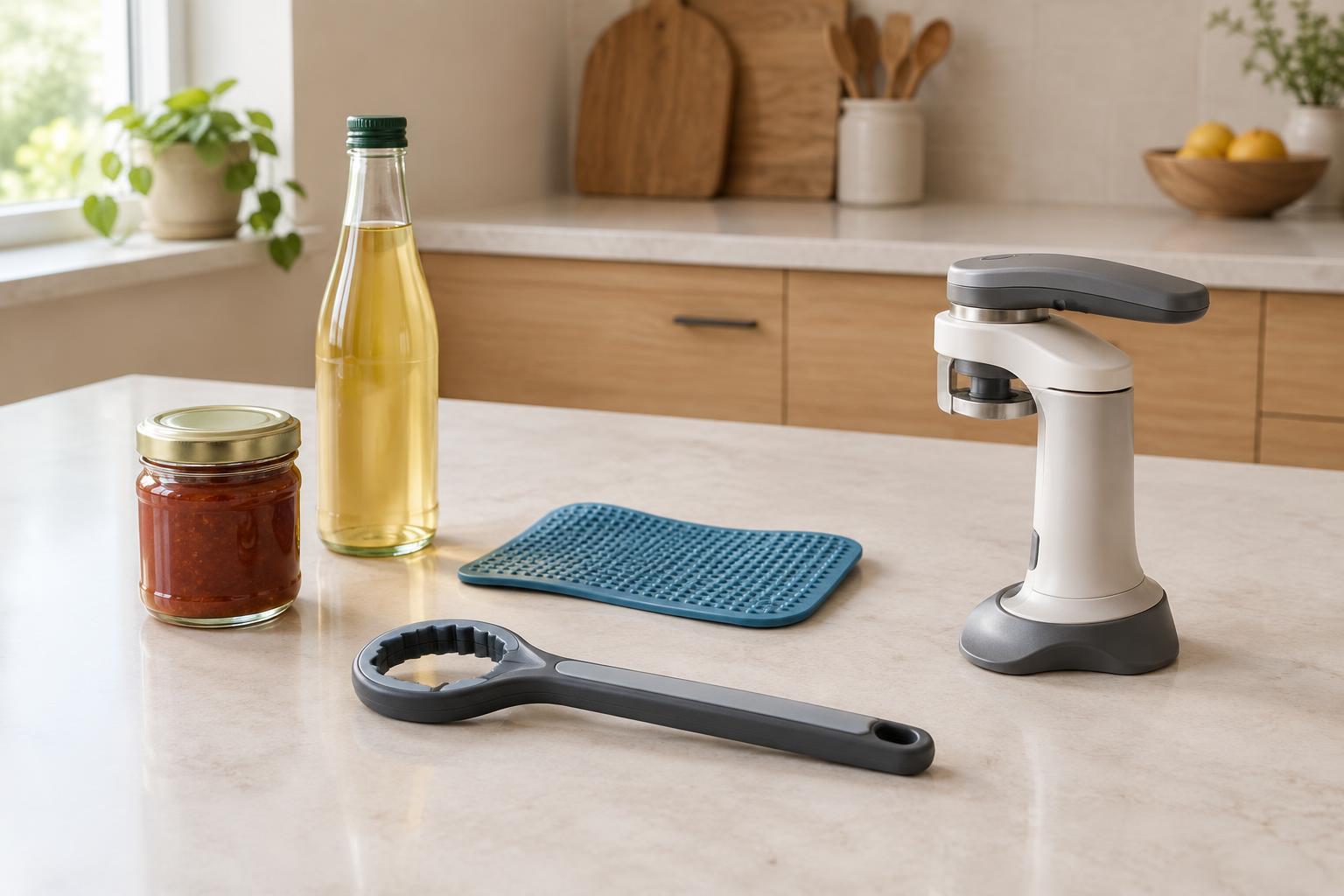
Flexible rubber or textured silicone pads add friction between a hand and a lid. They take little storage space and can work across several lid sizes. Sleeve-style grips wrap around a cap or lid, giving fingers a thicker surface to hold. Both approaches may help when a lid is slippery, but they do not remove the need to stabilize the container and apply turning force.
When comparing these aids, check how they feel against the skin, whether they slip when damp and whether their shape fits the lids in regular use. A very soft pad may be easy to fold around a cap but awkward to position on a wide lid. A sleeve that fits one bottle size neatly may not fit others. Ease of washing is worth considering if the aid will be used around food or sticky spills.
Handled openers: more leverage, more positioning
Handled jar openers use a clamp, adjustable jaw or set of notches to engage a lid. A longer handle can make turning feel more manageable, and some designs keep the hand away from the narrow rim of a cap. The trade-off is setup: the tool must fit securely, and the user still needs a way to keep the jar from rotating. Check that the handle can be held comfortably without forcing the wrist into an awkward angle.
Bottle-cap tools vary just as much. Some enlarge a small screw cap so it is easier to turn; others lift crown caps. A multipurpose opener can save drawer space, but its many slots may be confusing if it is not clear which one fits each lid. Simple markings and an obvious direction of use can matter more in daily use than the number of functions listed on the package.
Countertop designs: support and stability in one place
Countertop openers range from a rubberized mat that helps hold a jar in place to a mounted device that grips a lid while the container is turned. Their appeal is stability: the counter can provide support that a hand-held tool cannot. Some designs also let the user work with both hands on the container. They are less portable, however, and they need a suitable location with enough clearance for the jars or bottles used most often.
Look at how a countertop model stays put. A suction base depends on a compatible, clean surface; a clamp needs an edge it can attach to securely. A tool that shifts during use may create more work than it saves. Consider whether it can be reached without stretching, whether it obstructs food preparation and whether its contact surfaces are easy to remove or wipe clean.
Choose by trying the whole routine
The most useful comparison is not how many lids a product claims to fit, but what happens from start to finish. Can the user take it out, position it, open a common container, release the lid and put the tool away without a struggle? If possible, try it with several clean, empty containers similar to those used at home. Notice any slipping, pinching or need to brace a jar against the body.
No single opener works well for every closure. A compact grip pad may be enough for everyday jars, while a countertop aid may be preferable when holding the container steady is the larger challenge. It can be reasonable to keep separate tools for screw lids and crown caps. Whatever the choice, use the opener on a stable surface, avoid excessive force on glass containers and replace worn gripping surfaces when they no longer hold reliably.