Start with the task, not the longest tool
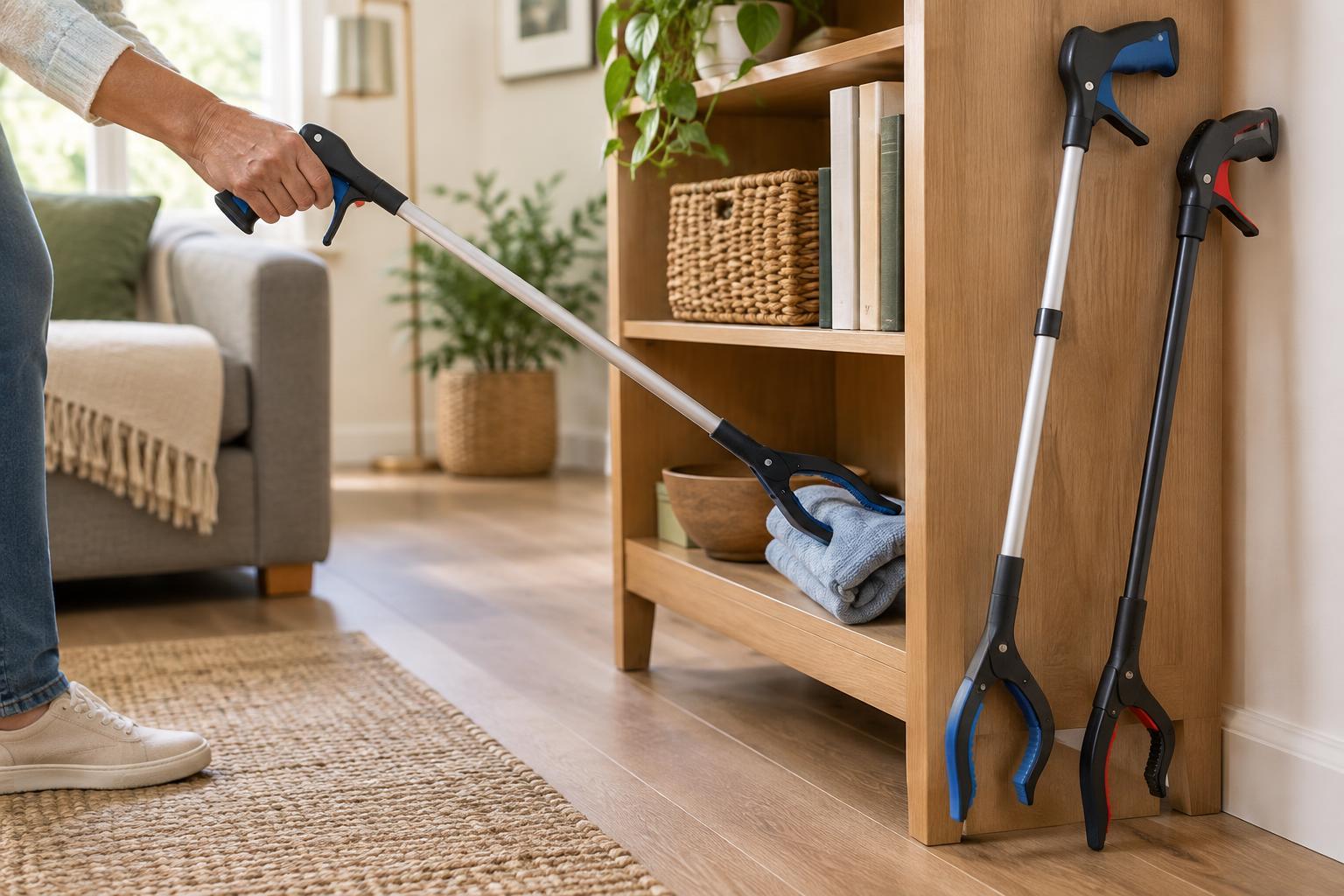
Reachers, sometimes called grabbers, extend your hand’s reach for everyday tasks such as retrieving a dropped sock or taking a light item from the back of a shelf. They vary more than they may appear to at first glance. A model that handles laundry well might struggle with a small key, while one that grips tiny objects might be awkward for larger packaging. Before comparing features, make a short list of the objects you expect to pick up and the places you will use the tool.
Notice whether the task takes place at floor level, across a table, or inside a cupboard. Consider the space around the object, too: a wide jaw may not fit between closely packed items. A reacher can reduce the need for some bends or stretches, but it is not a substitute for stable footing or a safer way to access something heavy, hot, sharp, or high overhead.
Choose a length you can control
A longer reacher can help with objects farther away, but extra length also makes the tip harder to position precisely. The tool’s weight is farther from your hand, and an object held at the end may feel less steady. A shorter model can be easier to guide in a small room or around furniture. The useful length is therefore the shortest one that comfortably reaches your usual targets, rather than the longest available.
Think about storage as well as use. Check whether the reacher will fit beside a chair, in a drawer, or wherever you are likely to keep it. Folding models may be convenient to store or carry, though their hinges and locks are worth checking for a secure feel. If you can try a model before choosing it, use it from the position where you normally expect to work, without leaning so far that you lose your balance.
Match the jaws to common objects
Jaw design affects what a reacher can hold. Broad jaws can make it easier to grasp soft goods such as towels or clothing. Narrower tips may fit around smaller objects or into crowded spaces. Some jaws rotate, allowing you to change their orientation without twisting your wrist as much. That feature is most useful if the jaw stays in the selected position while you use it.
Grip surfaces matter as much as jaw size. Rubber-like pads may help hold a smooth bottle or a piece of paper, while ridged tips may catch fabric more readily. Test the reacher with a few light objects of different shapes rather than judging it by a single successful pickup. Check whether the jaws open wide enough, close fully on thin items, and release an object where you intend to put it. An added magnet may help with some small metal items, but it will not work for every metal or replace a secure jaw grip.
Pay attention to the trigger and handle
Trigger comfort becomes important when you use a reacher repeatedly. Some handles ask you to squeeze with several fingers; others have a smaller trigger that concentrates effort in one place. Neither arrangement is automatically better. Look for a handle that sits comfortably in your hand and lets you open and close the jaws without a strained grip or awkward wrist angle.
Try several pickups in a row, not just one squeeze. Notice how much force it takes to hold an object while moving it and whether the trigger is easy to release gradually. A textured or shaped handle may feel more secure, but a pronounced shape will not suit every hand. If a reacher will be shared, choose a handle that each user can operate comfortably. Product weight and balance also matter: a light tool can still feel tiring if its tip is difficult to control.
Test it in an everyday setting
A useful comparison is a small, repeatable trial: pick up a sock from the floor, move a lightweight container across a table, and retrieve a thin item from a reachable shelf. These tasks show different demands on length, jaw alignment, and trigger pressure. Practice placing objects down gently; a tool that picks something up but releases it abruptly may be frustrating in daily use.
Follow the product’s stated load limits and check that joints, pads, and the trigger continue to work as expected. Avoid using a reacher to support your body, pull furniture, carry heavy objects, or handle items whose weight or position could make them fall toward you. The best choice is not the model with the most features. It is the one that reaches your common targets, grips your common objects, and feels manageable throughout the task.