Why small fasteners deserve attention
A shirt button or zipper tab takes up little space, but using one can involve several small actions: locating the fastener, holding the fabric steady, gripping a narrow part and moving it in the right direction. If any of those steps feels awkward, getting dressed may take longer than expected. The design of the garment matters too. A button hidden under a placket presents a different task from a large button on a loose cardigan.
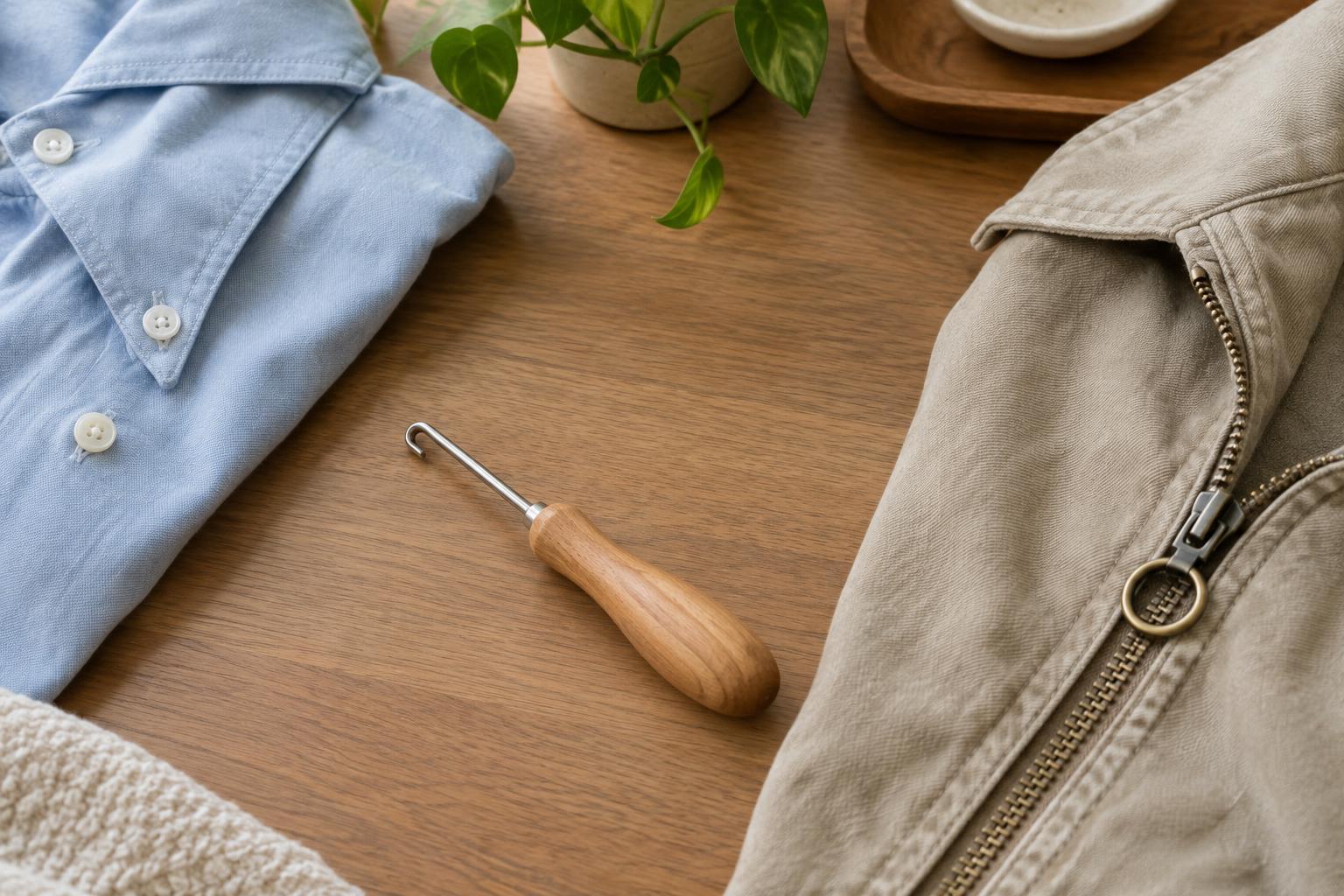
Button hooks and zipper pulls are everyday assistive products that change the way a person handles those small parts. They do not alter the fit of a garment or make every fastener easy. Their value is in offering another point of contact: a handle to hold, a loop to grasp or a longer tab to pull. Thinking about the particular garment, rather than shopping for a tool in the abstract, makes it easier to judge whether either option is useful.
What a button hook does
A button hook usually has a handle and a narrow wire loop. The loop passes through a buttonhole and catches the button so it can be drawn back through the hole. This replaces some of the close fingertip work of pinching the button and guiding it through. Handles vary in thickness, shape and surface texture. A larger handle may feel easier to hold, but it can also be bulky when working near a collar or cuff.
The match between hook and clothing is important. Small or tightly sewn buttonholes may leave little room for the wire loop, while delicate fabric can snag if the tool is pulled sharply. Buttons that are very flat or close to the fabric may be harder to catch. When comparing tools, consider the buttons on garments worn often, the direction they face when the clothing is on and whether the handle provides enough control without forcing the fabric.
What a zipper pull changes
A zipper pull adds something larger to grasp at the zipper slider. It might be a soft loop, a cord, a ring or a firm tab attached to the slider’s existing opening. Some products are removable; others stay on the garment. A longer pull can make a zipper easier to find and hold, particularly on a jacket or bag. It does not, however, fix a zipper that sticks, separates or is difficult to align at its base.
Before adding a pull, look at the slider. Its opening needs to accept the attachment without crowding the zipper or catching on nearby fabric. Length matters as well: a very long pull may be easy to reach but could swing, snag or get in the way when the garment is worn. On clothing that goes through a wash, check whether the attachment is likely to stay secure and whether its material is suitable for the garment’s usual care routine.
Try the tool in the setting where it will be used
A tool that works well on a garment laid flat may feel different when the garment is being worn. Trying it with familiar clothing can reveal practical details: where the handle needs to point, whether one hand must steady the fabric and whether the tool is easy to set down or store afterward. Good lighting and a contrasting background can also make a small hook or slider easier to see during a first attempt.
It helps to start with a fastener that moves freely and fabric that can tolerate a little handling. If the tool catches, stop rather than tugging harder; the hook, attachment or garment may not be a good match. Notice the whole task, not just whether the fastener closes. A product may work but still be inconvenient if it is difficult to find in a drawer, attach to the garment or use without twisting into an uncomfortable position.
Keep clothing choice part of the decision
Small tools are only one approach to a fastener problem. Clothing with larger buttons, roomier buttonholes or more substantial zipper tabs may require less fiddling in the first place. A pull added to a favorite coat might be worthwhile, while changing to a different style of shirt might be simpler than using a button hook every morning. Personal preference matters: some people want a discreet attachment, while others prefer one that is easy to spot.
Check a tool occasionally for rough edges, loose connections or signs that it is wearing the fabric. Store a removable hook where it is likely to be needed, such as near everyday clothes rather than in an unrelated drawer. The best choice is not necessarily the most specialized product. It is the one that fits the fasteners, feels manageable in regular use and lets the wearer get dressed in the way they prefer.