Start with the tasks, not the containers
Before buying bins or rearranging shelves, notice which supplies people reach for during an ordinary week. These might include tissues, gloves, wipes, clean towels, disposable bags or items used to prepare for appointments. Write down the common tasks and the items each one requires. This helps you organize around how the space is used, rather than around package size or an attractive storage set.
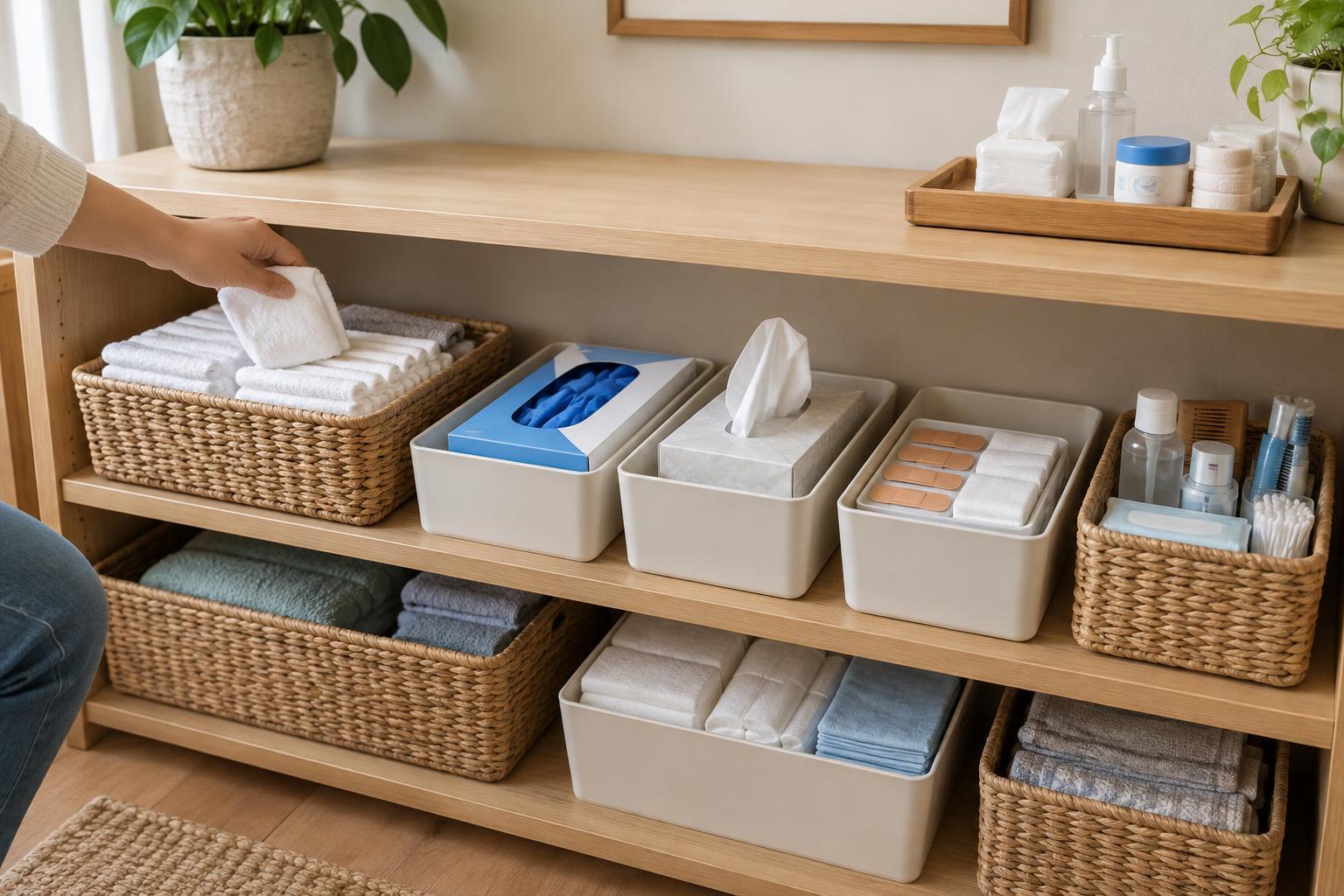
Make a small group for each task, such as getting ready to leave, cleaning up or changing linens. Keep frequently used items close to the place where they are needed, provided that spot is suitable for safe storage. Less-used extras can go in a separate backup area. If several people share the supplies, ask them which items are difficult to find; their answers may reveal gaps that are easy to miss.
Give every item a clear home
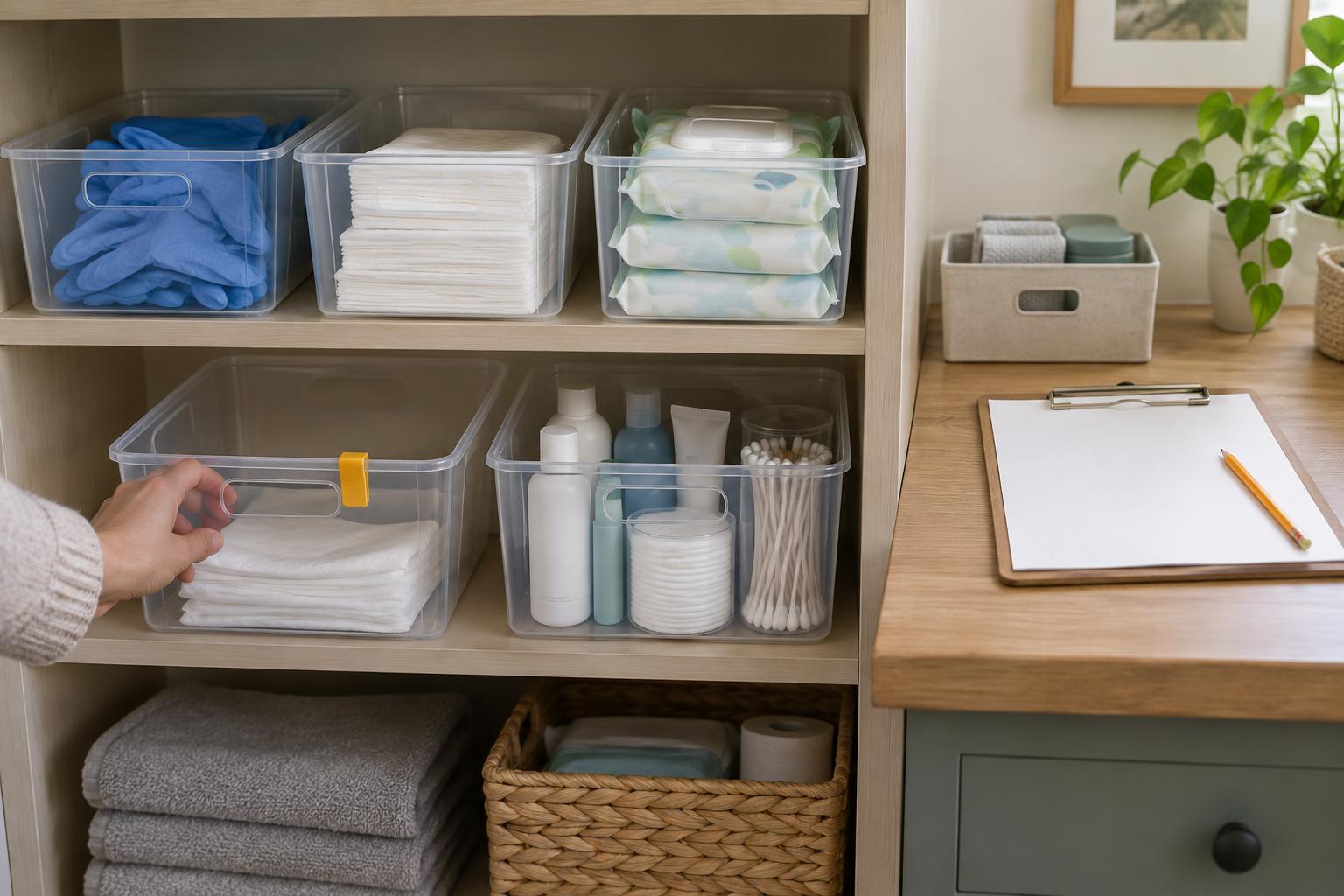
Choose storage spots that are easy to see and reach without moving a stack of other things. A shallow bin or divided drawer often makes small items more visible than a deep box. Put heavier packages at a comfortable lifting height, and avoid placing everyday supplies on high shelves or low surfaces that are awkward for the people using them. Leave enough room to take out one item without pulling out everything around it.
Use plain-language labels that describe contents or tasks: “clean towels” is more useful than a vague label such as “care.” Large, readable text can help in a shared household, and a label on the front of a bin remains visible when bins are stacked. Keep products in their original packaging when the package carries important instructions, identification or storage information. Check those directions before moving anything to a new location.
Separate supplies that should not be mixed
Convenient storage should not blur the difference between clean, used and cleaning items. Give clean supplies a protected place away from waste containers and products that could spill. Keep cleaning products in their original containers and store them according to their labels. If children or other household members might access an area, consider whether the storage location and any closures are appropriate for that household.
A small “in use” area can prevent half-finished packages from getting lost among unopened stock. Reserve another spot for backups, and avoid spreading the same extras across several cupboards unless there is a clear reason. If an item has a date or specific storage conditions on its packaging, make those details easy to check. The goal is not a perfect-looking shelf; it is a layout that helps people select the right item without guessing.
Build a restocking routine that takes little effort
A restocking system works best when it is simple enough to maintain. For each regularly used item, decide what “running low” looks like: perhaps opening the last backup package or reaching a marked level in a supply bin. Place a shopping list, notebook or shared digital list near the storage area so a person can record the need immediately. A reusable list of standard supplies can also make it easier to check what is missing.
Review the backup area at a predictable time, such as before a regular shopping trip. Move older usable stock forward when adding new packages, while still following any dates and storage directions on the packaging. If supplies often run out or accumulate unused, adjust the amount you keep rather than adding more containers. Your list should reflect actual use and available space, not an idealized inventory.
Make the system easy for someone else to use
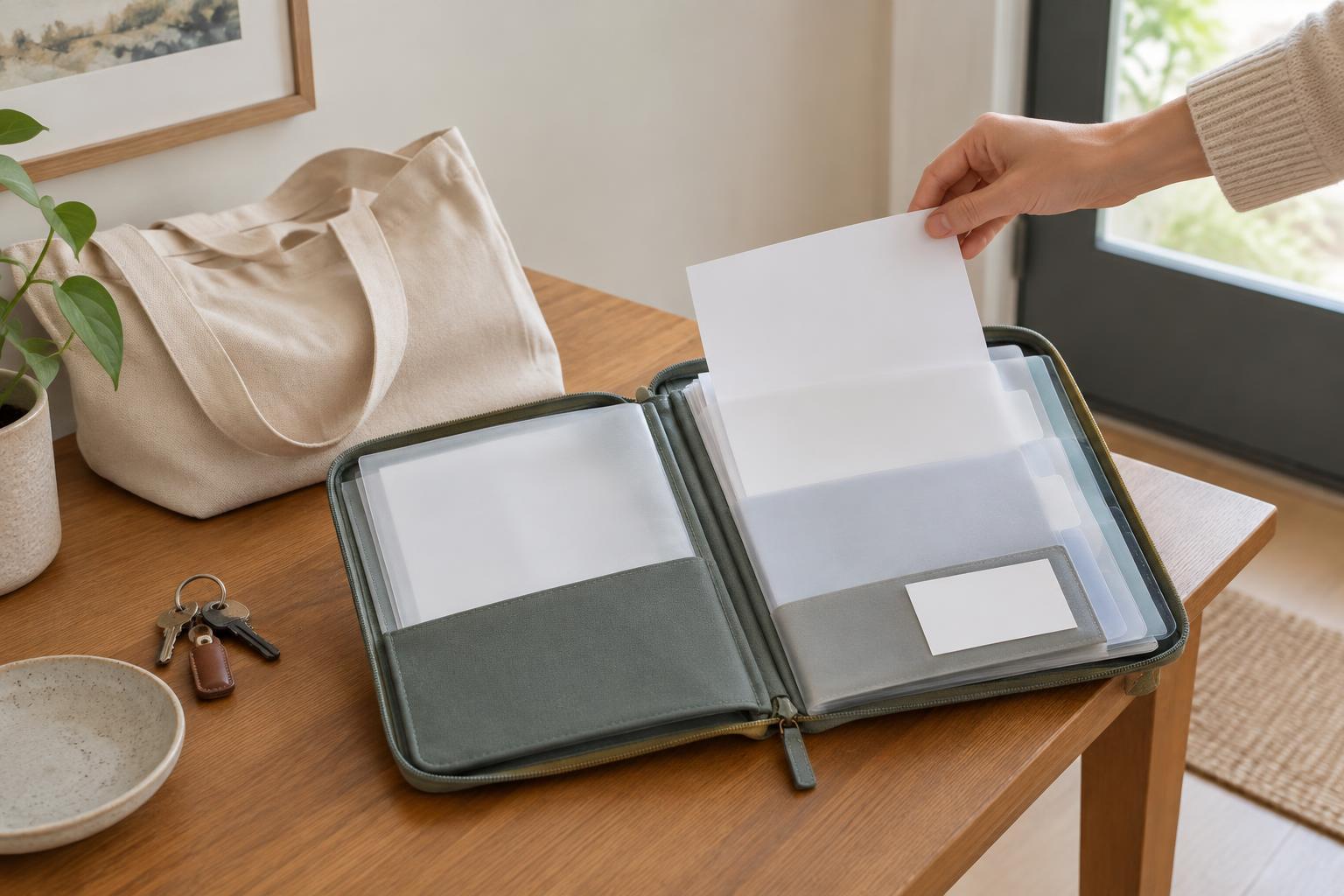
An organization system is most helpful when another household member or support person can understand it without a tour. Keep categories consistent, return items to their labeled homes and avoid private shorthand on labels. A brief note identifying where backups live can help someone who is covering a routine for the first time. If supplies are prepared for outings, keep a separate small bag or checklist and check it after each use.
Revisit the layout when routines, users or spaces change. An item that was once easy to reach may become inconvenient, and a category may need splitting when it grows crowded. Ask the people who use the supplies what slows them down, then change one part of the system at a time. Easy finding and reliable restocking come from a layout people can keep using, not from organizing everything once.