Start with the movement, not the fixture
A handrail and a grab bar are both designed to offer a reliable place to hold. Their roles, however, are not quite the same. A handrail usually supports someone as they move along a route, such as a stairway, ramp or corridor. A grab bar is generally placed where someone may need support during a specific action, such as stepping over a threshold, turning or getting up from a seat.
The distinction matters because a person’s hands may be doing different work in each situation. On stairs, a continuous rail can help someone maintain contact while moving from one step to the next. Beside a toilet or shower, support may be needed while shifting position or pausing in place. Choosing a fixture because it looks sturdy is less useful than asking what movement it is meant to support.
How handrails support a route
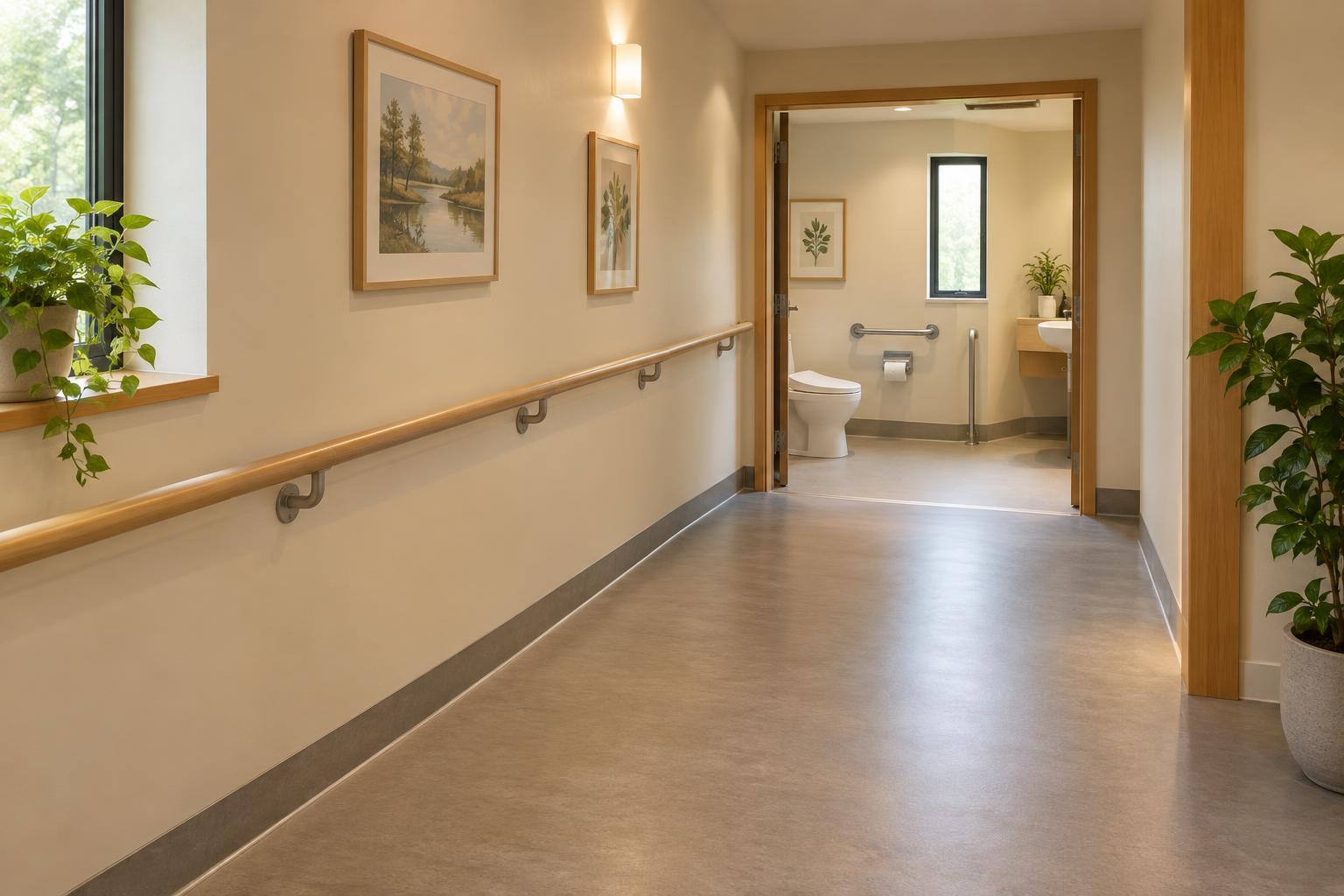
A useful handrail follows the path of travel and is easy to find before a person needs it. Continuity is important: an interruption at an awkward point may force someone to release their grip while still navigating a change in level. The rail should also be comfortable to grasp, with enough clear space around it for a hand to move without scraping a wall or catching on nearby objects.
Consider the route as a whole. Where does someone approach the stairs? Is there a door that must be opened while holding the rail? Does the rail end where a person has reached stable, level ground? Lighting, floor surfaces and visual contrast also affect how readily someone can locate and use a handrail. A rail is one part of a navigable route, not a substitute for addressing other obstacles along it.
How grab bars support a task
Grab bars are commonly associated with bathrooms, but the underlying idea applies wherever a predictable action calls for a secure handhold. Their usefulness depends heavily on position. A bar that is out of reach, blocked by a door or placed on the wrong side of a movement may offer little help, even if it is firmly attached.
Think through the task from beginning to end. Someone approaching a shower may need a handhold at the entrance and another within reach once inside. Someone rising from a seat may need support in a different position than someone who mainly uses a bar to steady themselves while turning. People vary in height, reach and preferred grip, so a layout that works well for one person may not work for another.
A towel rail, shelf edge or door handle should not be treated as a grab bar merely because it is convenient to hold. These items may not be designed or mounted for the forces involved when someone leans or pulls on them.
Placement and installation are part of the design
Neither type of support works well in isolation from the wall, floor and surrounding fixtures. A secure installation depends on suitable mounting and an understanding of what is behind the finished surface. Decorative appearance alone cannot show whether a rail or bar is appropriate for its intended use. For new work or changes to an existing space, a qualified installer can assess the structure and the product’s installation requirements.
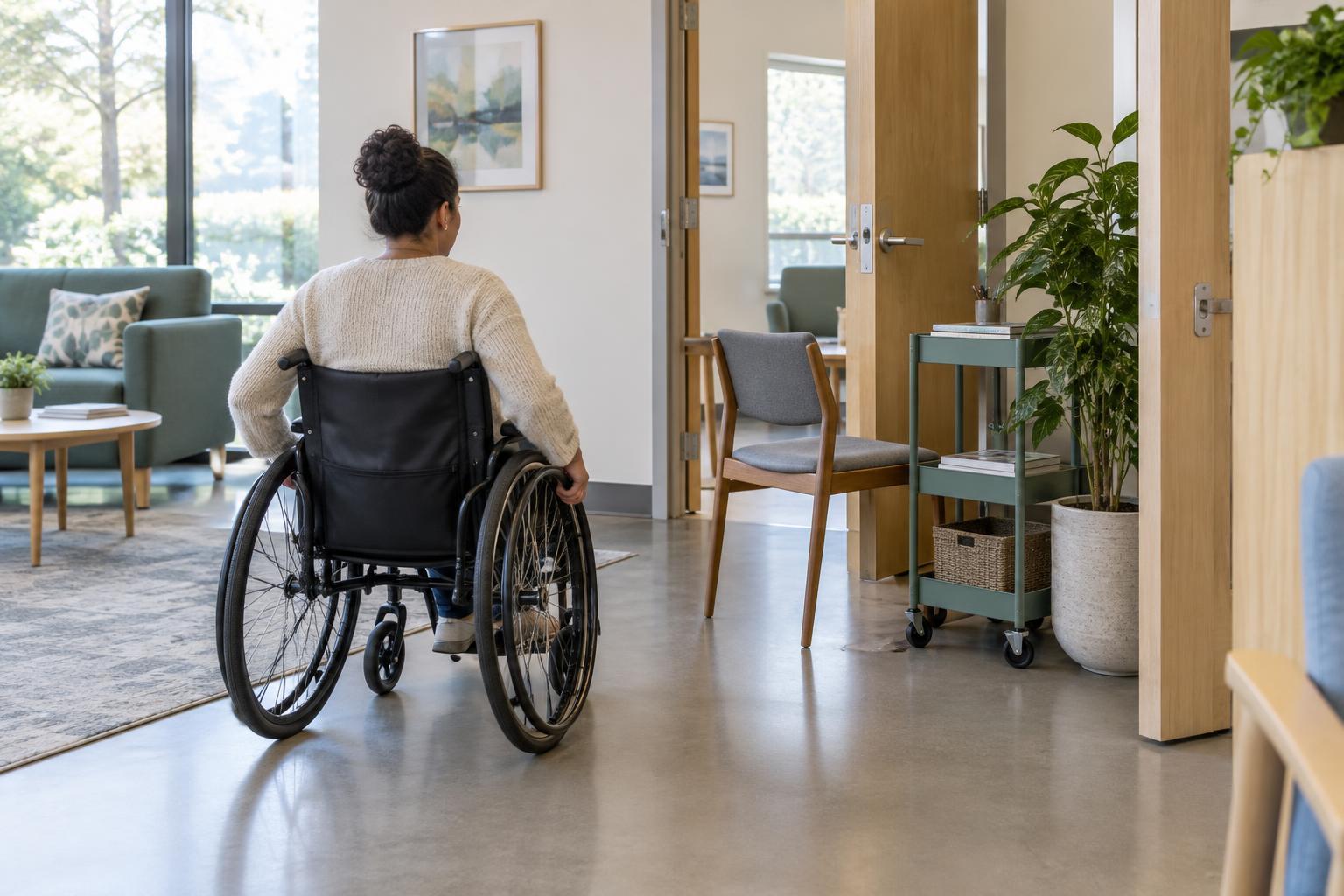
Clearance also deserves attention. Furniture, storage, dispensers and swing doors can make an otherwise well-placed handhold difficult to reach. In shared spaces, the arrangement should account for different approaches without creating a new obstruction. Applicable accessibility and building requirements can vary by location and setting, so check the requirements for the particular project rather than relying on a single rule of thumb.
Review the experience over time
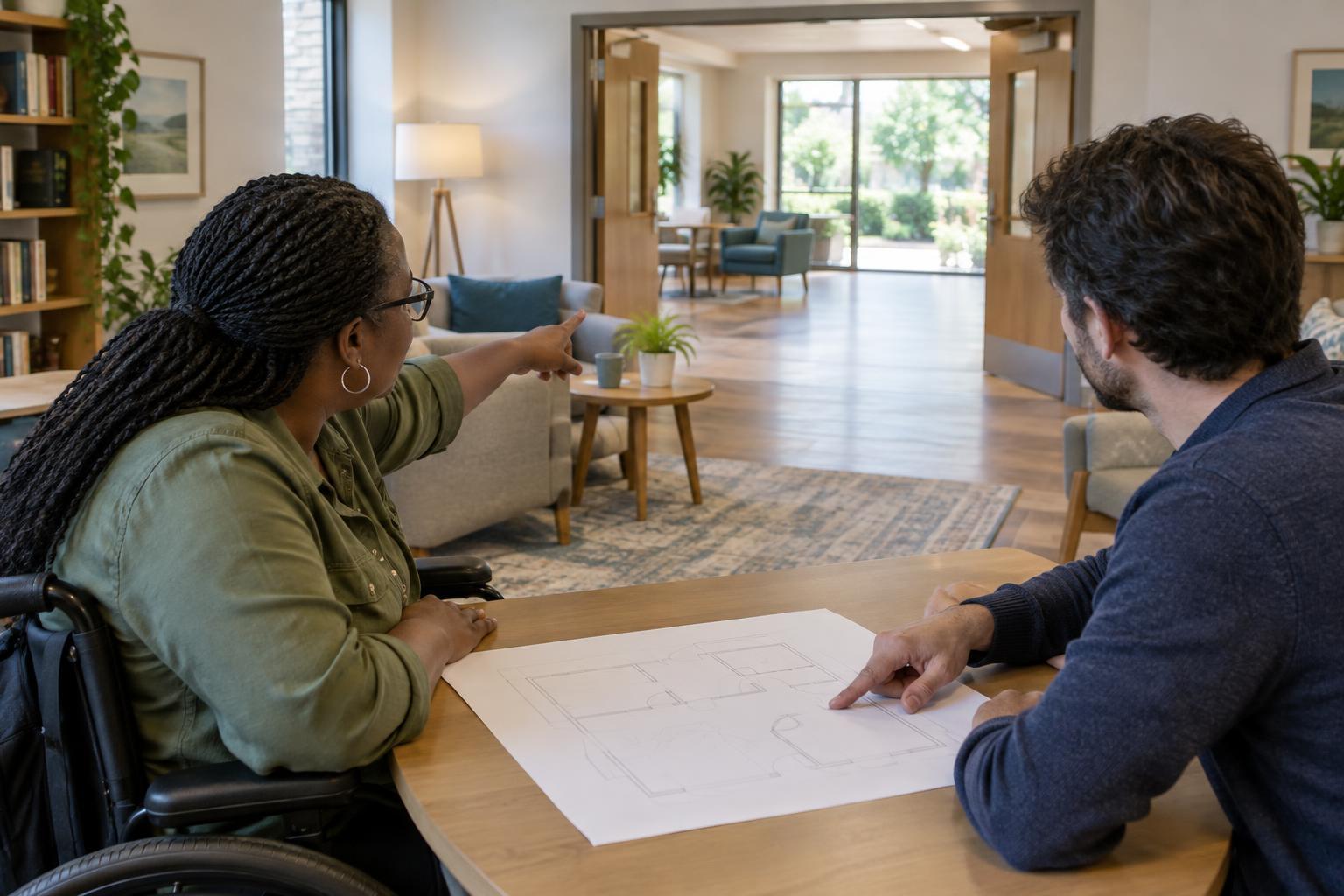
A practical review can begin by walking through the space and naming each transition: entering, changing direction, stepping up, sitting, standing and leaving. Notice where a person might naturally reach for support and whether that place offers a purpose-built, unobstructed handhold. If the space is intended for a particular user, their preferences and routines are valuable to the planning process.
Once installed, rails and bars should remain easy to see, reach and grasp. Loose fixings, damaged surfaces or newly placed objects can change how usable they are. Periodic checks help preserve the original design intent. The aim is not to add as many bars as possible; it is to provide dependable support in the places where movement calls for it.