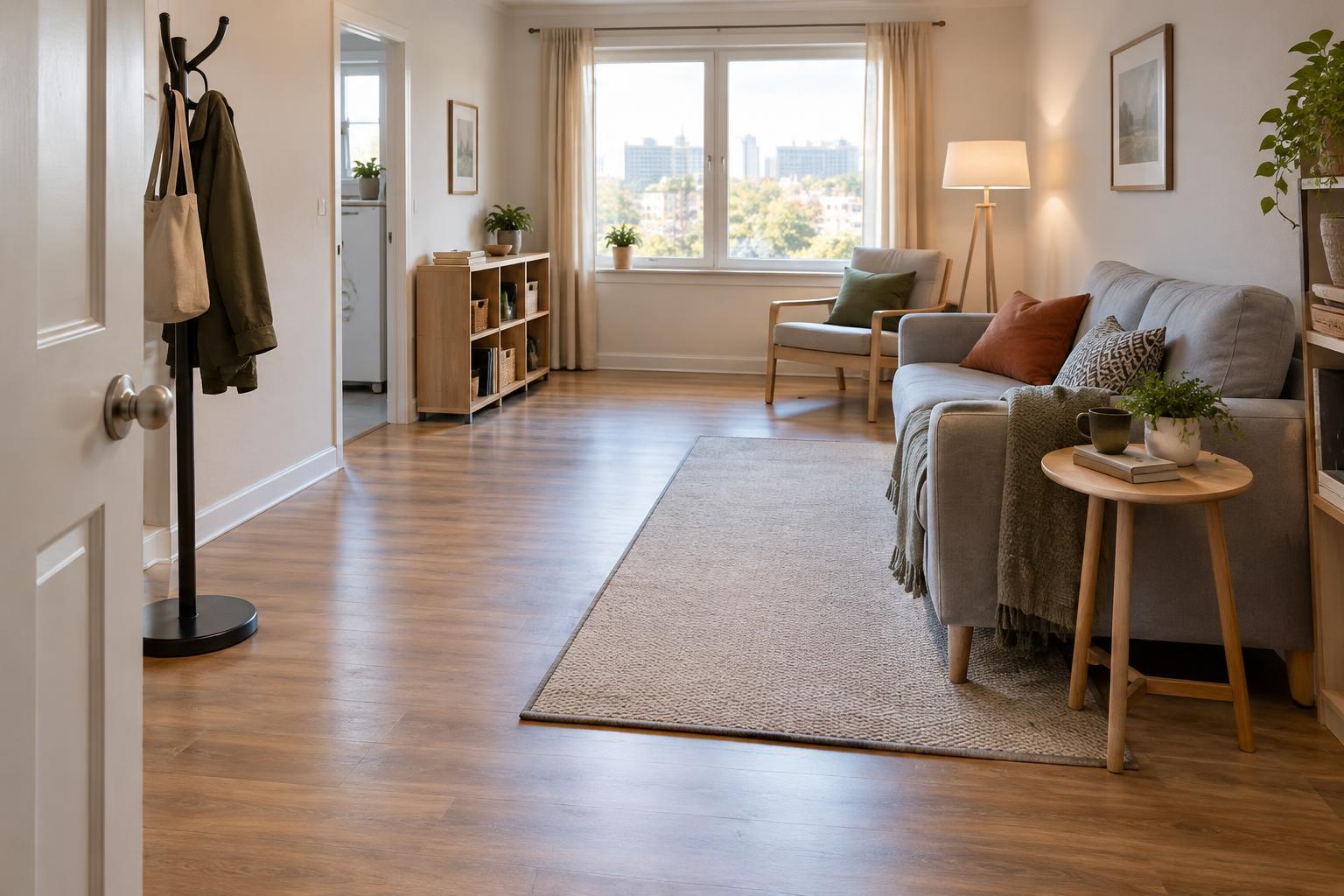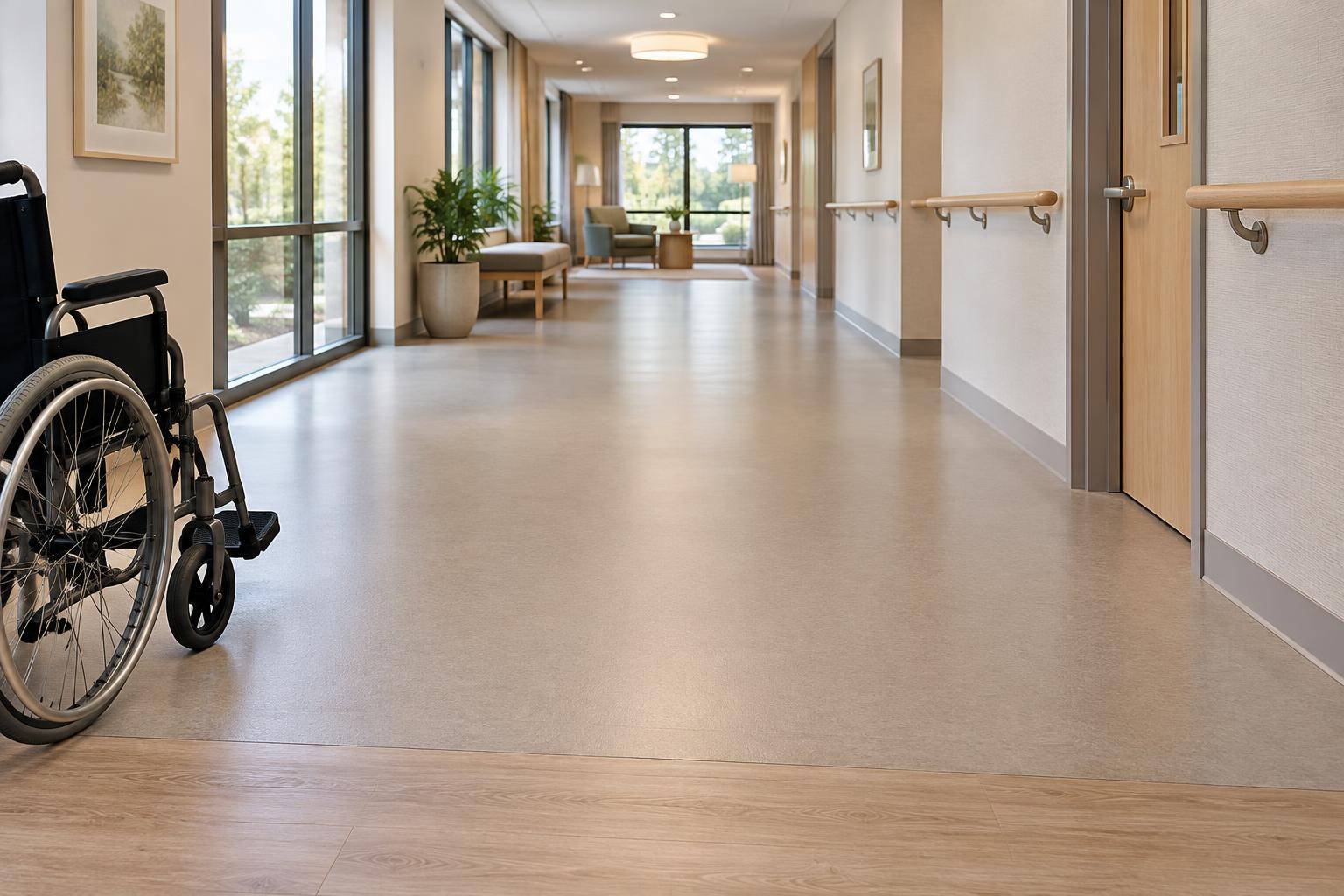
Start with the whole route
A flooring choice affects more than the room where it is installed. People move from entrances to reception desks, bathrooms, seating areas, and exits, often crossing several materials along the way. A smooth route with predictable footing can be easier to navigate than a collection of individually attractive floors joined by awkward edges. Before choosing a finish, walk the routes people actually use and note doorways, corners, places where water may be tracked in, and areas where someone might turn or pause.
Consider different ways of moving through the space. A person using a cane may notice a raised edge that a person walking without one misses. A small wheel may catch on a gap, while a soft surface can make rolling equipment harder to move. These observations do not point to one universal material. They help identify which details deserve attention before a floor is selected.
Balance traction with ease of movement
Traction matters, particularly near entrances, sinks, and other places that may become damp. Yet a surface that feels grippy underfoot can also resist wheels or make it difficult to slide a chair into position. Very rough textures may be tiring to cross and harder to clean. The goal is a finish that provides dependable footing under expected conditions without creating unnecessary drag.
Think about the floor in both its dry and routinely wet states. An entrance that performs well on a clear day may need a plan for rainwater and debris. A securely fitted entry system can help capture moisture, but loose or curled mats introduce their own obstacles. If a mat is needed, check how its edges meet the surrounding floor and whether it stays in place when people and equipment pass over it.
Appearance also influences how a surface is used. Strong glare can make it harder to see an edge or a patch of water. Busy patterns may obscure changes in level, while a dramatic pattern can sometimes look like a step or opening. Consistent, readable flooring and lighting make it easier to understand where the walking surface continues.
Give transitions as much attention as the main floor
Many movement problems arise where materials meet: at a doorway, beside a mat, or between a corridor and a room. Look for abrupt height changes, exposed edges, gaps, and strips that can loosen over time. Where a change in level cannot be avoided, a stable, gradual transition is generally easier to cross than a sharp lip. Its shape should work for both foot traffic and the wheels likely to use the space.
Transitions should also be easy to identify. A visible boundary can help people notice where one surface ends, but contrast should clarify the route rather than make a level floor look like a drop. View a proposed detail from both directions and under the lighting used during ordinary visits. Door clearances matter too: adding a thick floor or mat may change how a door swings or reduce the space beneath it.
For an existing space, a small change can sometimes make a meaningful difference. Securing a loose edge, replacing a worn entrance mat, or reducing clutter at a doorway may be more useful than replacing an entire floor. Larger alterations may require a closer review of the building and applicable accessibility requirements.
Choose a floor the space can keep in good condition
A promising surface is only useful if it can be maintained. Dirt, polish buildup, spills, and worn finishes can change how a floor feels underfoot. Seams that collect debris may become harder to clean, and damaged tiles or planks can create new edges. Ask how the material will be cleaned, how quickly spills can be addressed, and whether individual damaged sections can be repaired without leaving uneven joints.
Match the maintenance plan to the people and time available. A finish that depends on frequent specialist care may be a poor fit for a small space with a simple cleaning routine. Follow the flooring manufacturer’s guidance for cleaning products, since an unsuitable product may leave residue or affect the finish. Include periodic checks of mats, transitions, and high-wear areas rather than treating installation as the end of the decision.
When comparing samples, test them as a route rather than judging color and texture alone. Place them beside adjacent materials, look at them under the space’s lighting, and consider how they will behave near entrances and turning points. The most useful flooring choice is one that remains understandable, comfortable to cross, and manageable to maintain throughout everyday use.