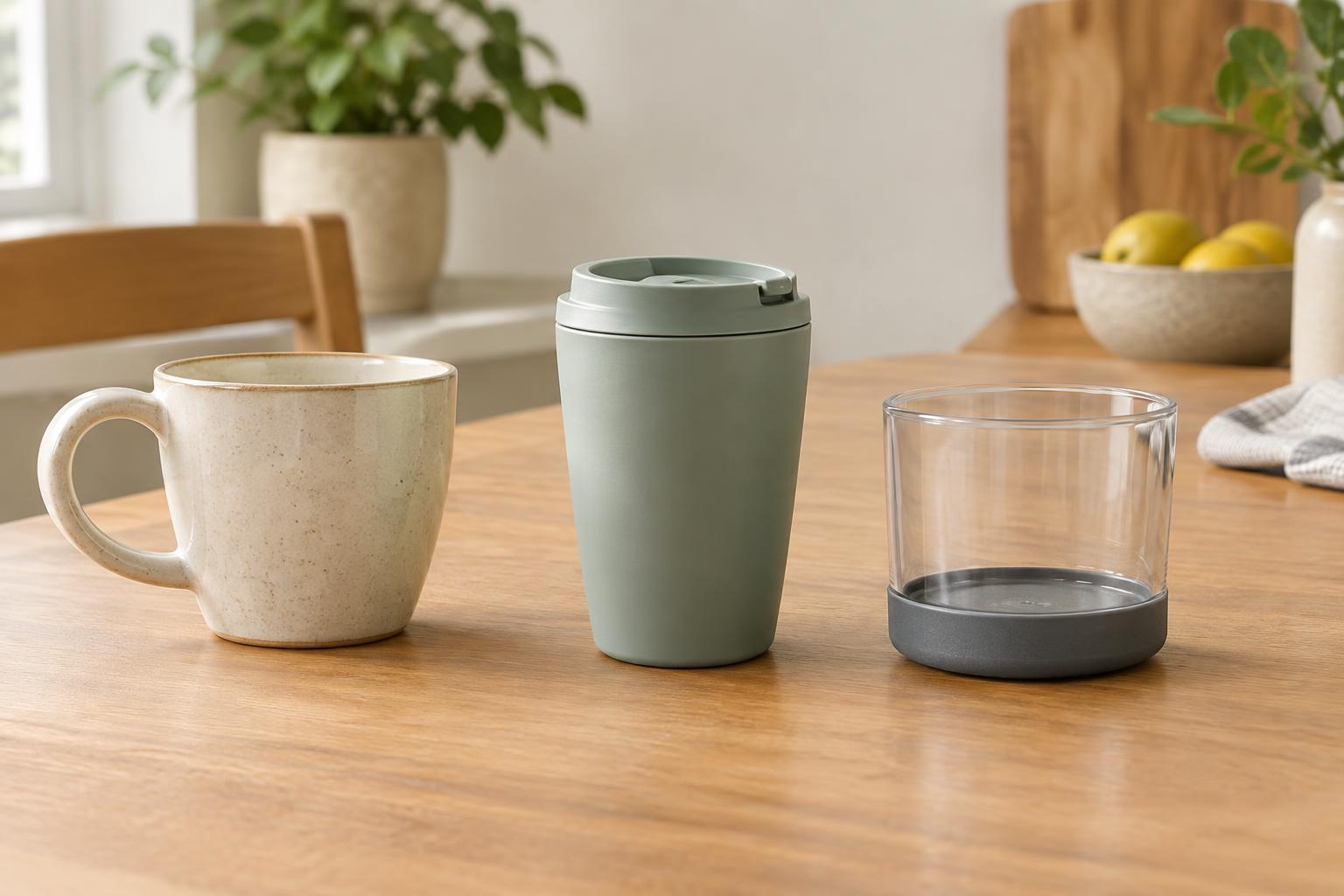
Start with the way the cup will be used
An easy-grip cup is not one particular shape. It is a cup whose details make holding, lifting, and setting it down feel manageable for the person using it. A cup that works well at a dining table may be awkward on a bedside tray or difficult to carry between rooms. Before comparing features, think about where the cup will sit, whether it will hold hot or cold drinks, and how it will be washed.
Try to assess the whole drinking routine rather than the grip alone. Can the cup be filled without becoming too heavy? Is its rim comfortable to drink from? Can the user see how much is inside? Does it fit in the usual storage space? A lightweight cup is often easier to lift, but it should still feel steady when placed on a surface. An attractive feature is only useful if it works alongside the rest of the routine.
Choose a handle that leaves room to hold on
Large loop handles offer space for several fingers and can be easier to approach than narrow handles. Two handles let someone hold the cup from both sides and may help when lifting it close to the body. A handle should provide enough clearance for fingers without forcing them into a cramped position. Check where the handle joins the cup, too: a smooth, sturdy connection is more comfortable and easier to clean than a tight crevice.
Handle texture matters, but more texture is not always better. A slightly grippy surface may help prevent slipping, while deep ridges can feel uncomfortable or trap residue. Some cups have a contoured body instead of a handle. These can suit someone who prefers to wrap a hand around the cup, provided the filled cup is not too wide or heavy to hold comfortably.
When possible, test a cup with water in it. An empty cup can feel balanced while a full one pulls the wrist in an awkward direction. Notice whether the handle stays comfortable during both lifting and drinking, not just while the cup rests on the table.
Match the lid to the drink and the routine
Lids serve different purposes. A simple press-on lid may reduce splashes during a short move across a room, while a tighter-fitting lid may be more suitable for carrying. Neither should be assumed leakproof unless the product is designed and tested for that use. A drinking opening can help control where liquid leaves the cup, but it should be easy to locate, drink from, and clean.
Check how much force is needed to fit and remove the lid. A lid that is difficult to open can make refilling and washing frustrating. Small sliders, seals, and narrow spouts can also add cleaning steps. If the cup will hold hot drinks, check whether the lid lets steam escape and whether the outside of the cup stays comfortable to touch. Follow the product’s own guidance on suitable temperatures and washing methods.
A lid should not make it harder to tell how full the cup is. For someone who values a clear view of their drink, a transparent cup or a lid that lifts off easily may be more useful than a complex closure.
Look closely at the base
A wider base generally gives a cup a larger contact area on a flat surface. Some cups add a non-slip ring to limit sliding on a smooth table. Others use extra weight near the bottom, which may help the cup feel planted but can make it harder to lift. The best balance depends on both the surface and the person using the cup.
Test the base on the surfaces that matter: a table, tray, or desk may each behave differently. Check whether the cup rocks, catches on an uneven surface, or needs a firm pull to lift. A suction base can resist accidental knocks, but it may be inconvenient when the user wants to pick up the cup independently. Stability should make the routine simpler, not introduce an unexpected tug or tip.
Make a short, practical comparison
If you are comparing cups, choose a few realistic options rather than searching for one product with every feature. Fill each to a normal level and try the same sequence: pick it up, take a sip, put it down, remove the lid, and wash it. Note which step feels easier or more difficult. A cup that performs well through the whole sequence is often more useful than one with an impressive feature that complicates daily use.
Finally, check the manufacturer’s care instructions and look for parts that can be replaced if they wear out. A cup that is easy to clean, comfortable to hold, and predictable when set down is a sound everyday choice. The most helpful design is the one that fits the person’s habits and surroundings without demanding extra effort at every drink.