Start where the journey starts
An entrance can be easy to use while the journey to it remains difficult. A person arriving by car may need to cross a driveway; someone arriving by bus may have to find a safe place to leave the sidewalk. Designing an accessible route means considering the whole trip from likely arrival points to the entrance, not just the ramp or doorway at the end.
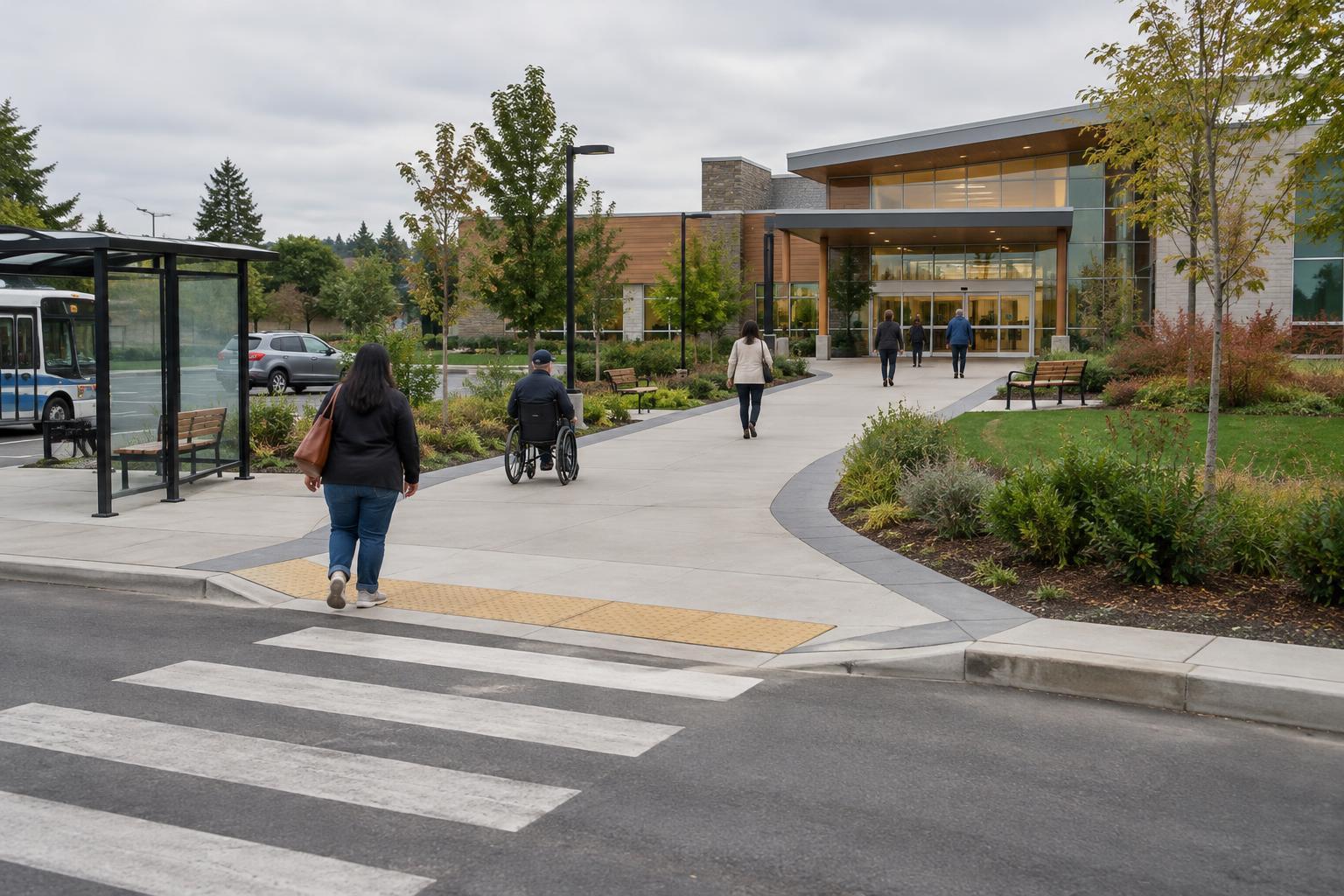
Map routes from accessible parking spaces, passenger drop-off points, nearby transit stops and public sidewalks. Note where each route meets vehicle traffic, changes level or requires a decision about which way to go. If a site has several entrances, identify which ones visitors can use and whether they are open during the hours people are expected to arrive. The most useful route is one people can actually find and follow.
Make the path continuous and predictable
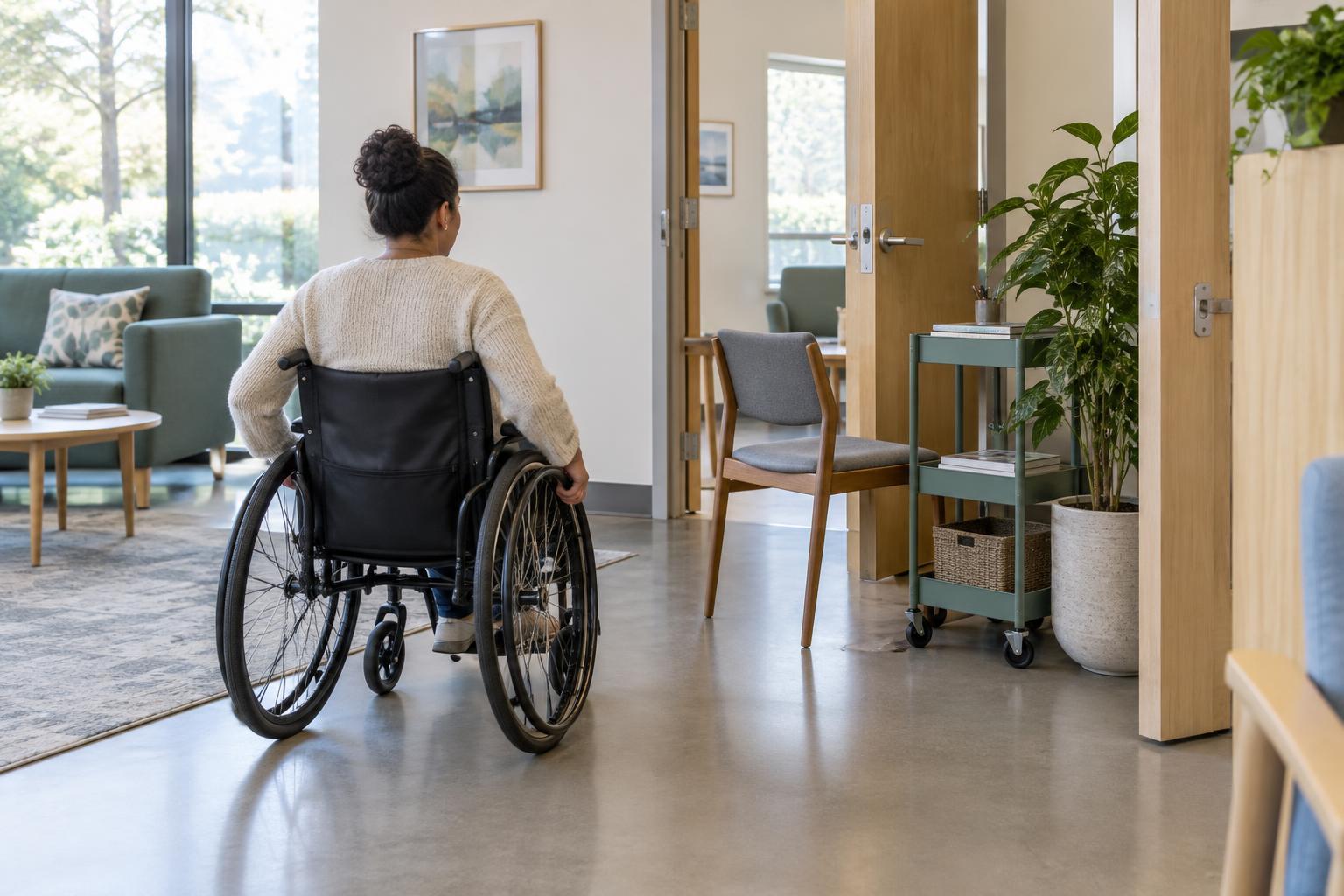
A usable route should have a firm, stable surface and enough clear space for people to travel without squeezing past bins, signs, planting or parked vehicles. Look for abrupt changes in level, broken paving, awkward drainage grates and temporary obstacles. A short gap in an otherwise accessible path can make the entire journey unusable.
Pay attention to slopes in more than one direction. A path may feel manageable going uphill but become uncomfortable when it also tilts sideways. Where level changes are unavoidable, plan an appropriate way around or across them rather than relying on an improvised shortcut. Local accessibility requirements can guide dimensions and technical details; the broader design goal is a connected route that remains practical in ordinary use.
Consider the length of the journey, too. A direct path can reduce effort, especially when someone is moving slowly, using a mobility aid or accompanying another person. Where a longer route cannot be avoided, a place to pause may help, provided seating and nearby features do not narrow the path.
Treat crossings as part of the route
Parking lots and drop-off areas often put pedestrians and vehicles in the same space. Make pedestrian crossings visible and locate them where drivers can reasonably expect people to cross. Avoid routing visitors behind reversing cars when a safer alternative is possible. At curb transitions, the path should connect smoothly to the crossing rather than end at a raised edge.
Transit arrivals need equal attention. The distance from a stop to the site may include intersections or a sidewalk the property owner does not control. Even when a project cannot change those areas, mapping them reveals gaps that affect visitors. Clear information about the available route can help people plan, while identified problems can be raised with the organizations responsible for those spaces.
Help people recognize where to go
Wayfinding should begin at each arrival point, not only beside the entrance. A visitor should be able to tell which path leads to the intended door and whether that door is usable. Signs work best when their wording is plain, their placement is consistent and they appear before a person has to choose between routes. Visual cues such as a distinct walkway or well-placed lighting can support signs without replacing them.
Avoid directing people to an accessible entrance that is hard to distinguish, routinely locked or far from the activity they came to reach. If an alternate entrance is necessary, explain where it is before visitors arrive and repeat the direction on site. Keep information up to date when construction, seasonal closures or changes in building access affect the route.
Check the route in real conditions
A route that works on a drawing may be blocked by delivery carts, overgrown plants or snow. Walk it from every arrival point at different times and in different weather when possible. Check whether water collects on the path, lighting leaves dark stretches, or doors and gates require an unexpected detour. Include the return journey: people must also be able to find their way back to parking or transit.
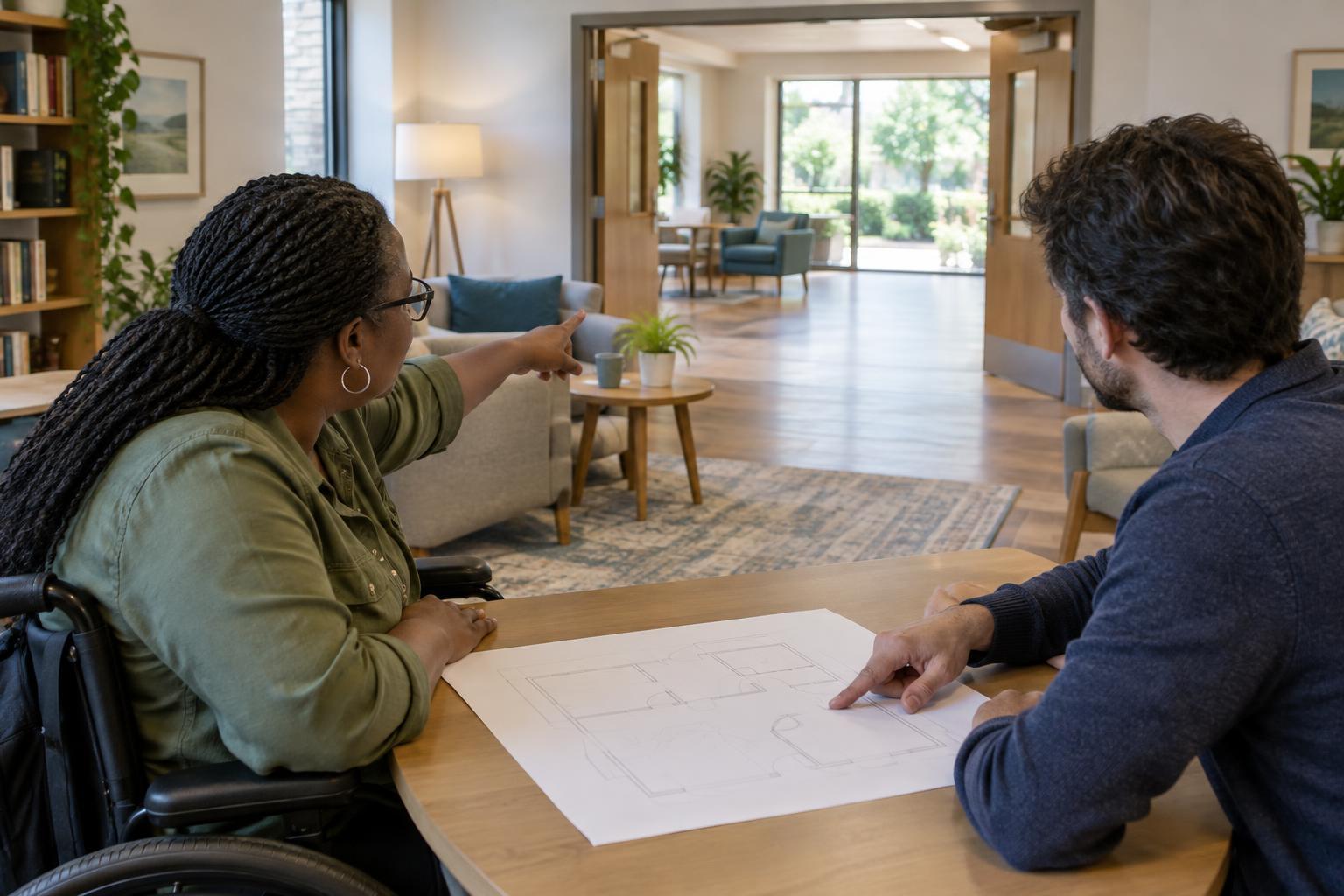
Invite people with different mobility and navigation needs to review the route, and treat their feedback as evidence for improvement rather than a final stamp of approval. A simple maintenance plan can assign responsibility for clearing obstructions, repairing surfaces and updating directions. Accessible route design is not a single feature; it is a continuous connection that needs to stay clear, understandable and usable over time.