Start with the product, not a universal cleaning rule
Reusable assistive products include items as different as reachers, shower seats, walking aids, non-slip mats and easy-grip utensils. They do not all tolerate the same cleaning methods. Before using a cleaner, check the product label or manufacturer’s instructions for approved materials, removable parts and drying requirements. Instructions matter especially for products that bear weight, contain electronics or have padded components.
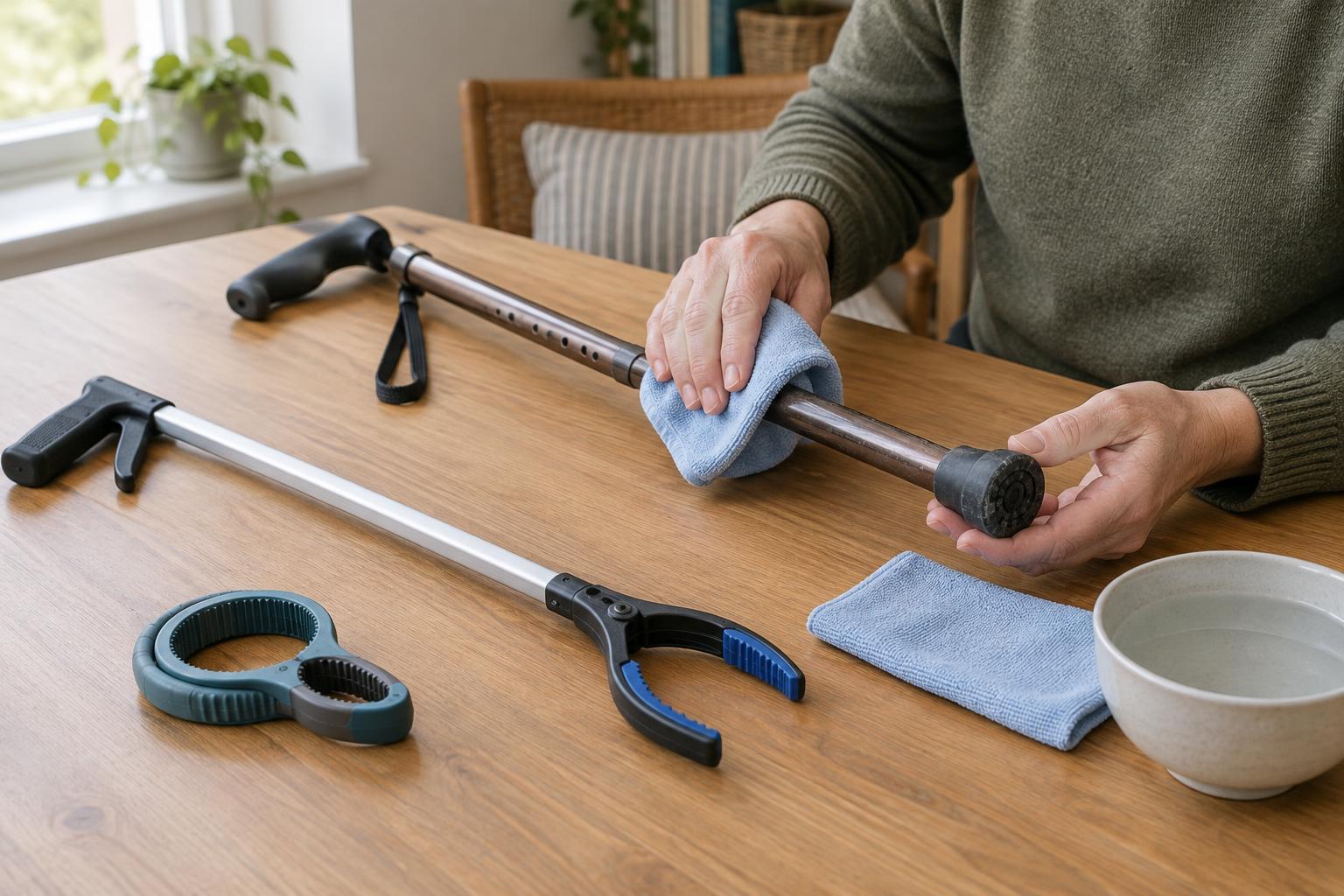
For an ordinary surface-cleaning routine, remove visible dust and residue with a soft cloth, following the product’s guidance on water and detergent. Pay attention to handles, buttons, joints and other frequently touched areas. Avoid soaking an item unless its instructions explicitly allow it: moisture trapped inside tubing, padding or a mechanism can be difficult to remove. Let washed parts dry thoroughly before putting them back together or storing the product.
Cleaning and disinfecting are different tasks. If an item is shared or needs a higher level of hygiene, check which disinfectants and contact times its manufacturer permits. A stronger chemical is not automatically a better choice; it may damage a coating, grip or fastening material.
Match the method to the material
Smooth plastic and coated metal are often straightforward to wipe, but seams, screw heads and the underside of a product can hold residue. Inspect these places while cleaning. Watch for a coating that is lifting or worn through, particularly where moisture regularly collects. Do not assume a metal component is rustproof simply because the rest of the product looks sound.
Rubber and silicone grips, feet and suction components need a closer look. Clean away residue that might interfere with contact, then check whether the material still feels secure and has its intended shape. Fabric straps and padded surfaces may retain moisture and odors; follow their care instructions rather than applying heat or chemicals that could weaken fibers or adhesives.
Products with batteries, motors, charging ports or sensors call for extra caution. Turn them off and disconnect them as directed before cleaning. Keep liquid out of openings, and use only the cleaning method specified for the device. If a cover is cracked or a seal appears damaged, do not treat a quick wipe as a fix.
Make inspection part of the routine
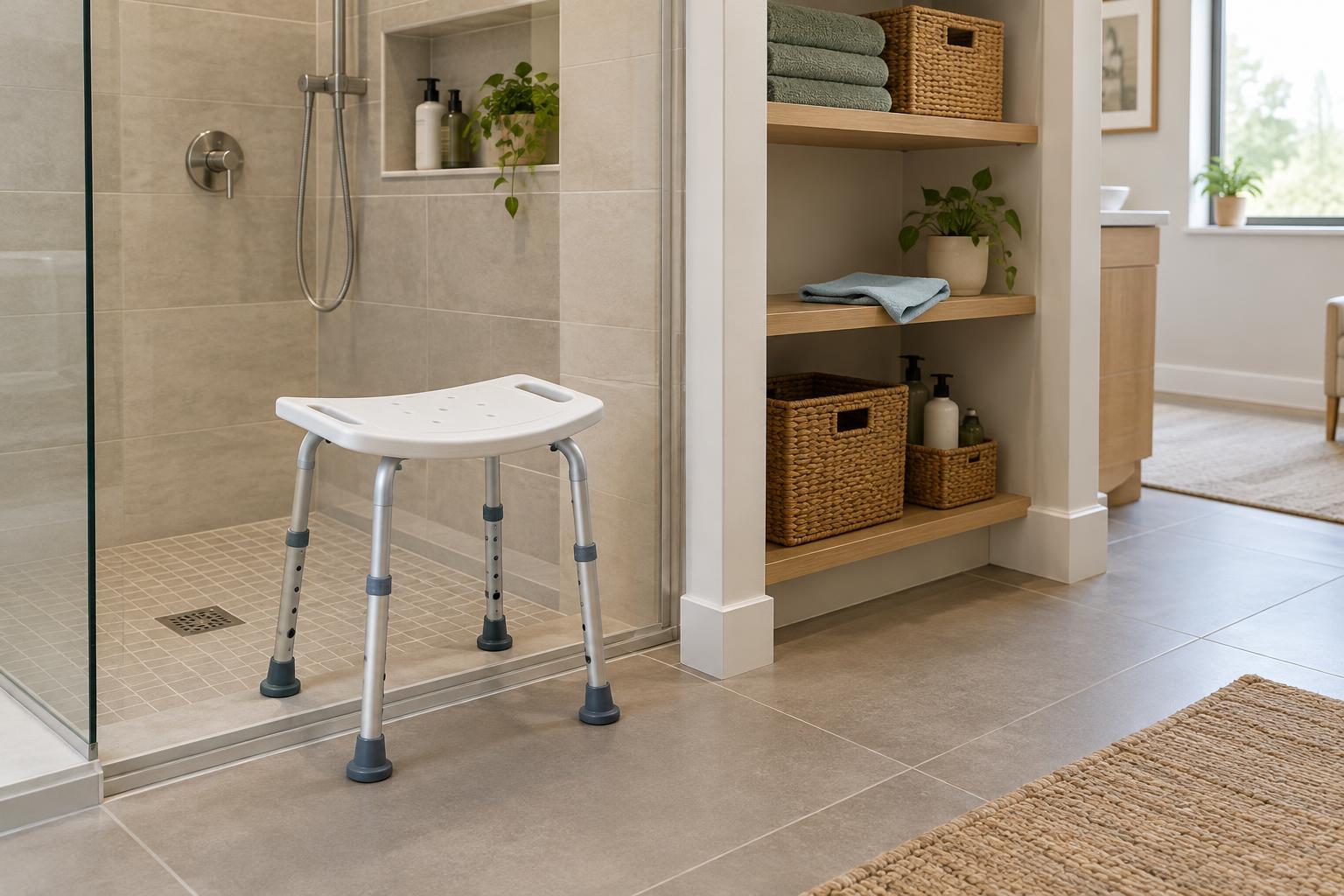
A brief visual and hands-on check is easier to remember when it happens after cleaning and before storage. Look along frames and handles for cracks, bends or sharp edges. Check that adjustable parts sit securely in their intended positions and that fasteners have not worked loose. On a reacher, for example, notice whether the trigger moves smoothly and the gripping end closes evenly; on a shower seat, check the seat surface, frame connections and feet.
Wear is not always dramatic. A foot may become smooth, a strap may fray at its attachment point, or a grip may rotate slightly on a handle. Changes in sound, movement or stability can also be clues. Compare the product with how it usually looks and feels, without trying to test a questionable item by putting weight on it.
Know when to replace a part or stop using the item
Replacement signs include cracks, exposed sharp edges, persistent looseness, badly worn contact surfaces and parts that no longer lock or adjust as intended. For an item that supports body weight or helps prevent slips, uncertainty about a structural part is reason to stop using it until its condition can be assessed. Do not rely on tape, glue or an improvised part to restore a safety-critical connection.
Some products have replaceable tips, feet, pads or straps. Use compatible parts identified by the manufacturer, and check that they are fitted according to its instructions. If a replacement part is unavailable, the product has repeated problems, or damage affects its frame or mechanism, replacing the whole item may be more appropriate than continuing to use it. A manufacturer, supplier or qualified repair service can help clarify options.
Store products so problems stay visible
Good storage supports both cleanliness and inspection. Put items away dry, with cords and straps arranged so they are not pinched or strained. Avoid leaving them where heat, prolonged dampness or heavy objects may change their shape or finish. Keep any product instructions and part details somewhere easy to find.
For products used often, a short check of surfaces, contact points and moving parts may be more useful than waiting for a major cleaning day. The goal is not to make every item look new. It is to notice when normal wear becomes a change in how the product works, and to address that change before relying on it again.