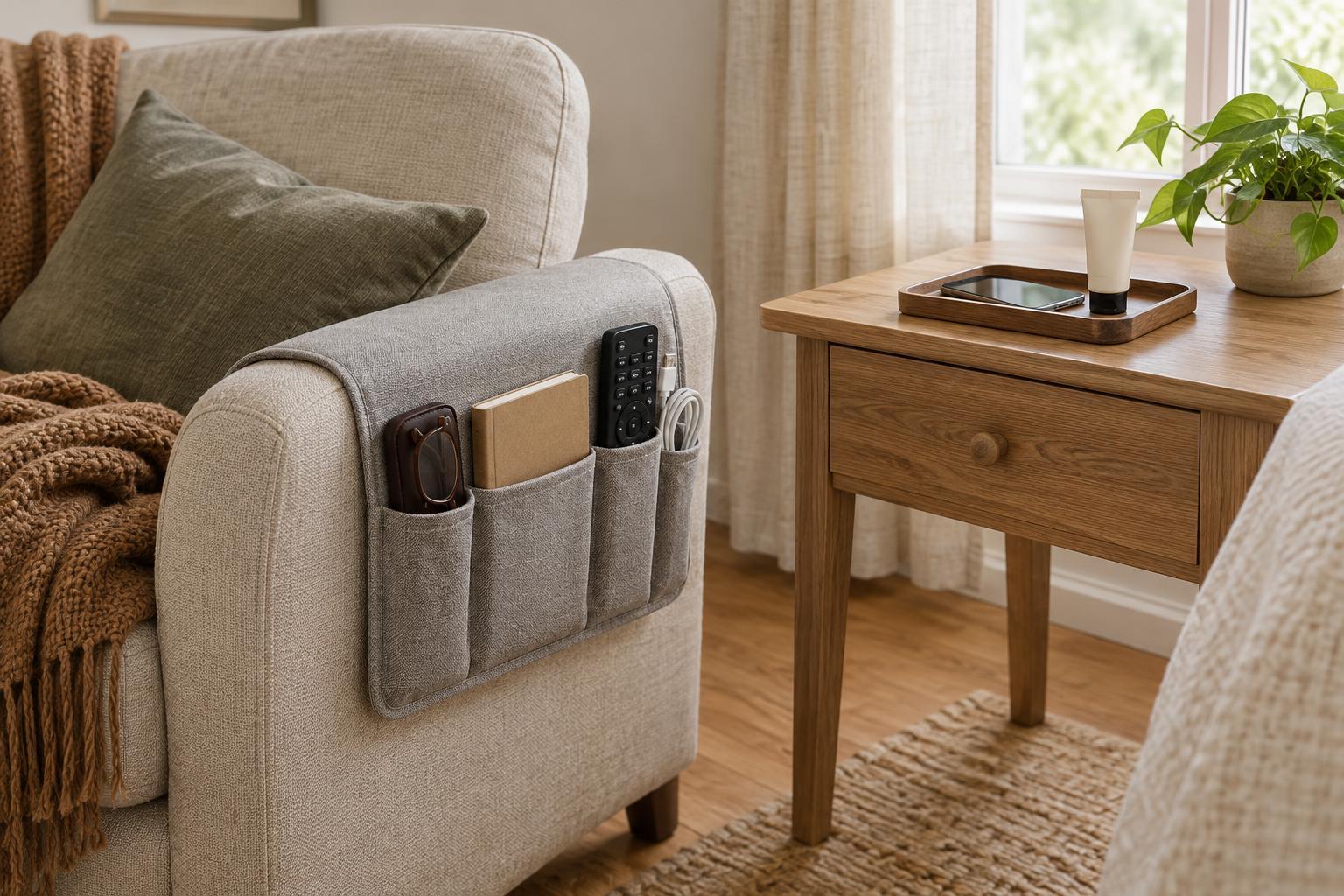
Start with the items, not the organizer
A useful organizer begins with a short list of things someone regularly wants close by: perhaps glasses, a phone, a remote, a book, tissues, or a pen. Note where each item is used and where it usually ends up. An organizer beside a favorite chair may need a different layout from one beside a bed, even when the same person uses both places.
Check reach from the usual seated or resting position before choosing a product. A pocket that looks convenient when standing may be awkward to use while seated. Consider which hand will retrieve each item, whether the opening is easy to see, and whether removing one object might knock another loose. Keep frequently used items in the easiest positions rather than filling every available compartment.
Compare pockets, caddies, and trays
Hanging pocket organizers can use space along a bed or chair without taking up much floor area. They work best for light items that fit fully inside their pockets. Look at how the organizer attaches: straps, ties, and panels tucked beneath a cushion behave differently. A chair with a moving back or reclining mechanism may need particular care so that fabric cannot catch in its moving parts.
A freestanding caddy can move between locations and may offer deeper compartments for books or bottles. Its base matters as much as its storage capacity. Check whether it sits flat on the intended surface and remains steady as items are removed. A tray provides an open surface for objects that are easier to pick up than to pull from a pocket, but raised edges can help keep small items from rolling away. Neither a caddy nor a tray should block a clear route around furniture.
Look closely at fit and daily use
Before buying, measure the space available beside or beneath the furniture and compare it with the organizer’s dimensions. Check how much room remains for getting in and out of a chair or bed. A soft organizer can sag when loaded, while a rigid one can protrude farther than expected. If it attaches to furniture, confirm that the attachment suits that particular arm, frame, or cushion without interfering with normal use.
Try a simple version of the arrangement first: place the intended items in a temporary box or on an existing side table. This can reveal which objects need separate compartments and which are better kept elsewhere. Think about visibility, too. Contrasting colors or clearly different pocket sizes may make items easier to locate, while a crowded set of similar pockets can make searching more frustrating.
Plan for cleaning, cords, and changing needs
Everyday organizers collect dust and occasional spills. Check whether the material can be wiped down or washed, and whether seams and narrow compartments are easy to clean. Keep liquids in containers suited to the setting rather than assuming a fabric pocket will contain a leak. Remove unused contents regularly; an overfilled organizer is harder to search and may be less stable.
If a phone or other device needs charging nearby, route its cord so it does not cross a walking path or get pinched by furniture. An organizer is a place to store the device, not a substitute for a suitable outlet or safe cord placement. Revisit the setup when furniture moves or routines change. The best arrangement is one that keeps needed items within comfortable reach while leaving the surrounding space clear.