Start with the task, not the grip
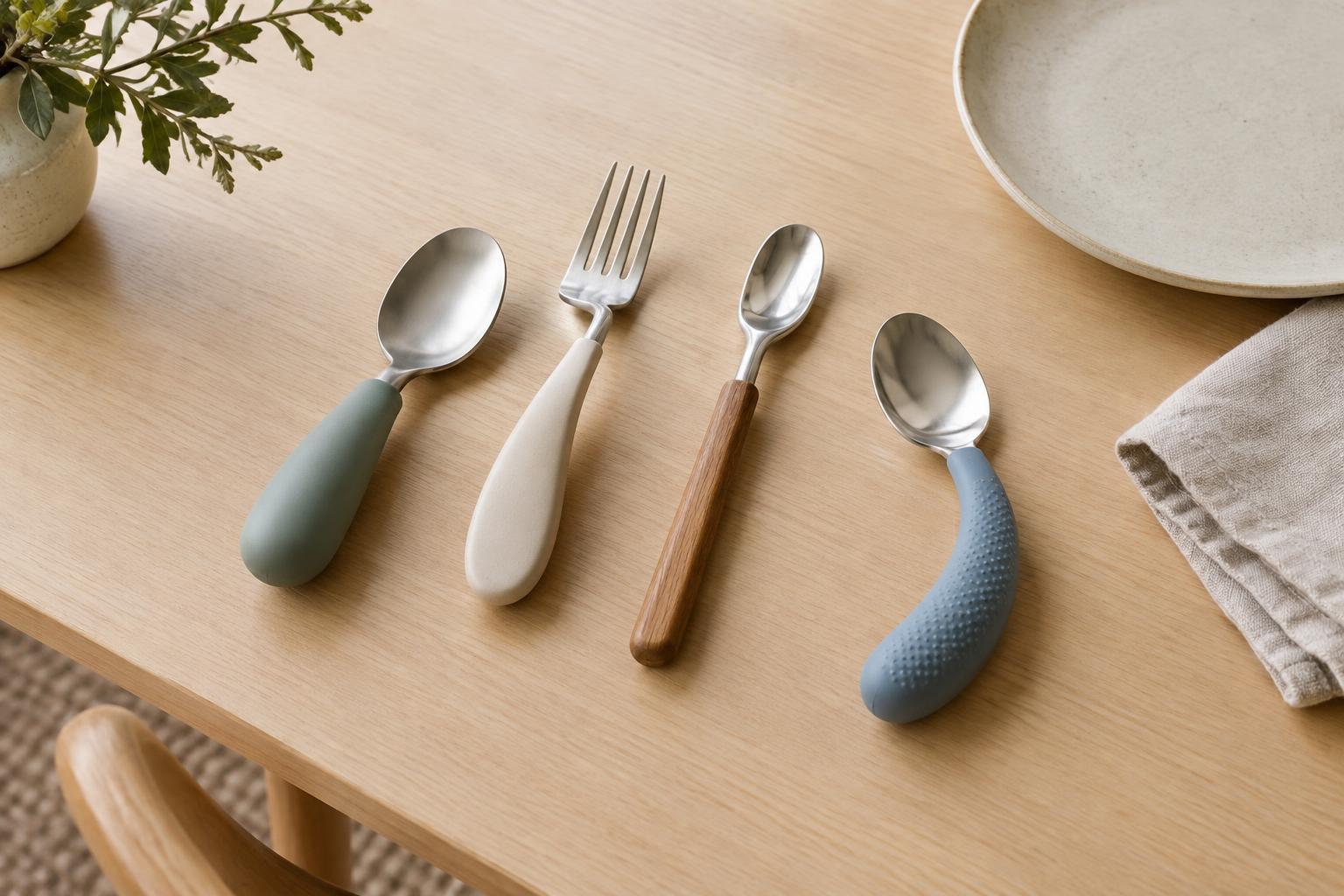
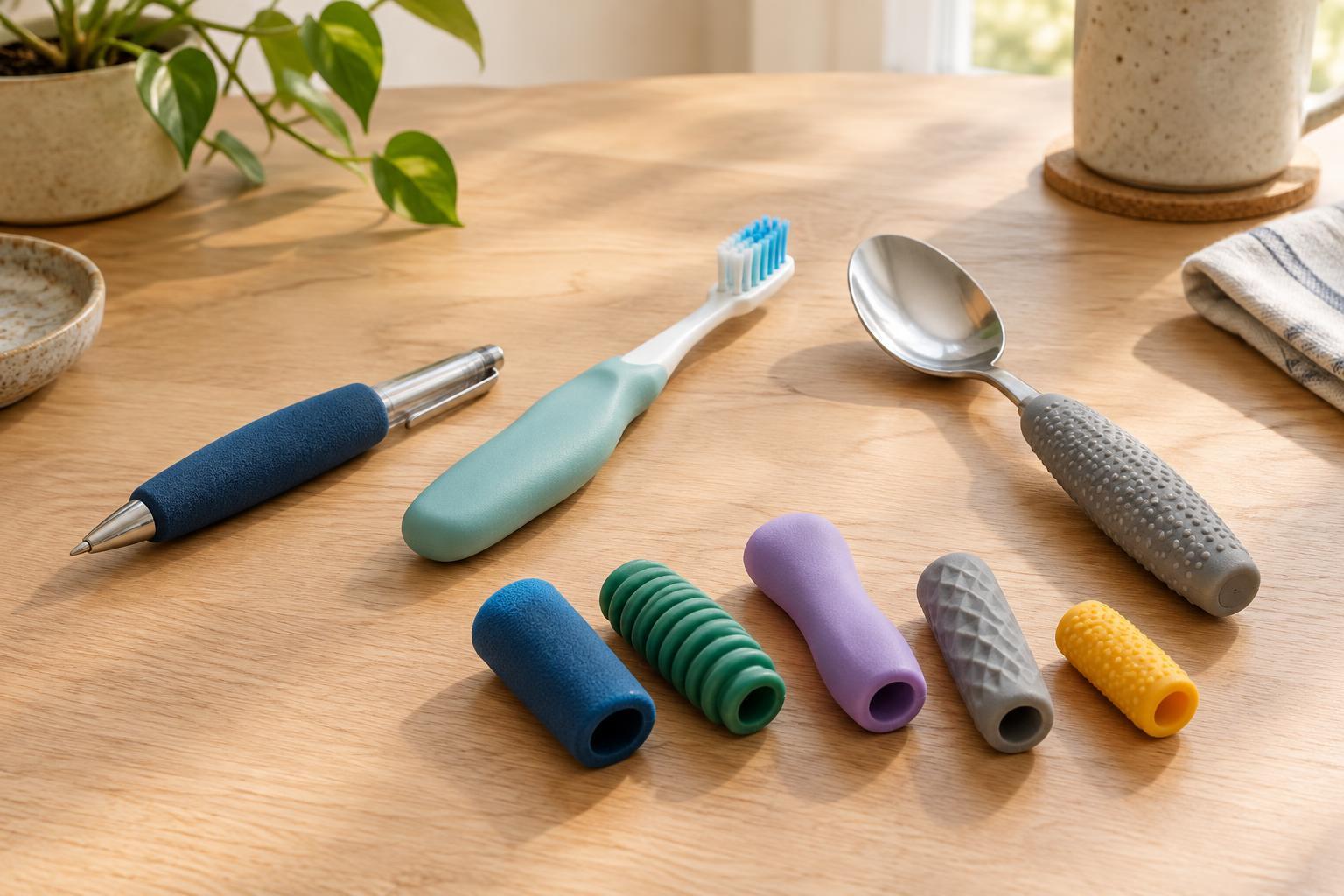
Built-up grips are sleeves or additions that make a tool’s handle wider. They are available for everyday objects such as pens, toothbrushes, and eating utensils. A wider handle may feel easier to hold for some people, but the largest option is not automatically the best. The aim is to find a combination of tool and grip that feels manageable during the actual task.
Before comparing products, notice how the object is used. A pen needs enough control for small movements. A toothbrush must reach different parts of the mouth while its handle may be wet. A spoon or fork moves between a plate and the mouth and may need to rest securely on a table. These differences matter more than whether three grips look alike in a product photo.
If possible, try a grip with the specific pen, brush, or utensil it will be used with. A quick hold can reveal an obvious mismatch, but a short everyday task tells you more: write a few lines, move the toothbrush as you normally would, or use the utensil for part of a meal.
Compare diameter, shape, and weight together
Grip diameter affects how far the fingers must open and how securely they can wrap around the handle. Compare more than one width when you can. A grip that feels comfortable at first may still make fine pen movements awkward or change how a utensil approaches food. Look for a size that supports the task without requiring an uncomfortable hand position.
Shape changes the feel as much as diameter. Round sleeves allow the object to rotate easily, which may be useful or frustrating depending on the task. Oval, triangular, or contoured grips offer more obvious places for the fingers to rest. Check whether that shape still works when the tool turns: a toothbrush is often held at several angles, while a pen may be held in a more consistent position.
Extra material also adds weight and bulk. A soft foam sleeve may be light, while a dense rubber grip can feel more substantial. Neither is universally preferable. Consider whether the tool still feels balanced, particularly near the working end, and whether it fits where it is normally stored.
Look closely at surface and attachment
Surface texture affects both comfort and control. Smooth grips may be easy to wipe but slippery when damp. Textured or soft surfaces may feel secure, yet grooves can collect residue. Check for seams or firm edges where fingers naturally rest, and notice whether the material feels pleasant during repeated use.
A removable sleeve should fit its handle firmly enough that it does not slide or twist unexpectedly. Check the opening size and any stated handle compatibility rather than assuming a sleeve will fit every tool. Pens can vary widely in thickness; toothbrush handles may be curved or tapered; utensil handles may be flat rather than round. If the grip is difficult to put on or take off, that matters too, especially when tools are shared or cleaned often.
Some built-up grips are part of a complete tool rather than an add-on. An integrated handle can avoid a loose sleeve, but it also means replacing the whole item if one part wears out. Compare that trade-off with the flexibility of moving a removable grip between compatible objects.
Account for cleaning and everyday routines
Cleaning needs differ by task. A utensil grip may come into contact with food, while a toothbrush grip is routinely exposed to water and toothpaste. Check the product’s care instructions, including whether the grip can be removed and whether any part is suitable for a dishwasher. Do not assume that a washable tool makes its added grip dishwasher-safe.
Think about places where moisture or crumbs could remain, such as the gap between a sleeve and its handle. A grip that is simple to remove, wash, and dry may be more practical than one with a more appealing shape but complicated upkeep. For pens, cleaning may be less frequent, but a grip that picks up lint or ink marks can still be inconvenient.
Storage is another useful test. A built-up toothbrush may no longer fit its usual holder, and a widened pen may not fit a case or clip. Utensils with bulky handles may need a different drawer space. These small details can determine whether an otherwise comfortable product gets used regularly.
Make a short comparison before committing
When comparing options, choose a few priorities for each tool: control for a pen, reach and wet-hand handling for a toothbrush, or balance and cleaning for a utensil. Then note what worked and what did not after trying each grip. Simple observations such as “turns in my hand,” “too bulky for the holder,” or “easy to wash” are more useful than a single overall rating.
Preferences may vary between tools and may change over time. It is reasonable to use one grip style for writing and another for meals, or to decide that the original handle works better for a particular object. If using a tool is painful or consistently difficult, a qualified professional can help assess the broader situation; a grip comparison alone cannot explain the cause.