Start with the task, not the product label
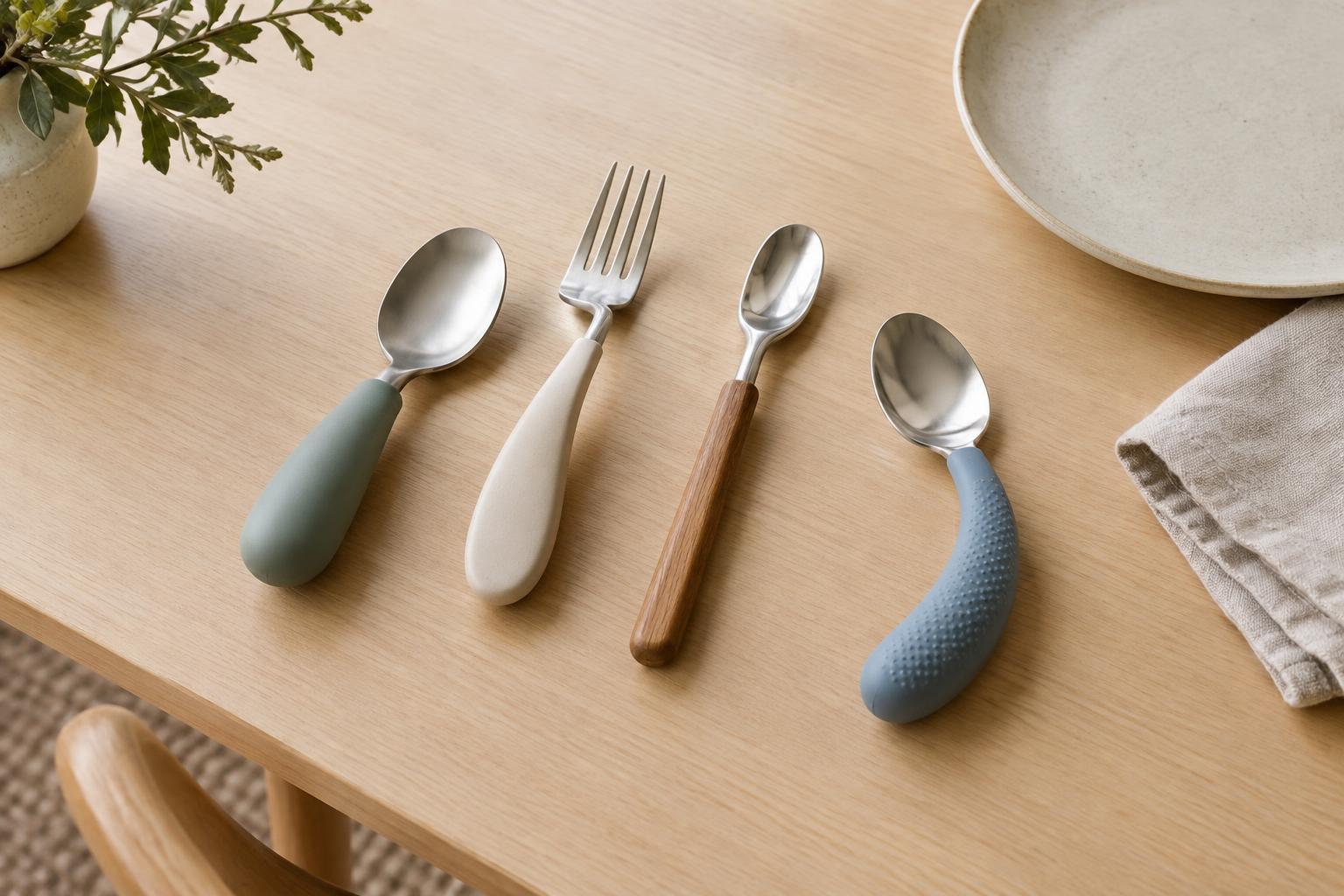
Adaptive cutlery includes familiar forks, spoons, and knives with features intended to make them easier to hold or direct. A thicker grip may reduce the need to close the fingers tightly around a narrow handle. An angled head may change how the utensil approaches the mouth or plate. A different material may alter its weight, texture, or ease of cleaning. None of these features is automatically better; their usefulness depends on the person, the meal, and the setting.
Before comparing products, notice what happens with ordinary cutlery. Is the handle difficult to keep hold of? Does the utensil turn unexpectedly? Is scooping food from a shallow plate awkward, or is storage and washing the main concern? A person may also prefer a design that looks and feels similar to cutlery they already use. Describing the specific difficulty makes it easier to compare features without assuming that one adaptive set will solve every problem.
Handle shape changes the way a utensil is held
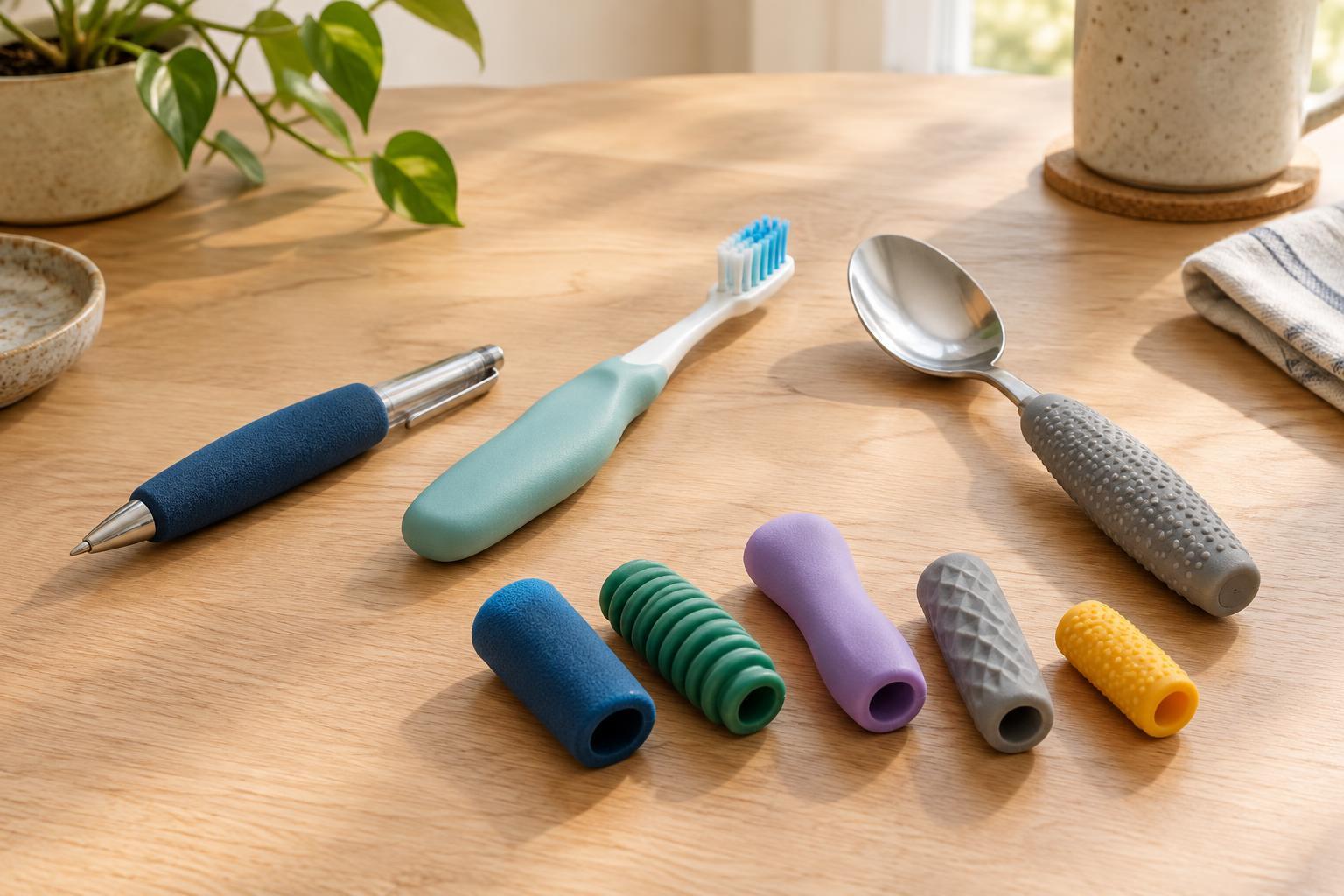
Wide, rounded handles provide more surface to hold than slim handles. They can feel secure in the palm, although a very large handle may be uncomfortable for someone who prefers a smaller grip. Oval or contoured handles offer places for fingers to rest, which some people find helpful for keeping the utensil oriented. Others may find that a fixed contour puts their fingers in an unnatural position. If possible, compare shapes while holding the utensil as it would be used, rather than judging it by appearance alone.
Handle length matters too. A longer handle can provide more room for the hand and may suit someone who wants to keep their grip farther from the food. A short handle can feel easier to guide and takes up less space in a drawer. Some handles have a textured or slightly tacky surface to help prevent slipping. Texture can aid control, but seams and deep grooves may also collect food and require more attention during washing.
Weight is another part of the grip experience. A heavier handle may feel steadier to one person and tiring to another. A very light utensil may be easy to lift but harder to sense or control. Rather than treating weight as a measure of quality, consider how the utensil feels over the course of an ordinary meal.
Straight and angled utensils serve different movements
Straight cutlery is familiar and flexible: it can usually be turned, shared, and used from either side of a place setting. Angled cutlery bends the utensil head relative to the handle. This changes the movement needed to bring food from plate to mouth and may make a particular motion feel more natural. The direction of the bend is important. Some angled designs are made for right- or left-handed use, while others can be adjusted or used by either hand.
An angle that feels useful for a spoon may not work as well for a fork or knife. Bowl depth also affects a spoon: a deeper bowl can hold more food, but its size should still feel comfortable to use. For forks, consider how easily the tines pick up food and how the utensil rests on the plate. With knives, look at how the handle shape and blade position support the cutting motion the person already uses. Testing each piece separately can be more informative than buying a matching set.
Materials affect comfort and upkeep
Stainless steel heads are common because they are durable and familiar at the table. Handles may be metal, plastic, rubber-like material, or a combination. Smooth surfaces can be quick to wipe, while softer or textured surfaces may feel more secure in the hand. Check how firmly the handle joins the utensil head and whether there are gaps that could be difficult to clean.
Cleaning instructions deserve the same attention as grip design. Not every handle is dishwasher-safe, and some materials may need more careful drying. Consider whether the cutlery will be washed by hand, placed in a dishwasher, or carried outside the home. If a utensil is pleasant to hold but inconvenient to keep clean, it may not be the most practical everyday choice.
Compare options in an ordinary mealtime setting
When practical, try a small number of options with familiar foods and tableware. Check whether the utensil stays comfortable, reaches the food easily, and feels controlled from the first bite to the last. Plate shape, seating position, and the height of the table can change how a utensil feels, so a brief test at a shop may not tell the whole story. Invite the person who will use the cutlery to say what they like or dislike, including its appearance.
A single preferred spoon or fork may be more useful than a complete set of pieces that rarely get used. Record simple details such as handle size, bend direction, and cleaning needs before purchasing replacements. The goal is not to find a universally “best” adaptive utensil, but to choose one that fits a particular hand, routine, and meal.