Start with the door, not the product
Keys place a lot of work into a small object: you have to identify the right one, line it up with the lock, hold it steady, and turn it. A larger handle may make one of those steps easier without changing the others. Before choosing an accessory, notice which part of the routine is awkward. Is the key difficult to pick up, hard to orient, or uncomfortable to turn? Does the door need to be pulled or pushed at the same time? The answers help narrow the choice.
Try observing the routine at the actual door, with the key normally used there. Locks and door hardware vary, as do the space around them. A bulky attachment that works well in your hand may hit the doorframe, another lock, or a nearby handle before the key finishes turning. If the door sticks or the lock itself is unreliable, adding a grip may not address the underlying problem.
How the common designs differ
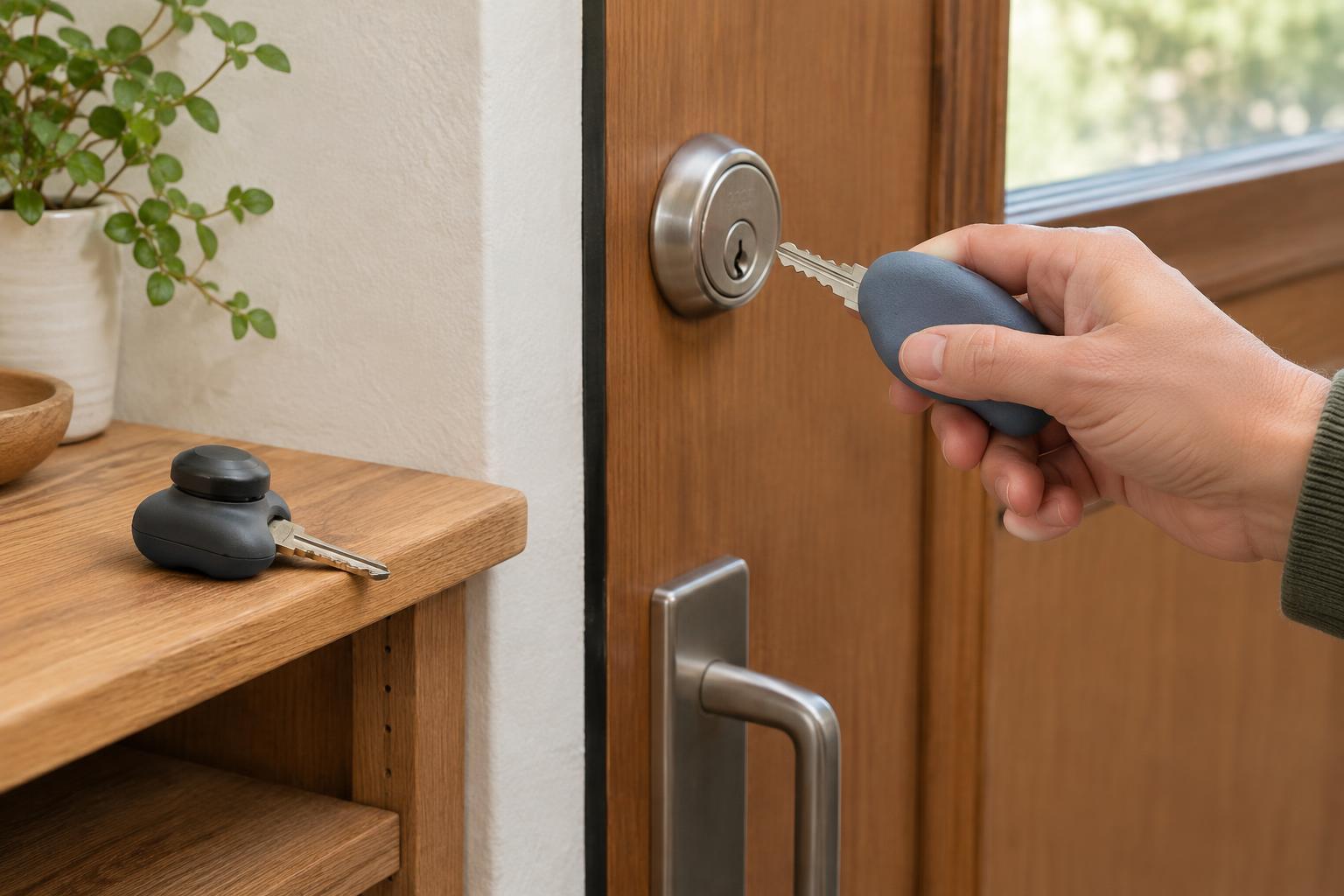
An enlarged key grip is usually a sleeve or holder that adds width to the key head. It can create a broader area to pinch or hold while keeping the key recognizable. Some grips use color or shape to help distinguish keys on a ring. Check how firmly the key sits in the holder: a loose sleeve can twist around the key instead of turning it.
A key turner typically holds the key in a longer or differently shaped handle. The added length may provide more leverage, but it also needs more room to swing. Some designs fold around one or more keys, while others hold a single key in a fixed position. A folding design may be tidier to carry, though opening it adds a step. If several people use the same key, consider whether each person can readily identify, open, and operate the attachment.
Check fit, handling, and carry
Begin with the key itself. Compare the size and shape of its head with the product’s stated fit, and check whether the key needs a hole for a pin or screw. Avoid assuming that a holder will fit every key with a similar-looking head. If an attachment requires assembly, look at how the key is secured and whether it could work loose with regular use. Keep the original key available while assessing a new setup, rather than making an untested attachment the only way to get in.
Next, think about how the key travels. A long handle may be comfortable at the lock but cumbersome in a pocket or small bag. A thick grip may crowd other keys on a ring. Consider whether the attachment has edges that catch on fabric, whether its surface is easy to hold when hands are damp, and whether its material can be wiped clean according to the maker’s instructions. A bright grip might make a key easier to find, but it should not display an address or other identifying information.
Try the whole routine before relying on it
Test an option when there is time to pay attention, rather than during a rushed arrival. Pick up the key from its usual storage place, select it from the ring, insert it, turn it through the full locking and unlocking movement, and put it away again. Try this with the door in its normal position. Notice whether the attachment helps with the intended step or simply moves the difficulty elsewhere.
If the key bends, the attachment slips, or turning requires force, stop rather than treating the larger handle as a way to overpower the lock. The key, lock, door alignment, and accessory all need to work together. A useful product should make the everyday sequence more manageable while remaining easy to store, recognize, and share where needed. The best choice is the one that fits the specific key and door as well as the person using them.