Start with the routine, not the furniture
A getting-ready area is any place where someone routinely washes, dresses, brushes their hair, or gathers what they need before leaving. It might span a bathroom and bedroom rather than fit neatly in one room. Before moving furniture or buying organizers, walk through a typical routine and note where items are used, carried, and put away. The aim is to reduce unnecessary trips and awkward reaches without forcing every task into the same spot.
Look at the route into and around the area. A chair that works well while occupied may block a drawer when pulled out. A hamper or open cabinet door can narrow the path at the busiest moment of the day. Leave room to approach frequently used surfaces, turn toward storage, and leave the area without stepping around loose items. If several people share the space, consider what happens when one person is seated and another needs to pass.
Make storage easy to see and reach
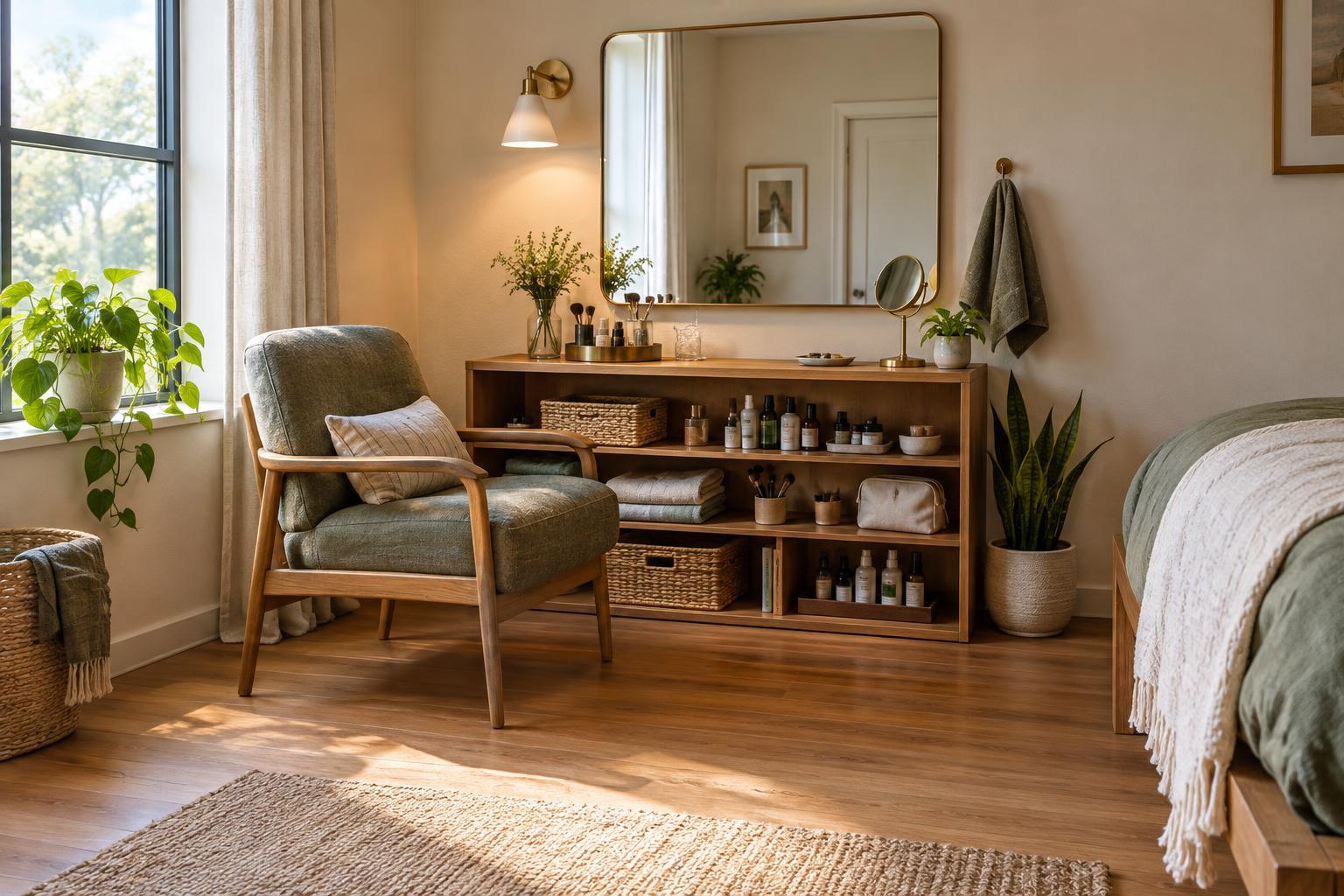
Place frequently used items where they can be reached from the position in which they are used. For a seated routine, that may mean keeping daily supplies on a nearby shelf or in a shallow drawer rather than a high cabinet. For a standing routine, it may mean clearing counter space so essentials do not disappear behind decorative objects. Keep heavier or breakable items in stable locations where they do not need to be lifted from an uncomfortable height.
Simple grouping can make the area easier to manage. A tray for daily items, a separate place for occasional supplies, and a clearly defined spot for used towels reduce searching and clutter. Choose containers that are easy for the intended user to open and identify; identical closed boxes may look tidy but make finding things harder. If the setup serves more than one person, agree on which spaces are shared and which should stay personal.
Personal-care routines can also guide what deserves space close at hand. Someone who enjoys exploring makeup techniques may want a stable surface for a few regularly used products; Makeup Techniques · Everyday Beauty Notes offers a place to browse more ideas for that routine. If hair styling is part of the morning, Hair Styling · Everyday Beauty Notes is another destination to browse when deciding which tools and supplies should have an accessible home. Keep these interests separate from the basic need for clear, usable space.
Offer a comfortable position and useful light
A getting-ready area should allow a person to use the position that works for them on a given day. If a seat is part of the setup, check that it is stable and does not obstruct cabinets, switches, or the route through the room. A nearby surface should hold items without requiring repeated twisting or stretching. Where a seated position is preferred, test the mirror and storage from that height rather than assuming a standing arrangement will also work.
Light is most useful when it helps someone see the task without shining directly into their eyes or creating strong shadows. Observe the area at the times it is normally used, with cabinet doors open and the person in their usual position. A mirror may be visible from one angle yet difficult to use from another. Adjustable lighting or a movable mirror can offer flexibility, but cords and movable objects should not create new obstacles on the floor or counter.
Test the setup during an ordinary day
A floor plan cannot show every small interruption in a routine. Try the arrangement with the supplies, towels, chair, and bags that are actually used. Notice whether drawers can open fully, whether a seated person can reach what they need, and whether items have a convenient place to return afterward. Change one or two things at a time so it is clear what helped.
The area will also need to stay usable as habits change. Set aside a moment to clear surfaces and return supplies to their places, and revisit the layout when new products or equipment are added. The best arrangement is not necessarily the one with the most organizers; it is the one people can use and maintain without regularly blocking routes or searching for essentials.