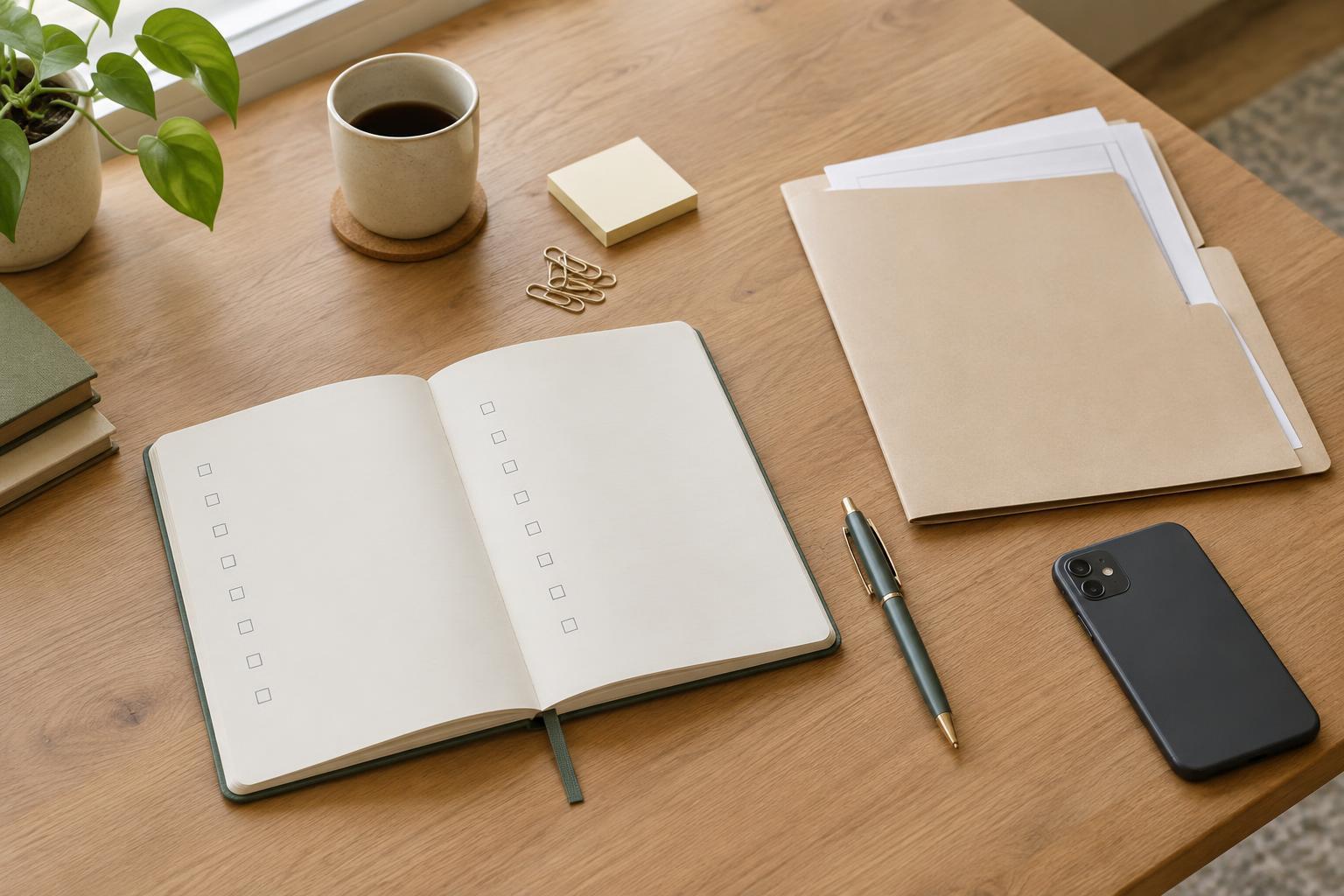
Start a list before you need it
Questions rarely arrive neatly the night before an appointment. One may come up while reading an appointment letter; another may occur during a conversation at home. Keeping a single, easy-to-find list gives those thoughts somewhere to go. The list can be a page in a notebook, a note on a phone, or a document shared with a trusted person. The best format is the one you can reach and update without much effort.
At first, write questions in your own words. You do not need to know the right terminology. “What happens next?” or “Who should I contact if plans change?” is more useful than a carefully worded question you forget to record. If the question relates to a particular form, instruction, or previous conversation, add a few words of context. That small detail may help you remember why you wanted to ask.
Make room for practical questions
An appointment is not only about the subject being discussed. It may also involve getting to the right place, understanding what to bring, arranging communication support, or knowing when to expect a follow-up. Keep these practical questions alongside your other ones. For example: “Is there anything I should bring?”, “Can I receive the information in writing?”, or “What is the best way to ask a question afterward?”
If you help organize appointments for someone else, invite them to add their own questions when possible. You might keep separate notes for what they want to ask and what you need to clarify about schedules or paperwork. This helps the list reflect their priorities rather than becoming only an organizer’s checklist. It also makes it easier to decide together which questions they would prefer to ask themselves.
Choose a few priorities before you go
A running list can become long. Before an appointment, read through it and mark the questions that matter most for that visit. Put those at the top, since the time available may be limited. You can group related questions under simple labels such as “today’s plan,” “paperwork,” and “next steps.” Keep less urgent questions below them rather than deleting them; they may belong in a later conversation.
Try turning broad concerns into questions that are easier to answer. “I’m confused about the process” might become “What is the next step, and who will contact me about it?” If a word in a letter or form is unfamiliar, copy it onto the list and ask what it means in that context. You can also note whether you would like an explanation repeated, written down, or given in a different format.
Use the list during the conversation
At the start of the appointment, it can help to say that you brought a short list of questions. You do not have to follow it in order if the conversation takes a different direction. Check off questions as they are answered, and leave space to note a brief answer or an action to take. If an answer raises a new question, add it rather than trying to hold it in memory.
Before leaving, glance at your highest-priority questions. If something remains unanswered, ask when or how to raise it. It can also be useful to confirm practical details in your own words: what you are expected to do next, who is responsible for any follow-up, and where information will be sent. This is a way to check your understanding, not a test of whether you listened carefully.
Update it afterward without making it a chore
Soon after the appointment, take a few minutes to tidy the list while the conversation is still familiar. Mark answered questions, record any next steps in your usual calendar or task system, and move unresolved questions to the next appointment’s page. If you received written information, note where you put it. A question list works best when it connects to the way you already organize everyday tasks.
There is no need to preserve a perfect record of every appointment. The purpose of the list is to help you prepare, speak up, and keep track of what still needs clarification. A few current questions, written plainly and kept somewhere dependable, can be more useful than an elaborate system that is difficult to maintain.