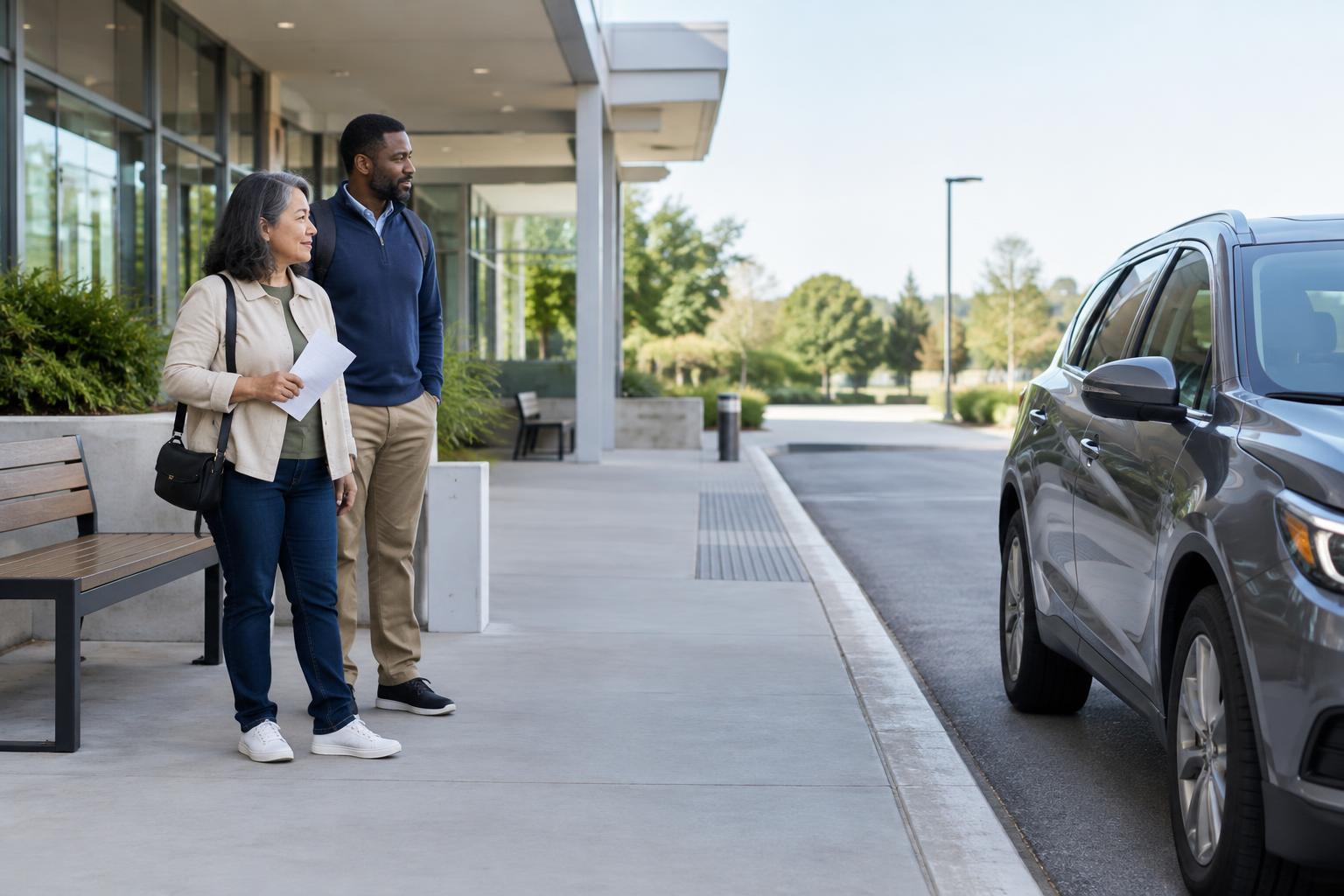
Start with the whole trip
When arranging transportation to an appointment, plan the return journey as well as the trip there. Write down the appointment location, the time you are expected to arrive, the entrance you need, and any check-in instructions you have been given. A building may have several doors or drop-off areas, so a street address alone may not tell a driver where to stop.
Consider what happens between the vehicle and the appointment desk. Is there a long walk, a difficult crossing, or a lift to find? If the location is unfamiliar, ask the venue which entrance is easiest to use and where vehicles can safely stop. Keep those details with the booking information so they are available to anyone helping with the journey.
Make pickup instructions easy to follow
A useful pickup note describes a place that both the passenger and driver can identify. Include the building name, entrance, nearby landmark, or agreed waiting area. For a large site, specify which side of the building to use. If the passenger cannot easily wait outside, clarify whether the driver should call on arrival and how long it may take to reach the vehicle.
Share practical access needs when arranging the ride. These might include space for a mobility aid, help locating the vehicle, extra time to get seated, or a vehicle that suits a particular boarding requirement. Explain what assistance is needed rather than assuming the transport provider will know. Before the day, confirm that the provider can accommodate the request; if not, there is still time to look for another option.
Keep contact details limited to what is necessary for the trip. If a family member, friend, or support person is coordinating the ride, agree on whose number the driver should use and who will respond to changes. This avoids a situation in which the driver calls one person while the passenger is waiting for a message from another.
Build timing around more than travel time
The journey itself is only one part of the schedule. Allow time to reach the pickup point, board the vehicle, travel, get from the drop-off point to the correct entrance, and check in. Traffic and waiting times are uncertain, so it helps to choose a pickup time that leaves a reasonable margin without requiring an unnecessarily long wait at the destination.
Return trips need a different approach because appointment end times may be hard to predict. Find out whether the ride can be booked for a flexible pickup window, whether the passenger must call when ready, and where the return pickup will take place. If someone is helping to coordinate, decide who will make that call. Avoid promising a driver a precise departure time unless the appointment schedule makes one realistic.
Prepare a small, usable trip record
Put the essential details in one place: appointment address and arrival time, outbound and return pickup locations, transport provider and booking reference if there is one, contact numbers, and any access arrangements. A short note on paper can be useful even when the information is also on a phone. The aim is not to create more paperwork, but to make details easy to find when plans change.
If another person is involved, share the trip record before the appointment rather than explaining it during a rushed pickup. Check that everyone understands their role: who meets the vehicle, who carries any needed items, and who contacts the provider if the ride is late. The passenger should know the plan too, in a format that works for them.
Decide what to do if the plan changes
A backup plan can be simple. Identify a second transport option, a person who might be able to help, or a number to call if the booked ride does not arrive. Decide how long to wait before checking on a delayed vehicle and who will make that call. If a delay could affect arrival, contact the appointment location to ask what options are available rather than guessing.
Plan for a changed return time as well. Keep a charged phone available where possible, along with a way to access important numbers if the phone is unavailable. If the passenger needs a suitable place to wait, ask the venue about this ahead of time. A good plan cannot prevent every disruption, but it can make the next step clear when one occurs.