Start with the person and the purpose
A communication format works well only if the person can use it in that situation. Before choosing a phone call, handout, email, or portal message, ask what the exchange is for. Is it a quick question, a detailed explanation, a reminder, or information the person will need to find later? A message that requires discussion calls for a different approach from one that simply needs to be stored and revisited.
Ask about preferences rather than assuming them. Someone may like phone calls for questions but want appointment details in writing. Another person may use digital messages at home yet find a screen difficult to read in a busy waiting area. Language, hearing, vision, literacy, device access, privacy, and the ability to respond all matter. Preferences may also change with the setting or the importance of the message.
Use spoken communication for exchange and clarification
Conversation is useful when people need to ask questions, describe a concern in their own words, or resolve confusion as it arises. In person, a speaker can notice signs that the pace is too fast, though they should not rely on body language alone to judge understanding. By phone, it helps to identify who is speaking, explain the purpose of the call, and pause regularly for questions. A quiet space, clear speech, and one point at a time can make either format easier to follow.
Spoken information is harder to revisit. Names, times, directions, and several steps can be easy to miss or forget, especially during a stressful conversation. Offer a brief written recap when details need to be retained. For important arrangements, invite the person to describe what they plan to do next; this gives both sides a chance to catch a misunderstanding without turning the exchange into a test. If an interpreter or another communication support is needed, plan for it rather than treating a faster format as an adequate substitute.
Choose print when a stable reference helps
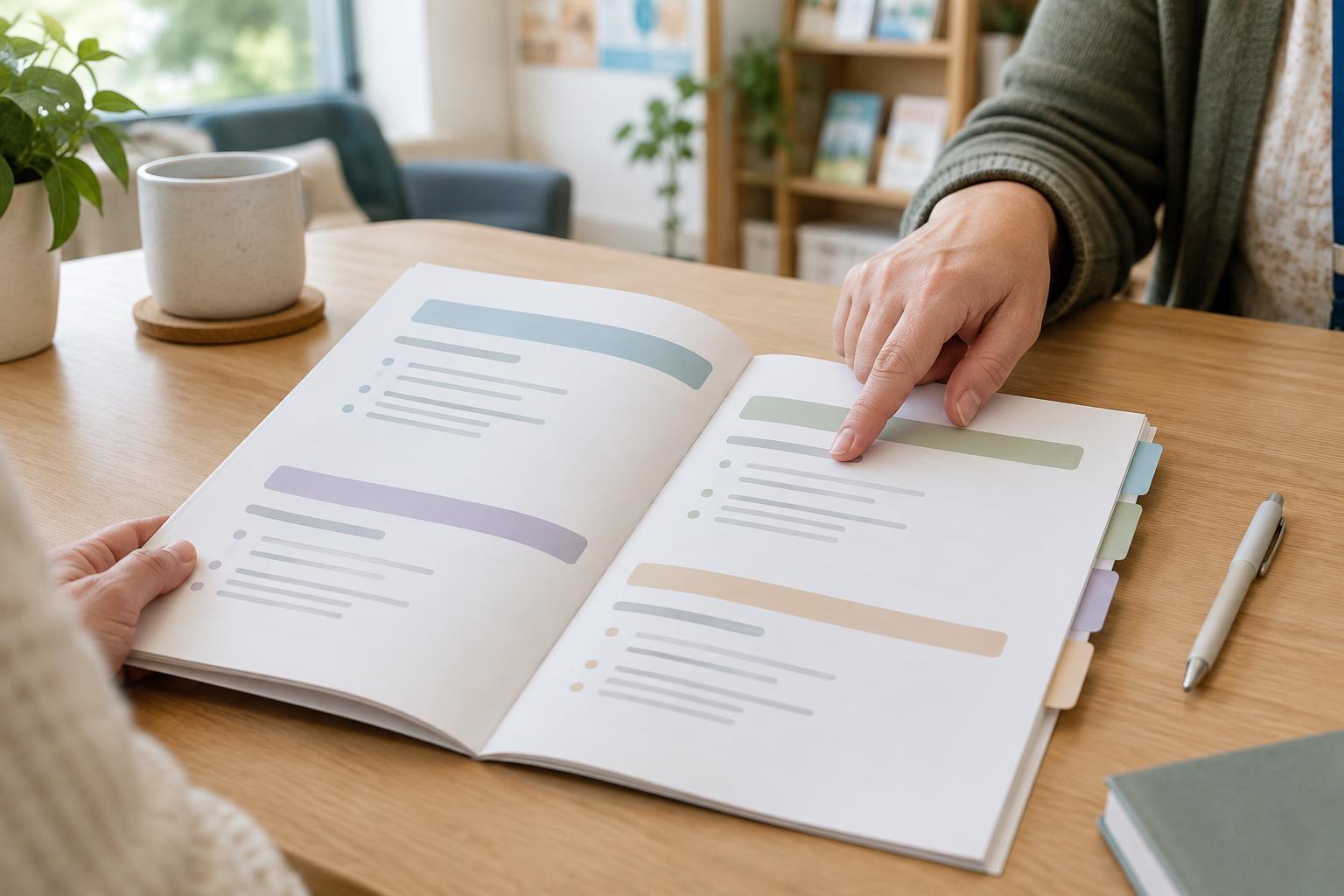
Printed communication is useful for information someone may want to keep nearby: a map, a short checklist for an appointment, or a summary of how to contact a team. It does not depend on a charged device or an internet connection. A person can mark it up, share it with someone they choose, or bring it along to a later conversation.
Print still needs careful design. Use descriptive headings, familiar words, legible type, good contrast, and enough space to separate ideas. Put the main action near the top rather than burying it in a long block of text. Avoid making color the only way to distinguish instructions. A handout may not be accessible to someone who cannot read standard print, and handing it over does not show that its meaning is clear. Offer another format or a conversation when needed, and make it easy to ask about anything unclear.
Use digital messages for convenient access, not by default
Digital communication can be helpful for reminders, links to resources, and information someone may want to search or revisit. Depending on the tool, text can be enlarged or read with assistive technology. Messages can also allow people time to form a response instead of answering immediately. These benefits depend on a usable device, a workable connection, an accessible interface, and confidence with the tool.
Choose the channel with privacy and expectations in mind. A shared phone or email account may expose a message to others. A notification preview may reveal more than the recipient expects. People also need to know whether a digital channel is monitored for replies and what to do if they need an answer sooner. Keep subject lines and notifications discreet when appropriate, avoid unnecessary personal details, and provide a clear route to a person when a message raises questions.
Combine formats and check the handoff
The choice is rarely limited to one format. A spoken explanation followed by a concise print or digital summary can support both understanding and recall. A printed notice can include a phone number for questions; a digital reminder can point to a more detailed, accessible version. What matters is that the formats agree. Conflicting times, unfamiliar terms, or different instructions create work for the recipient and can undermine an otherwise clear message.
Before sending or handing over information, check four things: Can the person access this format? Is the main point easy to find? Is it clear what, if anything, they need to do next? Is there a way to ask questions or request another format? These small checks keep communication focused on the person using it, rather than on the channel that happens to be easiest to send.