
Clear CommunicationWhen a wait is difficult to predict, a vague promise can be less helpful than a clear update plan. Learn how to explain what is known, what remains uncertain, and how people can get information without repeatedly asking.
Read article · 3 min↗

Clear CommunicationA change to an appointment can be easy to miss or misunderstand. Learn how to write notices that make the new plan clear, distinguish confirmed details from open questions, and give readers a straightforward next step.
Read article · 3 min↗

Clear CommunicationUnexplained jargon, rushed speech, and hidden assumptions can turn an ordinary care conversation into a confusing one. Here are practical ways to make information easier to understand, remember, and use.
Read article · 4 min↗

Clear CommunicationA nod, a pause or a facial expression can seem easy to read, but its meaning may be less certain than it appears. In care-related conversations, a brief, respectful check can prevent confusion without making the other person feel examined. These practical approaches make room for different ways of communicating.
Read article · 3 min↗

Clear CommunicationThe words used in conversations, signs and appointment notes can shape whether someone feels included and understood. Learn how to describe a care need clearly while leaving room for a person’s preferences, strengths and choices.
Read article · 4 min↗

Clear CommunicationA pause in conversation is not an invitation to answer for another person. Learn simple ways to allow more response time while keeping the person’s voice, preferences and choices at the center of an exchange.
Read article · 3 min↗

Clear CommunicationCommunication boards and text-to-speech tools can both help someone express a message, but they work in different ways. This beginner’s guide compares how each option is used, where it may fit, and what to consider when supporting communication in everyday care settings.
Read article · 4 min↗

Clear CommunicationA useful wayfinding sign helps people decide where to go without making them decode a label or guess what an icon means. Learn how to choose familiar words, pair them with supportive symbols, place signs at decision points, and check whether the system works along a real route.
Read article · 4 min↗

Clear CommunicationAn interpreter can help people take part in care-related conversations, but everyone in the room still has a role. Speaking to the person rather than about them, using manageable turns, and checking that questions have space can make the exchange clearer and more respectful.
Read article · 4 min↗

Clear CommunicationMultilingual communication works best when teams decide what people need to read, what they need to discuss, and how each exchange will be checked for understanding. This guide explains the distinct roles of translation, interpretation, and automated tools.
Read article · 4 min↗

Clear CommunicationClear labels and helpful error messages can make digital forms less frustrating, especially when people are arranging appointments or sharing practical information about care. This guide explains how to name fields, offer guidance and help people recover from mistakes.
Read article · 4 min↗
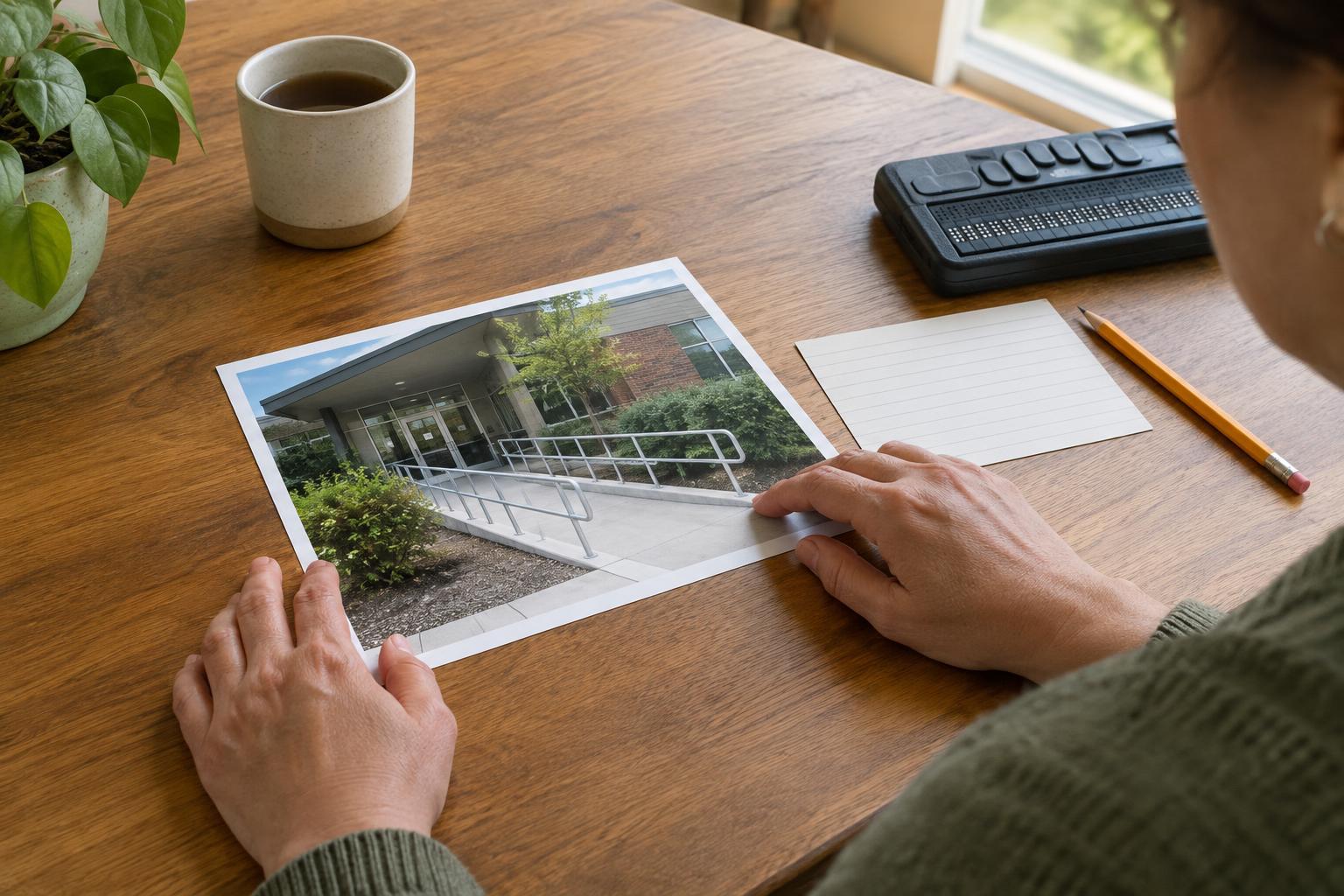
Clear CommunicationAlt text helps people understand images they cannot see or cannot see clearly. In care-related materials, the most useful description depends on what the image contributes to the task: finding an entrance, recognizing a product, following a form or understanding a diagram. This guide offers a practical way to decide what to describe, what to leave out and when an image needs more than alt text.
Read article · 4 min↗

Clear CommunicationCaptions and transcripts both turn spoken information into text, but they serve different moments and needs. Learn how to choose between them, when to provide both, and what makes each one useful in care-related communication.
Read article · 4 min↗

Clear CommunicationA useful conversation depends on more than speaking loudly. Learn how lighting, seating, clear turns and simple check-ins can make face-to-face communication easier for someone who has hearing difficulty.
Read article · 4 min↗

Clear CommunicationA useful question about communication is open, specific and easy to answer. Learn how to offer choices about format, pace and participation without guessing what someone needs or putting them on the spot.
Read article · 3 min↗

Clear CommunicationAn unfamiliar term or broad instruction can make it hard to know what to do next. These simple questions can help you slow the conversation, check your understanding and leave with a clearer plan.
Read article · 4 min↗

Clear CommunicationTeach-back can help people leave a care conversation knowing what was said and what happens next. The key is to frame it as a check on how clearly information was explained, not a test of the listener’s memory.
Read article · 4 min↗

Clear CommunicationThe best communication format depends on the person, the message, and what needs to happen next. Use this guide to choose between conversation, print, and digital messages—and to combine them when one format is not enough.
Read article · 4 min↗

Clear CommunicationA useful handout should be easy to scan, comfortable to read, and clear about what matters most. Learn how type size, spacing, headings, and emphasis can help people find and understand information in print or on screen.
Read article · 4 min↗
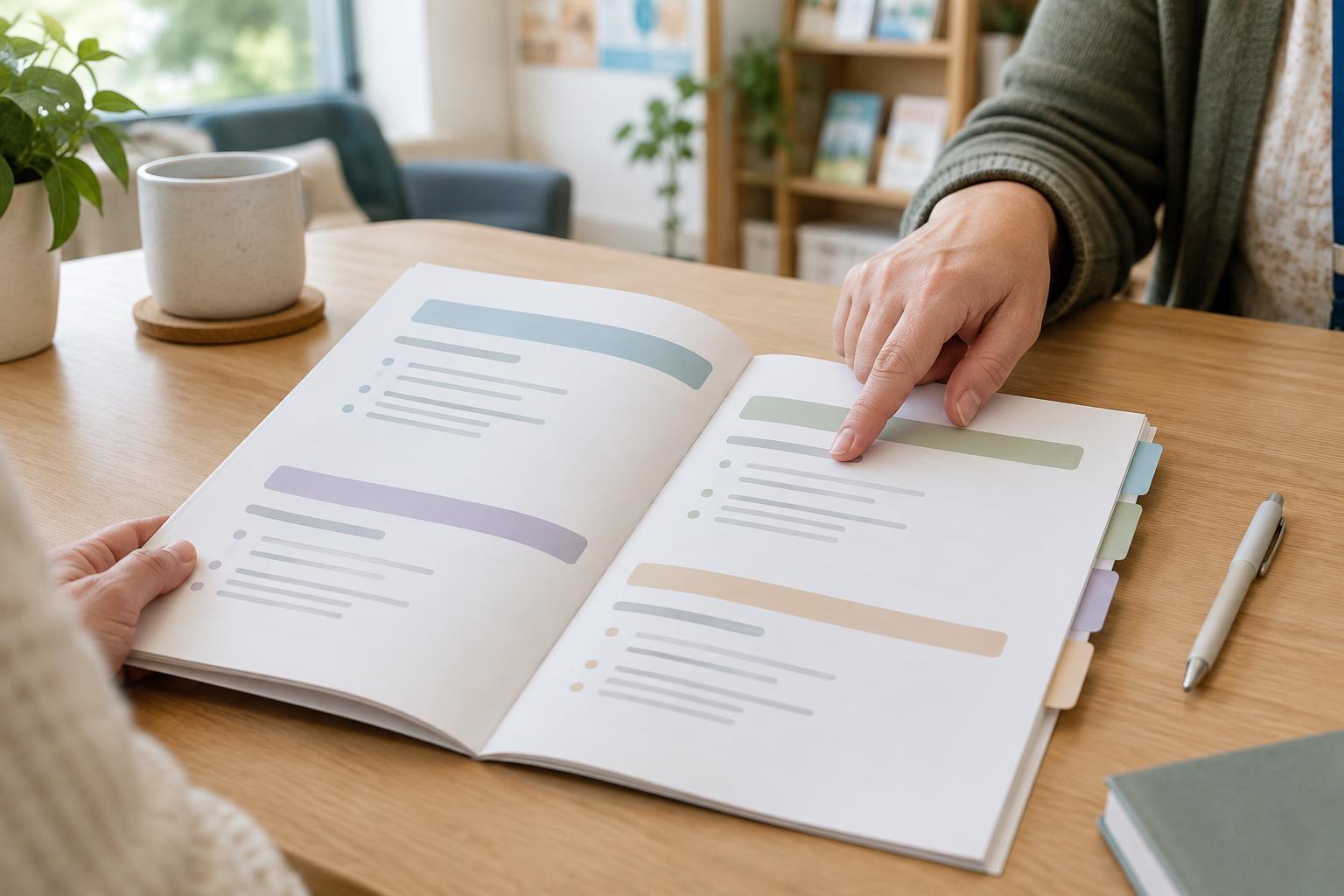
Clear CommunicationA useful care guide does more than contain the right details. It helps readers find what matters, understand what to do next, and return to the information later. Descriptive headings and short sections make that possible without oversimplifying the message.
Read article · 3 min↗

Clear CommunicationCare information often uses words that are familiar to staff but new to readers. A few simple writing habits can make those terms easier to understand without removing useful detail.
Read article · 4 min↗

Clear CommunicationCare-related information is easier to use when readers can find the point, recognize the words and picture what to do next. Learn how familiar language and concrete examples can make forms, notices and instructions clearer without leaving out important details.
Read article · 4 min↗